If you have scanned a sushi menu in Miami Beach and found yourself weighing nigiri against sashimi, you are not alone. The two options sit side by side on almost every menu, yet they serve very different purposes. One is a complete bite built over rice. The other is a pure, unadorned expression of the fish itself. Knowing the difference does not just make you a more confident diner. It helps you build a better meal.
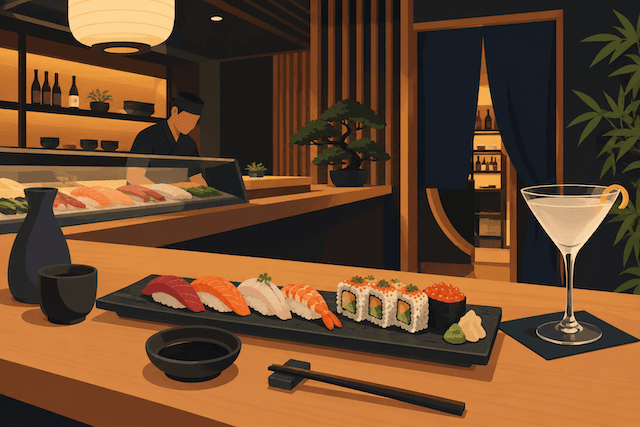
At Tokyo Sushi Speakeasy on Collins Avenue, both nigiri and sashimi are treated with the same precision. The kitchen sources fish daily, cuts each piece to order, and lets the ingredient speak. Whether you are sitting at a table for a date night or sharing a round of starters with a group, understanding what lands on the plate matters.
What Is Nigiri? The Hand-Formed Classic
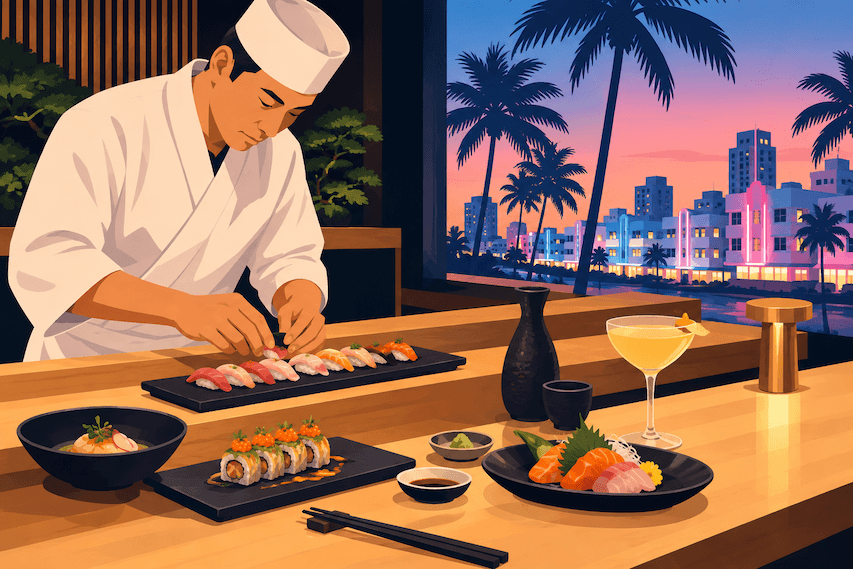
Nigiri sushi is the style most people picture when they think of traditional Japanese sushi. A small, hand-pressed mound of seasoned vinegared rice is topped with a slice of raw or cooked fish. The word “nigiri” translates roughly to “gripped” or “pinched,” which describes how the chef shapes each piece by hand.
The rice is warm, slightly sticky, and lightly seasoned with rice vinegar, sugar, and salt. The fish is cut to drape over the rice, often brushed with a touch of soy sauce or nikiri (a sweetened soy glaze) before it reaches the table. At Tokyo Sushi Speakeasy, nigiri is served in two-piece orders, making it easy to sample several varieties in one sitting.
What to Look for in Good Nigiri
Quality nigiri comes down to balance. The rice should be loose enough to fall apart on the tongue but tight enough to hold its shape when picked up. The fish should be cut against the grain at a consistent thickness.
The temperature should be subtle – slightly cool fish over warm rice creates the contrast that defines good nigiri.
On the menu at Tokyo Sushi Speakeasy, the nigiri section covers king salmon, tuna, yellowtail (hamachi), spicy tuna, unagi (freshwater eel), and wagyu beef. Each piece is hand-formed to order, priced at $10 for two pieces. The kitchen keeps the lineup tight and seasonal, which means every option on that list earns its place.
For anyone new to the full menu at Tokyo Sushi Speakeasy, starting with the king salmon nigiri is a smart move. The lemon zest finish cuts through the richness of the salmon and gives you a clean introduction to the kitchen’s style.
What Is Sashimi? The Fish in Its Purest Form
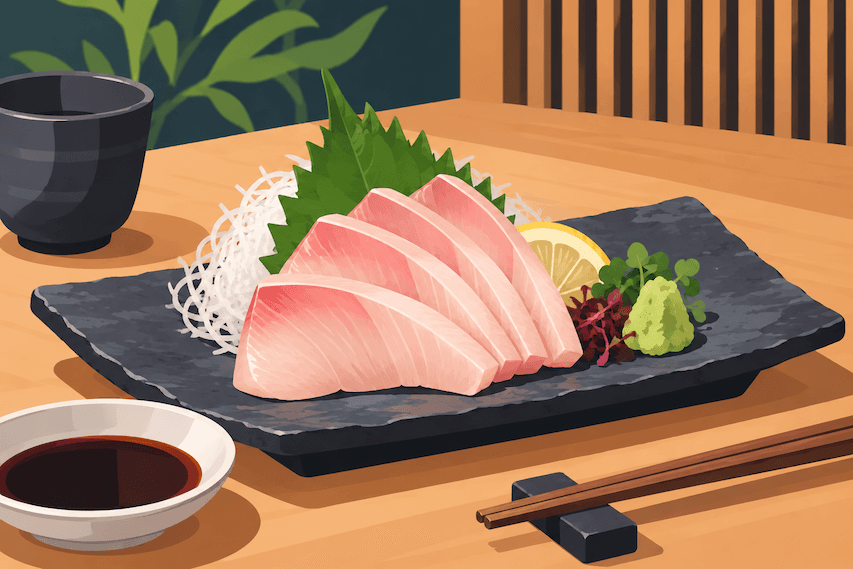
Sashimi takes a different approach entirely. There is no rice, no shaping, no extra vessel. Just sliced raw fish or seafood served on its own, arranged on a plate with garnishes like shredded daikon, shiso leaf, or ponzu.
The word “sashimi” refers to the pierced or cut body of the fish, and the focus is entirely on the quality of the ingredient. Because there is no rice to balance against, the texture, marbling, and freshness of the fish must carry the entire experience. A good sashimi plate tastes like the ocean, clean and direct.
What Separates Excellent Sashimi
The cut matters more than most people realize. Sashimi should be sliced across the grain at a thickness that lets the fish soften against your tongue without falling apart. The knife work should be clean enough that the slices catch the light. At Tokyo Sushi Speakeasy, sashimi is served in five-piece orders, and each plate is built around a single variety – salmon, tuna, hamachi, or eel.
For a broader experience, the Tokyo Sashimi Boat combines all four varieties in a single presentation. Twelve pieces of chef-selected salmon, tuna, hamachi, and eel sashimi are arranged over ice with wakame salad, pickled ginger, wasabi, and ponzu. It is designed for the center of the table and works well when you are sharing a meal with a group.
If you are curious about how the kitchen approaches its raw preparations, the sushi etiquette guide on this site covers how to eat each style the right way.
Nigiri vs Sashimi: The Key Differences
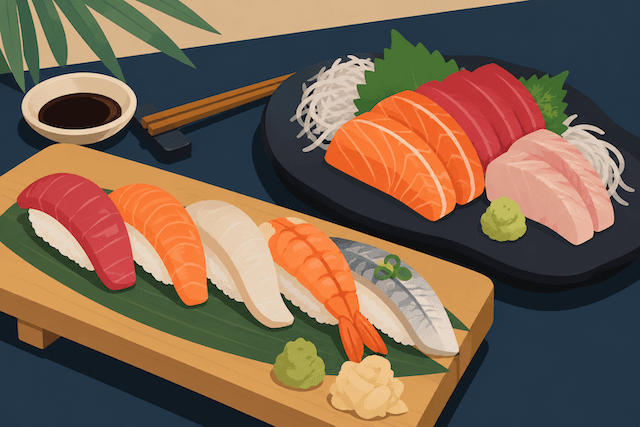
The simplest way to distinguish the two is rice. Nigiri always includes it. Sashimi never does. But the distinction goes deeper than that.
Nigiri is a composed bite. The chef controls the ratio of fish to rice, the pressure applied during shaping, and the touch of soy or citrus on top. It is meant to be eaten in one or two bites, ideally within seconds of being plated. The rice absorbs a small amount of soy if you dip it – fish side down, never the rice – and the whole thing is designed to deliver fish and seasoning in a single moment.
Sashimi is an ingredient showcase. Without rice to mediate the flavor, the quality of the fish is the only variable that matters. Each slice is arranged to be eaten on its own, often with a dab of wasabi or a quick dip in soy. The pace is slower, and the focus is on the texture and taste of each individual cut.
In terms of a complete meal, they fill different roles. Nigiri is often ordered as a main course or paired with sake for a lighter dinner. Sashimi works well as a shared starter or as a complement to more substantial dishes like signature sushi rolls. At Tokyo Sushi Speakeasy, many guests order both and build the table around them.
What to Order at Tokyo Sushi Speakeasy
The menu at Tokyo Sushi Speakeasy is organized to make mixing and matching easy. Small plates and bao buns open the meal, followed by nigiri, sashimi, and rolls, with cocktails and sake running alongside the entire experience.
If you are building a meal around nigiri, order two or three varieties and share them across the table. The king salmon and yellowtail nigiri make a strong pairing – one rich, one buttery. Add the wagyu beef nigiri if you want something cooked that still carries the same hand-formed precision.
If sashimi is your focus, the individual five-piece orders give you room to taste one variety at a time. The tuna sashimi is the cleanest expression of the kitchen’s sourcing, while the hamachi sashimi with citrus ponzu has a brightness that stands up well against a cocktail like the Yuzu Blossom.
And if you cannot decide, the Tokyo Sashimi Boat removes the guesswork entirely. It is the most direct way to taste the full range of what the kitchen does with raw fish.
For a deeper look at how to structure your full evening, the speakeasy experience page walks through what to expect from the atmosphere, the service, and the pacing of the meal.
How to Pair Drinks with Nigiri and Sashimi
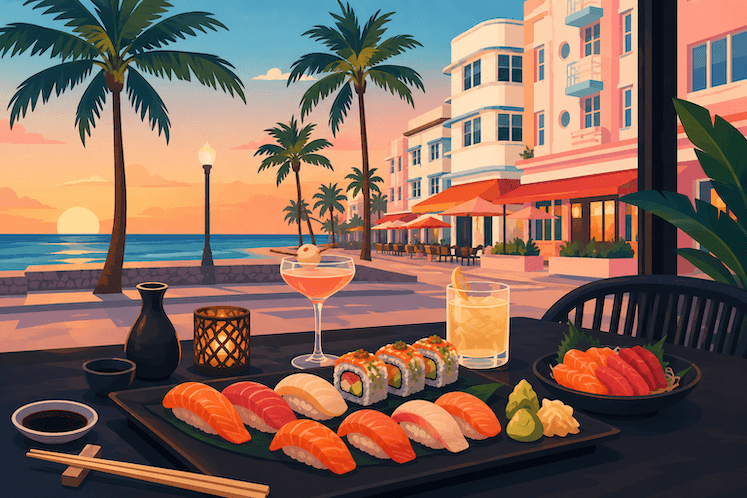
One of the advantages of dining at a sushi speakeasy in South Beach is that the cocktail and sake programs are built alongside the food menu. That makes pairings feel intentional rather than accidental.
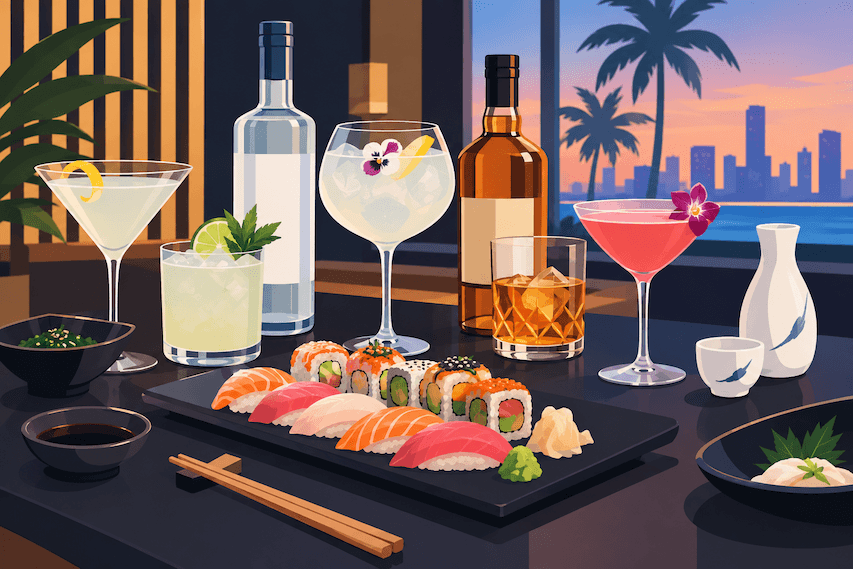
Nigiri pairs naturally with sake, especially a clean ginjo or daiginjo. The floral notes of a premium sake like the Floral Premium Ginjo on the menu complement the subtle seasoning of the rice without overwhelming the fish. For a cocktail pairing, the Lychee Orchid is light enough to work alongside nigiri without competing for attention.
Sashimi, because it has no rice, can handle more assertive pairings. The Japanese Dragon cocktail – made with Japanese whisky, dragon fruit, ginger syrup, and lime – has a smoky, bold profile that stands up to the richness of hamachi or salmon sashimi. If you prefer sake, the House Dry Junmai served chilled cleans the palate between slices.
The cocktail pairing guide on this blog goes deeper into specific combinations, but the general rule is simple: lighter fish calls for lighter drinks, and richer cuts can handle spirit-forward cocktails.
Why Both Deserve a Place on Your Table
Nigiri and sashimi are not competing options. They serve different purposes, and a well-ordered meal at a Japanese speakeasy in South Beach benefits from both. Start with sashimi to wake up the palate. Move into nigiri for the composed, hand-crafted bites. Then finish with rolls or a chef special to close the table.
The key is knowing what each style offers and ordering with intention. When the fish is fresh, the rice is warm, and the cocktail is built to match the moment, the difference between nigiri and sashimi stops being a question and becomes part of the experience.
Make a reservation at Tokyo Sushi Speakeasy and see the difference for yourself.