The best sushi meals never start with sushi. They start with a warm bowl, a crisp bite, a moment that tells your table the night is about to move at a different pace. At Tokyo Sushi Speakeasy, small plates and starters are where the ritual begins — precision bites that set the tone for everything that follows.
These are not throwaway appetizers padding out a menu. Each one is built with intention, from truffled edamame dusted in smoked salt to hand-folded gyoza served with sesame peanut ponzu. They warm up your palate, ease you into the room, and give the kitchen a chance to show its hand before the mains arrive.
Here is how our starters work, why they matter, and how to build the opening act of your evening in South Beach.
Why Starters Set the Tone for the Whole Night
There is a reason every great meal has a rhythm. You do not sprint into the richest plate first. You arrive, you settle, and the first few bites decide the mood.
Starters do the heavy lifting here. They wake up your palate with contrast — salt, acid, crunch, umami — so the nigiri and rolls that follow land with more clarity. A cold, clean bite of edamame primes you differently than diving straight into a 24K gold-topped signature roll.
They also pace the table. Small plates are meant to be shared, passed, and lingered over. That shared energy is exactly what turns dinner into an experience, especially inside a room built for date nights and after-dark celebrations.
If you are new to ordering here, starters are also the safest, smartest place to begin. They give you a low-stakes way to read the kitchen before you commit to the bigger, bolder plates.
The Small Plates & Starters Menu, Broken Down
Every item on our starter menu earns its place. Some lean traditional, some lean playful, and a few bridge both worlds. Here is what each one brings to the table and how to think about ordering it.
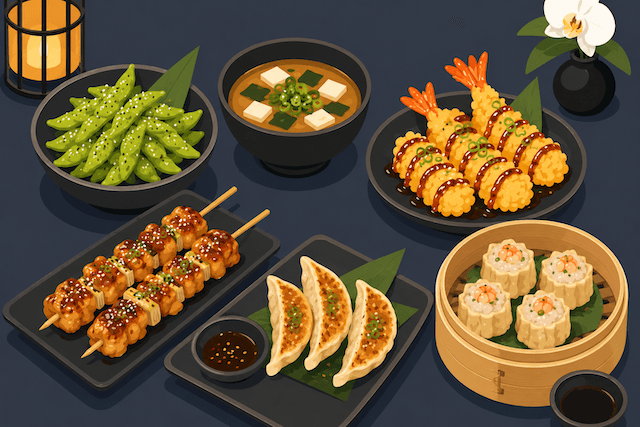
Truffled Edamame — $9
Steamed soybeans finished with smoked truffle salt. This is the classic starter, elevated just enough to feel like it belongs in a speakeasy.
The smoked truffle salt adds a savory depth you do not expect from edamame. It is warm, salty, and impossible to stop reaching for. Order it early and let it sit at the center of the table while the rest of your night takes shape.
It also pairs cleanly with a crisp cocktail or a chilled sake pour, which makes it the natural first move for the whole group.
Miso Soup — $10
Traditional Japanese miso with wakame, tofu, and scallions. Comfort in a bowl, and a genuine palate reset between courses.
Miso does something subtle but important — it warms and softens the palate so the next bite of fish reads brighter and cleaner. The wakame adds a gentle brininess, the tofu adds body, and the scallions keep it fresh.
If you are building a slower, more considered meal, start with miso. It grounds the table before the richer plates arrive.
Super Crunch Shrimp — $12
Crispy battered shrimp served with house eel sauce. This is the crowd-pleaser, the plate that disappears fastest, the one you order a second round of without discussion.
The batter delivers real crunch, and the house eel sauce brings a sweet, glossy finish that balances the salt. It is indulgent without being heavy, which makes it a perfect bridge into the sushi that follows.
Super Crunch Shrimp is also the plate to lead with if your table skews toward big flavors and bolder textures rather than delicate, fish-forward bites.
Chicken Yakitori — $12
Two skewers of grilled chicken glazed with teriyaki, scallions, and sesame seeds. Smoke, char, and a glaze that clings to every bite.
Yakitori brings a grilled, savory contrast to a menu that leans raw and cool. That contrast is exactly why it belongs on the table — it keeps the palate interested and gives non-sushi eaters something familiar and satisfying.
The teriyaki glaze walks the line between sweet and savory, and the sesame finish adds a nutty top note. It is one of the most approachable starters we serve.
Gyoza — $11
Three Japanese dumplings, pork or vegetable, served with sesame peanut ponzu. Hand-folded, pan-seared, and built for dipping.
The pork version is rich and juicy; the vegetable version is lighter and cleaner. Either way, the sesame peanut ponzu is the star — nutty, tangy, and layered enough to make you want to drag every bite through it.
Gyoza is the ultimate shareable starter. Three pieces per order means it plays best when you order a few plates for the table and pass them around.
Ebi Shumai — $12
Five steamed shrimp dumplings served with ponzu sauce. Delicate, clean, and a little more refined than the fried options.
Where the Super Crunch Shrimp is all crunch, Ebi Shumai is all softness — steamed, tender, and mild. The ponzu adds a citrus-forward brightness that keeps each bite light.
This is the starter for anyone who wants to stay closer to the traditional Edomae spirit, which is the same precision and restraint that defines our approach to sushi.
How to Build the Perfect Starter Lineup
The trick with small plates is balance. You want contrast across temperature, texture, and flavor so no single note dominates before the mains arrive.
Here is a simple framework that works almost every time.
Start with one warm, one cold
Pair Miso Soup or Truffled Edamame with something grilled or fried. That temperature contrast keeps the table dynamic and gives everyone a range of first bites to reach for.
Warm plates comfort. Cold and crisp plates energize. Together they open the meal without overwhelming your palate.
Add one crunch, one soft
Super Crunch Shrimp brings the crunch. Ebi Shumai or Gyoza brings the soft, tender counterpoint. That textural push-and-pull is what makes a starter spread feel considered instead of random.
If your group loves bold, indulgent bites, lean into the fried side. If they prefer clean and delicate, lead with the steamed dumplings and edamame.
Match the size of the table
Two people can happily split two or three starters. A larger group should order across the whole menu so everyone gets a taste of both traditional and playful.
For bigger celebrations, starters double as a natural icebreaker while everyone settles in. That is part of why they work so well when you are planning a birthday dinner on Miami Beach — they keep the energy up before the main event.
Pairing Starters with Cocktails and Sake
Starters and drinks are a two-way conversation. The right pour sharpens the food; the right food softens the drink.
Cocktails for the fried and glazed plates
Super Crunch Shrimp and Chicken Yakitori carry sweet, savory glazes that love a citrus-led or slightly smoky cocktail. The acidity cuts the richness and keeps each bite feeling fresh.
Our Lychee Martini, with its floral and tart profile, is a reliable match for almost anything fried. If you want to go deeper on drink pairings, our guide to the best cocktails to pair with sushi walks through the logic behind each match.
Sake for the clean and steamed plates
Ebi Shumai, Truffled Edamame, and Miso Soup pair beautifully with a crisp, dry sake. The clean profile of a well-chosen pour mirrors the delicacy of steamed dumplings without competing with them.
If sake is unfamiliar territory, start with our beginner-friendly introduction to sake before your visit. It makes the ordering process far more confident once you are seated.
Small Plates as the Opening of a Late-Night Ritual
South Beach runs on a different clock, and so do we. Starters are how the late-night ritual begins here — a first round that eases you into the room before the night finds its full rhythm.
The moody lighting, the sculpted cocktails, the low hum of a room that moves on its own frequency — starters are the on-ramp to all of it. You do not rush them. You order a few, you share, and you let the evening build.
That slow, deliberate pacing is a big part of why guests keep returning for late-night sushi in South Beach. The food is only half the story. The rhythm is the rest.
Common Questions About Our Starters
Which starter should a first-timer order?
Truffled Edamame and Super Crunch Shrimp are the easiest entry points. One is clean and salty, the other is rich and crispy, and together they show off the range of the kitchen without any risk.
From there, add Gyoza if you want something warm and shareable, or Ebi Shumai if you want to stay closer to tradition.
Are there vegetarian starter options?
Yes. Truffled Edamame, Miso Soup, and the vegetable version of our Gyoza are all vegetarian-friendly. That combination makes a satisfying, meat-free opening spread on its own.
How many starters should I order?
A good rule is one to two starters per person for a full experience, or two to three shared plates for a lighter opening before rolls and nigiri. Larger groups should order across the menu so everyone samples both fried and steamed styles.
Can starters be a full meal?
They can, especially if you are here for drinks and a lighter bite rather than a full sushi dinner. Stack a few small plates, add a cocktail, and you have a relaxed, low-commitment evening that still feels like an event.
Start the Ritual the Tokyo Way
Starters are not an afterthought. They are the first impression, the palate primer, and the moment your table syncs into the same rhythm.
From smoked truffle edamame to hand-folded gyoza and crisp super crunch shrimp, every small plate is built to open the night with precision and pull you into everything that comes next. When you are ready to see how the full menu unfolds, take a look at the complete Tokyo Sushi Speakeasy menu and plan your opening act.
The ritual begins with the first bite. Reserve a table and let it start with something warm, crisp, and unmistakably South Beach.