The sake list lands on the table, and four names stare back at you. Junmai. Ginjo. Daiginjo. Nigori. Everyone at the table suddenly remembers they do not know what any of them mean.
This is exactly why sake flights exist.
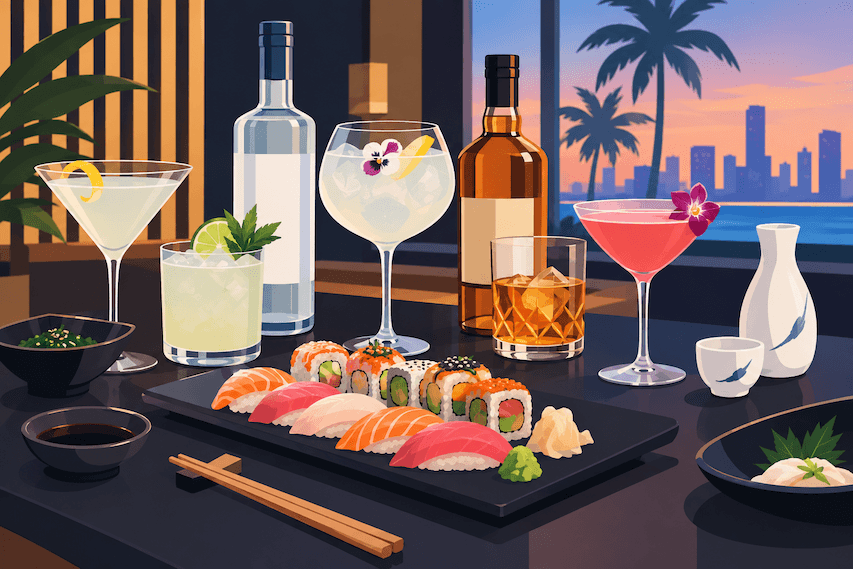
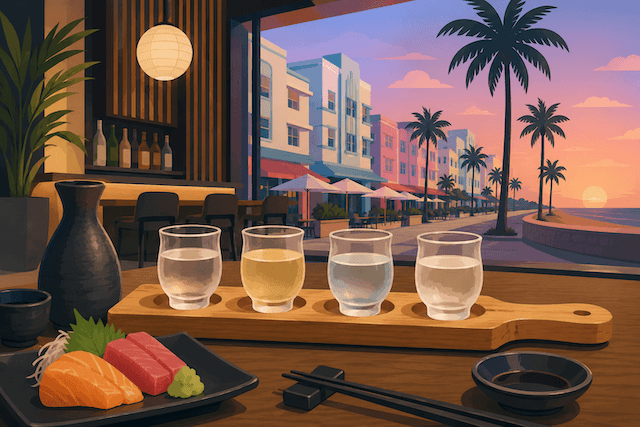
Instead of committing to one glass and hoping for the best, a flight gives you the whole lineup in small pours, side by side, ready to compare. It is the friendliest way to learn sake — and at a speakeasy in South Beach, it turns the drink order into part of the night.
Here is what a sake flight is, what the four pours on our list actually taste like, and how to order them like you have done it a hundred times.
What Is a Sake Flight, Anyway?
A sake flight is a small pour of several different sakes served together so you can taste them against each other. It is the same idea as a wine flight: a little of each, served in sequence, with enough contrast to teach you something.
Flights make sense at a sushi bar for a simple reason. Sake is brewed, not blended into one flavor — every bottle behaves differently. A flight lets you discover your taste without committing to a full glass of something you might not love.
That is also why a good sake list comes with opinions. Ours does.
The Four Sakes on the List
Our sake program is deliberately small: four pours, four different styles, each with a job to do. Learn these four and you will have the whole vocabulary you need to order sake anywhere.
House Dry: The Junmai
Clean, rice-forward, and dry to the finish — the purest expression of junmai craftsmanship, and the most honest pour on the list. It is served chilled or at room temperature, which makes it the most flexible glass you can order.
House Dry is the workhorse. It stands up to rich rolls, torched fish, and anything with sauce, and it stays easy to drink from the first course to the last. If you order nothing else, order this.
Floral Premium: The Ginjo
Delicate, slightly fruity, with a floral nose that shows up before you even sip. Floral Premium is the ginjo our kitchen points to when a plate of nigiri or sashimi lands on the counter — it is the sake made for the clean end of the menu.
It is served chilled, because heat would flatten the aromatics you are paying for. If you want to understand why ginjo is the style that converts cocktail drinkers, this is the glass to start with.
Ultra-Premium: The Daiginjo
Silky, complex, and refined — the finest pour on the list, and the one reserved for moments that deserve it. Ultra-Premium drinks like the culmination it is, with a long finish that rewards slow sipping.
It is served cold and priced accordingly, so treat it as the celebration bottle: anniversaries, birthdays, the final course of a big night. Order it when you want the table to notice.
Cloudy Sweet: The Nigori
Unfiltered, rich, and slightly sweet, with a creamy texture that makes it the perfect close to the meal. Cloudy Sweet is the wildcard — and the most fun pour on the list.
It is served cold, always, and it does two jobs better than anything else: it cools the burn of a spicy roll, and it plays the role of dessert in a glass. Order it last. You will understand why.
For the deeper breakdown of how these styles differ — the polishing, the flavor profiles, the occasions each one suits — our sake comparison guide walks through junmai, ginjo, daiginjo, and nigori in detail.
How to Taste Through a Flight
A flight only teaches you something if you taste it in the right order. Here is the simple version.
Start dry and work toward sweet. That means House Dry first, then Floral Premium, then Ultra-Premium, with Cloudy Sweet last — the creamy finish is a hard act to follow, so let it close the show.
Take a look before you sip. The clearest giveaway is the Cloudy Sweet, which shows its unfiltered character the moment it hits the glass. Swirl it gently, bring it close, and get the nose — floral for the ginjo, rice-forward for the junmai. Then take a small sip and let it sit on the palate for a second before swallowing.
Tasting side by side is the whole point. The contrast between the dry junmai and the sweet nigori will teach you more in one flight than a month of reading about sake, and if you are new to it entirely, the beginner’s guide to sake covers the foundations before you go deeper.
Which Sake Goes With Your Food
The four pours map cleanly onto the menu, which is the point of a curated list.
House Dry is the table sake — it holds its own against signature rolls, bao, and anything with sauce or spice. Floral Premium is the nigiri and sashimi pour, delicate enough to let the fish stay the hero. Ultra-Premium belongs with the cleanest, most refined pieces on the menu, the ones built on Edomae-style restraint. And Cloudy Sweet shows up at the end — with a spicy roll, or in place of dessert.
When in doubt, tell your server what you are eating and let them pour. A good sake list comes with recommendations, and ours does.
The Flight Experience in South Beach
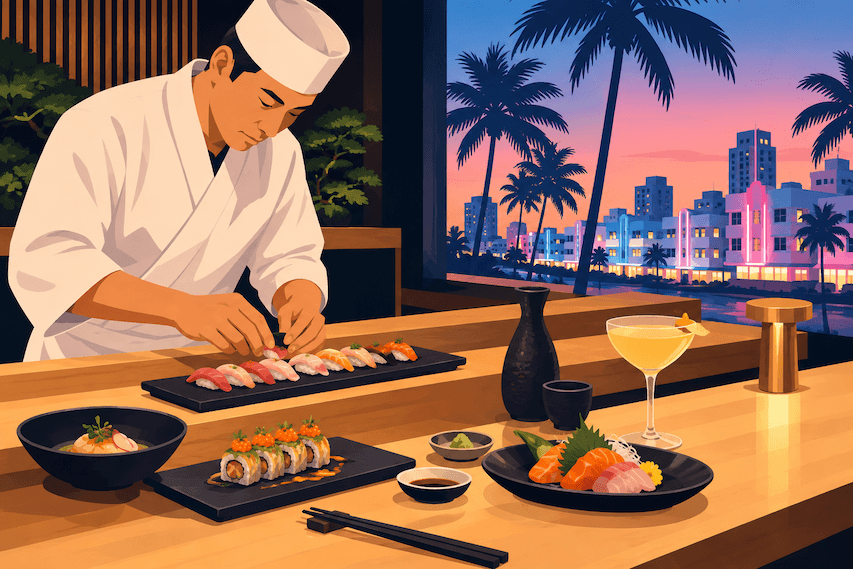
A sake flight fits a speakeasy night better than almost anything else on the menu. It is built for lingering — small pours, shared comparisons, a conversation piece on the table — and it keeps the evening moving without weighing anyone down.
Tokyo Sushi Speakeasy pours these four sakes plus bottles behind an unmarked door at 1000 Collins Ave in South Beach, open Wednesday through Monday from 5 PM to midnight. The room does its part: dark lacquer, low golden light, and a bar that makes the late-night scene feel like it was designed around the glass in your hand.
Ask for a flight when you sit down, work through the four pours, and let the night decide where it goes from there. Reservations are recommended, so book your table or call (786) 728-9318.
Frequently Asked Questions
How many sakes come in a sake flight?
Flights sample the pours in small glasses so you can taste them side by side. The lineup varies with the list, so ask your server what is pouring tonight and let them build the order for you.
Is sake served hot at Tokyo Sushi Speakeasy?
Not on the current list. Each pour is served chilled or at room temperature, the way the style drinks best. The House Dry junmai is the only one that flexes — chilled or room temp, depending on the night.
Can I order a whole bottle?
Yes. The list includes flights and bottles, so when one glass is not enough, a bottle is the move for the table — especially with the Ultra-Premium daiginjo on a night worth marking.
What is the best sake for a first-timer?
The Floral Premium ginjo. Its delicate fruit and floral nose are the friendliest introduction on the list, and it pairs with nigiri and sashimi straight out of the gate.
Does sake go with dessert?
The Cloudy Sweet nigori does that job. Creamy and gently sweet, it is dessert in a glass — the perfect close to the meal, with or without the matcha cheesecake.
The Final Word
Sake flights exist for people who want to learn without the guesswork. Four small pours, one night, and by the end you will know exactly which style is yours.
Start with the dry junmai. End with the creamy nigori. Somewhere in between, you will find out why sake is the most interesting drink on the menu.
Reserve A Table