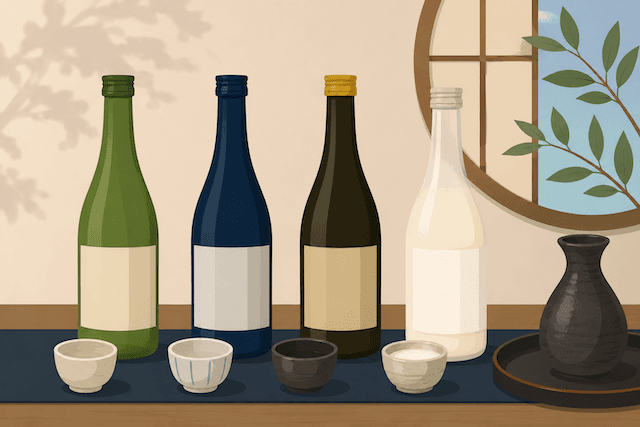
You're two seats deep at the sushi counter, the list lands in front of you, and every bottle has a name you can't pronounce. Junmai. Ginjo. Daiginjo. Nigori. Which one is the best sake?
Here's the honest answer: the best sake depends on what you're eating and what kind of night you're having. A delicate daiginjo behaves completely differently next to fatty tuna than a warm junmai does on a rainy night. Once you understand the four main styles, ordering stops being a gamble and starts being part of the ritual.
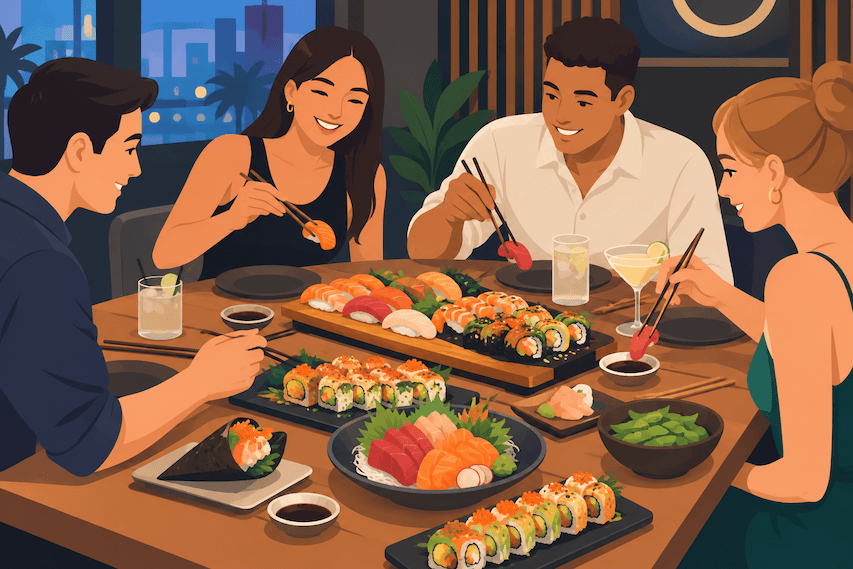
This guide compares the major sake categories, what each one actually tastes like, and which to order depending on your plans — whether that's a quiet date night or a long table of friends working through a round of signature rolls.
First, What Actually Separates One Sake From Another
Sake is brewed from four ingredients: rice, water, yeast, and koji (a mold that converts rice starch to sugar). Two things drive most of the differences you'll taste.
How much the rice is polished. Before brewing, the outer layer of each rice grain is milled away. The more that's polished off, the cleaner and more aromatic the sake tends to be. Highly polished sake is lighter and more fragrant; less polished sake keeps more of the rice's earthy, savory character.
Whether alcohol is added. "Junmai" on a label means pure rice — nothing but the four core ingredients. Sake without the junmai designation has a small amount of distilled alcohol added, which can lift aromas and lighten the body. Neither is better; they're different tools.
That's most of the vocabulary you need. Now the comparison.
Junmai: The Savory Workhorse
Junmai is pure rice sake with a fuller body and more umami — the savory depth you also taste in soy sauce, mushrooms, and aged fish.
Tastes like: Rich, slightly earthy, sometimes a touch of acidity. The most "rice-forward" style.
Serve it: Room temperature or gently warmed. Junmai is one of the few styles that often improves with warmth.
Best for: Bold flavors. Richer nigiri, anything torched or sauced, and dishes with real umami weight.
If you're ordering a spread of signature rolls with sauces, spice, and texture, junmai is the style that won't get steamrolled. It stands up to the meal instead of disappearing behind it.
Order junmai when: it's a group dinner, the table is sharing everything, and you want one bottle that works across the whole spread.
Ginjo: The Aromatic Middle Ground
Ginjo sake is made from rice polished to at least 60% of its original size and brewed slowly at cold temperatures. That extra care produces the style's signature: aroma.
Tastes like: Lighter than junmai, with fruit and floral notes — think melon, apple, banana — that show up on the nose before you sip.
Serve it: Chilled. Heat flattens the aromatics that make ginjo worth ordering.
Best for: Balance. Delicate enough for sashimi, expressive enough to be interesting on its own.
Ginjo is the answer to "I don't know much about sake but I want something good." It's the style most likely to convert a cocktail drinker, and it flatters almost everything on a sushi menu.
Order ginjo when: it's a date and you want a bottle that's easy to love, easy to share, and gives you something to talk about.
Daiginjo: The Showpiece
Daiginjo is the top of the polishing ladder — rice milled to at least 50%, often far more. It's the most labor-intensive style to brew, and it drinks like it.
Tastes like: Silky, refined, intensely aromatic. Clean fruit, subtle sweetness, a long elegant finish.
Serve it: Well chilled, ideally in a wine glass or wide-mouthed cup so the aroma has room.
Best for: The delicate end of the menu. Pristine white fish, lean cuts, classic Edomae-style nigiri where the fish itself is the point.
Daiginjo is what you order when the occasion deserves it. It's also typically the most expensive style on any list — the polishing alone throws away half the rice — so treat it as the celebration bottle, not the session bottle.
Order daiginjo when: it's a birthday, an anniversary, or the kind of night you'll still be talking about next month. If that's the plan, it's worth booking the table ahead of time so the bottle isn't the only thing that's secured.
Nigori: The Cloudy Wildcard
Nigori is coarsely filtered, so fine rice particles stay suspended in the bottle. That's the cloud you see — and it changes everything about how it drinks.
Tastes like: Creamy, gently sweet, almost milkshake-textured compared to the other styles. Shake or swirl before pouring.
Serve it: Cold, always.
Best for: Spice and dessert. Nigori's sweetness cools heat the way nothing else on the list does.
Nigori divides people. Some find it too sweet next to raw fish; others won't order anything else once they've tried it with a spicy roll. It's the least traditional pairing for Edomae sushi and the most fun pairing for the loud end of the menu.
Order nigori when: the table went heavy on spicy rolls, or you want one more pour after the meal instead of dessert.
The Quick Comparison
StyleBodyAromaServeOrder it forJunmaiFull, savorySubtleWarm or room tempRich rolls, group dinnersGinjoLight-mediumFruity, floralChilledDate nights, first-timersDaiginjoSilky, refinedIntense, elegantWell chilledCelebrations, delicate nigiriNigoriCreamy, sweetSoft, rice-forwardColdSpicy rolls, after-dinner
Warm or Cold? It Depends on the Bottle, Not the Season
A common myth: good sake is always served cold, and warm sake is a cover-up. Not quite.
Premium aromatic styles — ginjo and daiginjo — genuinely are best chilled, because heat burns off the delicate aromas you're paying for. But a solid junmai served gently warm is a legitimate, centuries-old pleasure, and warmth actually amplifies its savory character.
The rule of thumb: the more polished and aromatic the sake, the colder you serve it. The more rice-forward and savory, the more it can handle warmth. When in doubt, ask whoever's pouring — a good sake list comes with opinions.
So Which One Is the Best Sake?
If you take one thing from this comparison:
Sharing a big spread with friends? Junmai.
First sake, or a date you want to impress? Ginjo.
Marking an occasion? Daiginjo.
Chasing spice or skipping dessert? Nigori.
There's no single best sake — but there's absolutely a best sake for the fish in front of you and the night you're planning. That's the real skill: matching the pour to the moment.
Taste the Difference After Dark
Reading about sake only gets you so far. The styles make sense the moment you taste a chilled ginjo next to a warm junmai with the same piece of nigiri between them.
That side-by-side is exactly the kind of ritual worth building a night around. Tokyo Sushi Speakeasy pours sake alongside premium Edomae-style sushi and Japanese craft cocktails behind an unmarked door in South Beach — you can view the full menu to see what's on the list, or reserve a table on Collins Ave and let the comparison happen glass by glass.
Start with the ginjo. See where the night takes you.