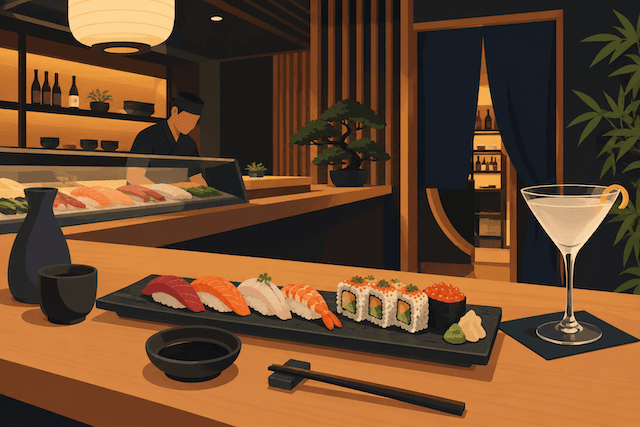
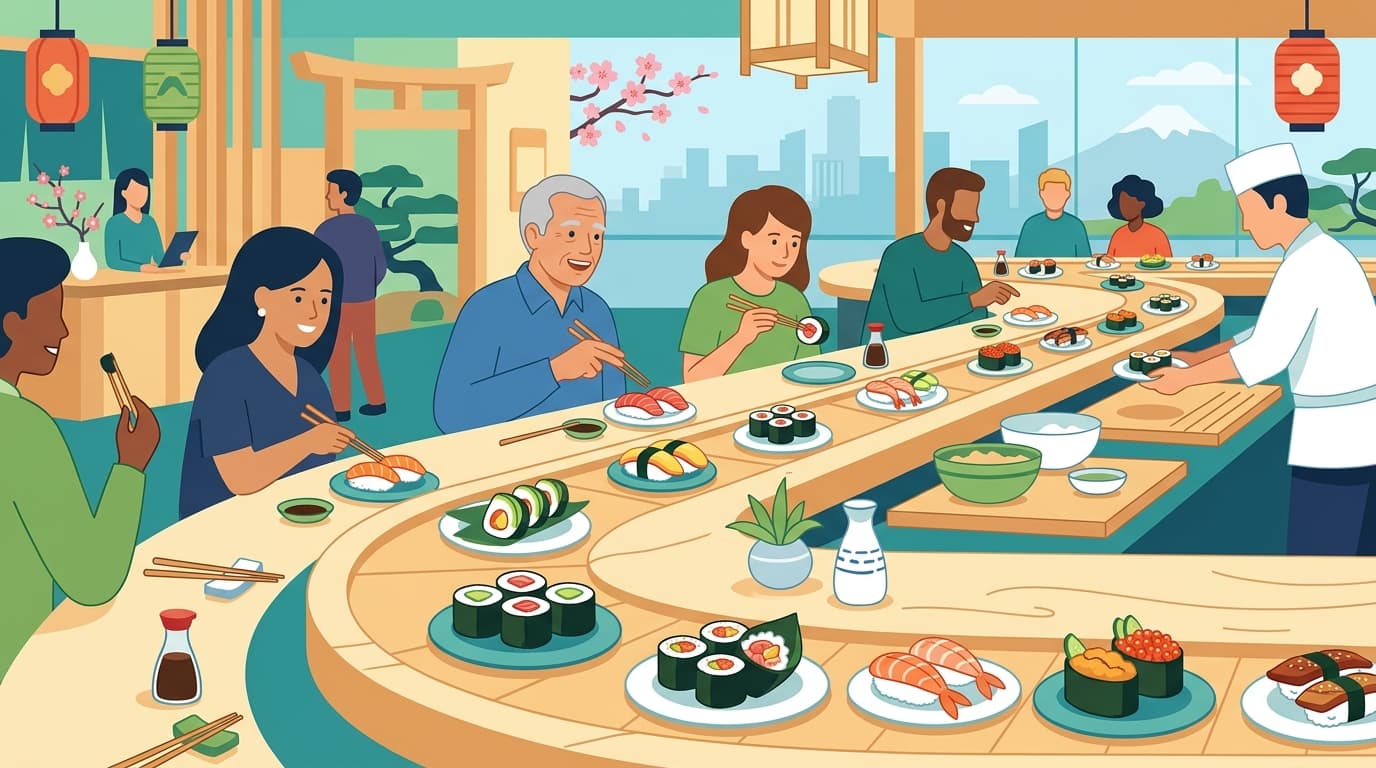
Whether you’re stepping into Tokyo Sushi Speakeasy for the first time or you’ve been ordering sushi for years, knowing your sushi types changes the entire experience. This guide breaks down every major style—nigiri, maki, sashimi, temaki, and more—so you can navigate any menu with confidence and order exactly what you’ll love.
What Are the Main Types of Sushi?
Sushi falls into two primary categories: nigiri (hand-pressed rice topped with fish) and maki (rice and fillings rolled in seaweed). Everything else—temaki, gunkan, chirashi, uramaki—branches from these core styles.
Nigiri: The Purest Form of Sushi
Nigiri is a small, hand-pressed mound of vinegared rice topped with a single slice of fish or seafood, often with a touch of wasabi between them. It’s the most traditional and revered style in the sushi world, designed to showcase the quality and flavor of the topping.
What makes nigiri special:
Hand-formed rice with precise pressure for the right texture
Single slice of fish draped over the rice (tuna, salmon, yellowtail, eel, etc.)
Minimal ingredients—lets the fish speak for itself
Typically eaten in one bite
Often served at omakase counters and high-end sushi bars
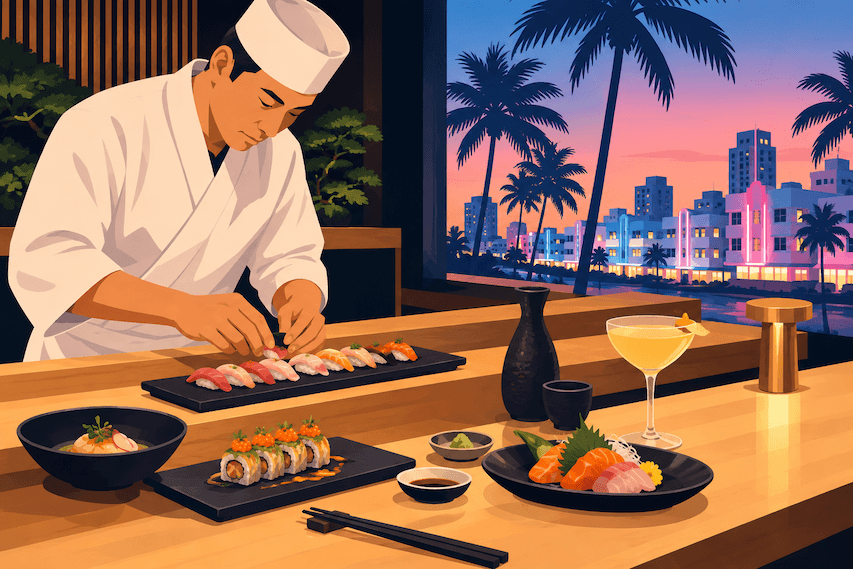
At Tokyo Sushi Speakeasy, nigiri-style presentations appear throughout the menu, especially in signature creations that balance Edomae technique with modern flair. If you’re planning a romantic dinner in Miami, nigiri offers an elegant, intimate way to share premium cuts.
Maki: The Classic Sushi Roll
Maki (makizushi) is sushi rolled in nori seaweed with vinegared rice and fillings inside, then sliced into bite-sized rounds. This is the style most people picture when they think “sushi roll.”
Key maki variations:
Hosomaki: Thin rolls with a single filling (cucumber, tuna, or salmon)
Futomaki: Thick rolls packed with multiple ingredients
Uramaki: Inside-out rolls with rice on the outside, often topped with sesame seeds, roe, or sauces
Maki rolls dominate Western sushi menus and work perfectly for groups, celebrations, or anyone who prefers layered flavors in every bite. For birthday dinners in Miami Beach, maki-style signature rolls like the Tokyo Gold Roll or South Beach Roll bring both drama and shareability to the table.
Sashimi: Not Technically Sushi (But Always on the Menu)
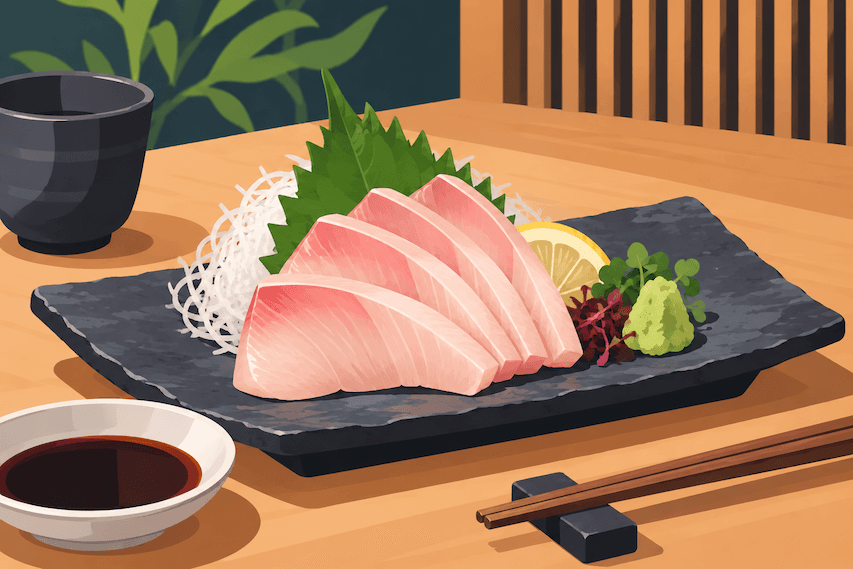
Sashimi is thinly sliced raw fish or seafood served without rice, which technically makes it not sushi—but you’ll always find it alongside sushi on Japanese menus. It’s all about the purity of the fish itself.
Why order sashimi:
No rice means you taste the fish directly
Ideal for low-carb or keto diners
Highlights the chef’s sourcing and knife skills
Often served as an appetizer or part of a larger omakase progression
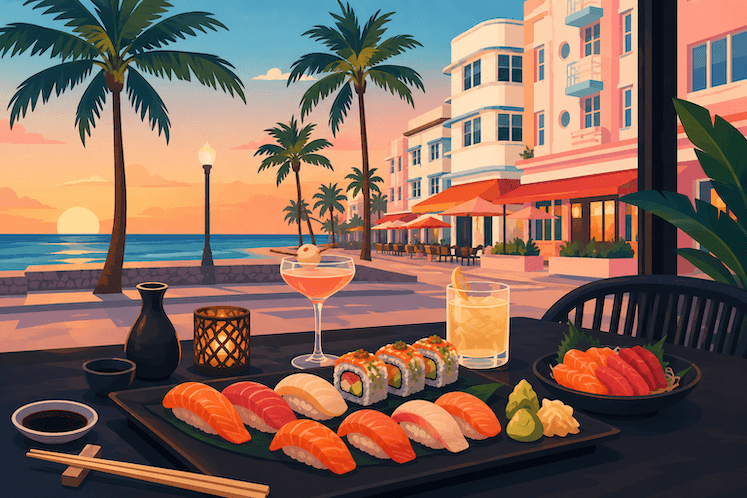
If you’re exploring fresh food Miami Beach options, sashimi is a great way to gauge a restaurant’s commitment to quality seafood.
What Are the Less Common Sushi Styles You Should Know?
Beyond nigiri and maki, several specialized styles add variety and texture to any sushi experience.
Temaki: Hand-Rolled Sushi Cones
Temaki is a cone-shaped hand roll made with nori on the outside, filled with rice, fish, and vegetables, and meant to be eaten immediately with your hands. It’s casual, fun, and interactive—perfect for groups.
When to order temaki:
You want something less formal than nigiri
Sharing with friends or a date
Craving a mix of textures in one bite
Looking for a hands-on dining moment
Gunkan: Battleship Sushi for Loose Toppings
Gunkan-maki is oval-shaped sushi wrapped with a strip of nori seaweed to create a “boat” that holds loose or soft toppings like ikura (salmon roe), uni (sea urchin), or chopped scallops. It’s designed to keep delicate ingredients from falling off.
Gunkan highlights:
Nori forms a wall around the rice
Toppings sit on top, contained by the seaweed
Common choices: salmon roe, sea urchin, corn mayo, spicy tuna
Signature rolls at Tokyo Sushi Speakeasy often borrow from gunkan’s logic—topping rolls with ikura, caviar, or crispy elements that need structure to stay in place.
Chirashi: The Sushi Bowl
Chirashi (chirashizushi) is a bowl of vinegared rice topped with an assortment of sashimi, vegetables, and garnishes—essentially a deconstructed sushi platter. It’s colorful, generous, and great for sharing.
Why chirashi works:
Variety in one bowl—try multiple fish types at once
Visually stunning presentation
Less formal than omakase, more substantial than appetizers
Ideal for lunch or a lighter dinner option
Inari: Sweet Tofu Pouch Sushi
Inari-zushi is sushi rice stuffed into seasoned, sweetened tofu pouches (aburaage). It’s vegetarian-friendly, slightly sweet, and often overlooked—but a beloved staple in Japan.
Inari perks:
No raw fish—great for cautious eaters or vegetarians
Sweet-savory flavor profile
Portable and kid-friendly
Often served as part of bento boxes
Nigiri vs. Sashimi vs. Maki: What’s the Real Difference?
The confusion between these three is common, but the distinction is simple once you know what to look for.
Type | Rice? | Nori (Seaweed)? | Raw Fish? | Format |
|---|---|---|---|---|
Nigiri | Yes (pressed mound) | No | Usually | Hand-pressed oval |
Sashimi | No | No | Yes | Thin slices, no rice |
Maki | Yes (inside roll) | Yes (outside) | Sometimes | Rolled and sliced |
Quick rule of thumb: If it has vinegared rice, it’s sushi. If it’s just fish with no rice, it’s sashimi.
How to Order Sushi Like You Know What You’re Doing
Ordering sushi confidently comes down to knowing your preferences and asking the right questions.
Start with these moves:
Ask about daily specials—chefs often reserve their best fish for off-menu items
Mix textures and temperatures—balance raw nigiri with cooked rolls or tempura elements
Order in rounds—start light (sashimi, nigiri), then move to richer rolls
Share family-style—sushi is meant to be passed around the table
Trust the chef—if you’re unsure, ask for recommendations based on what’s freshest
For groups planning a night out in Miami, ordering a mix of nigiri, signature maki, and shareable plates keeps the energy high and the conversation flowing.
What Sushi Types Are Best for Beginners?
If you’re new to sushi, start with approachable options that ease you into raw fish and unfamiliar textures.
Beginner-friendly picks:
California roll (uramaki): Crab or imitation crab, avocado, cucumber—rice on the outside
Salmon nigiri: Mild, buttery flavor; one of the most popular entry points
Shrimp tempura roll: Cooked, crispy, and familiar
Eel (unagi) nigiri or roll: Cooked with sweet eel sauce
Vegetable rolls: Cucumber, avocado, or asparagus for no-fish options
Once you’re comfortable, branch into tuna nigiri, yellowtail, or signature rolls that blend cooked and raw elements.
Which Sushi Types Should You Try at Tokyo Sushi Speakeasy?
Tokyo Sushi Speakeasy blends traditional technique with South Beach energy, offering both classic styles and modern signature creations. Here’s how to navigate the menu:
For traditionalists:
Order nigiri to experience clean, precise cuts and seasonal fish
Try sashimi if you want pure fish flavor without rice
Sample gunkan-style toppings like ikura or caviar-topped rolls
For roll lovers:
Tokyo Gold Roll: Shrimp tempura, eel, avocado, topped with tuna, ikura, spicy mayo, eel sauce, and 24K gold leaf
Wagyu Truffle Roll: Beef tartare with chives, wagyu slices, truffle mayo, crispy garlic
South Beach Roll: Salmon, shrimp, avocado topped with crispy crab and caviar
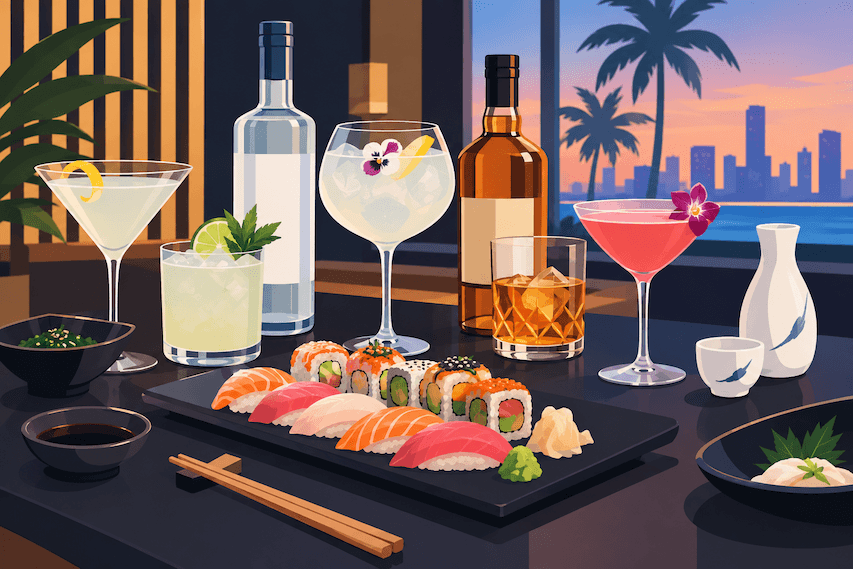
These signature rolls lean into uramaki style (rice on the outside) with dramatic toppings—perfect for celebrations, date nights, or anyone chasing that Miami moment. If you’re comparing fresh food Miami Beach options, Tokyo Sushi Speakeasy stands out for late-night omakase-style dining with cocktail pairings.
What Are the Most Popular Sushi Fish and Toppings?
Knowing common fish names helps you order with confidence and avoid guessing games.
Top nigiri and sashimi choices:
Maguro (tuna): Lean, rich, or fatty (otoro) depending on the cut
Sake (salmon): Buttery, mild, crowd-pleasing
Hamachi (yellowtail): Slightly fatty, clean flavor
Unagi (freshwater eel): Cooked, sweet-savory with eel sauce
Ebi (shrimp): Usually cooked, firm texture
Ikura (salmon roe): Pop-in-your-mouth briny bursts
Popular maki fillings:
Crab or imitation crab
Avocado
Cucumber
Spicy tuna or spicy salmon
Tempura shrimp
Cream cheese (Western-style rolls)
How Many Pieces of Sushi Should You Order Per Person?
Portion planning keeps the night balanced—enough to satisfy, not so much that you’re stuffed after two rounds.
General guidelines:
Light eaters: 8–10 pieces (2–3 nigiri + 1 roll)
Average appetites: 12–16 pieces (4–6 nigiri + 2 rolls)
Big eaters or omakase-style nights: 18–24+ pieces (mix of nigiri, sashimi, and signature rolls)
Final Thoughts: Order What You Love, Then Try Something New
Sushi is personal—there’s no wrong way to enjoy it as long as you’re having a good time. Start with what you know, then let curiosity guide you toward new fish, new styles, and new flavor combinations.
At Tokyo Sushi Speakeasy, the full ritual awaits: premium sushi, sculpted cocktails, and a room built for unforgettable after-dark plans. Whether you’re hosting a birthday dinner in Miami Beach or planning a couples’ night out, knowing your sushi types means you can order with confidence and make the most of every bite.