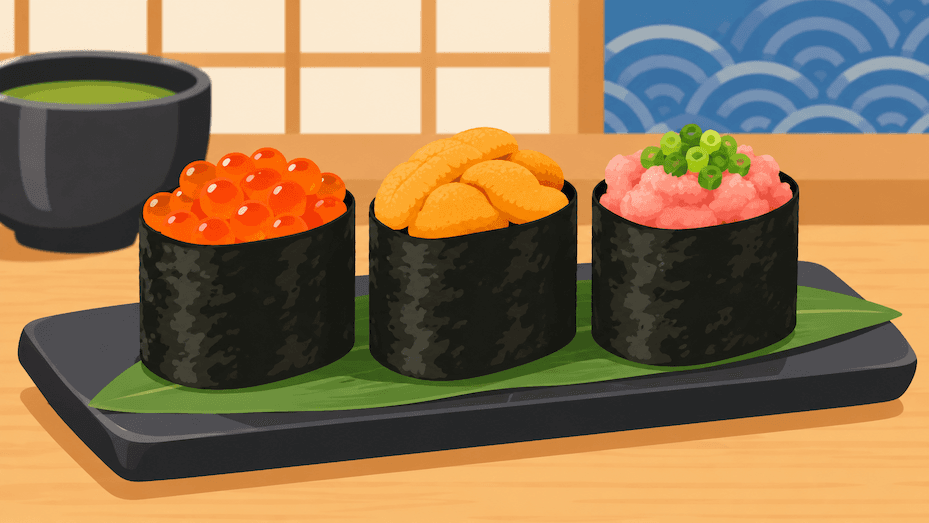
Gunkan sushi is a traditional Japanese sushi style made with a small mound of seasoned rice wrapped in a strip of nori seaweed, creating a boat-like shape that holds soft or loose toppings. Also known as gunkan-maki or battleship sushi, it is commonly served with ingredients such as salmon roe, sea urchin, chopped seafood, and other flavorful toppings.
Unlike traditional nigiri, which places a slice of fish directly over rice, gunkan sushi uses a seaweed border to keep delicate ingredients in place. Its distinctive shape makes it one of the most recognizable sushi styles for enjoying toppings that are difficult to serve on ordinary nigiri.
Whether you are exploring Japanese cuisine for the first time or looking to understand different sushi preparations, learning what makes gunkan sushi unique can help you appreciate the craftsmanship behind this Japanese favorite.
What Is Gunkan Sushi and Why Is It Called Battleship Sushi?
Gunkan sushi is a type of hand-formed sushi made with vinegared rice surrounded by a vertical strip of nori. The seaweed creates a raised edge that holds ingredients on top, giving the sushi its distinctive boat-like appearance.
The Japanese word gunkan translates to battleship. The name comes from the shape of the sushi, which resembles a small vessel carrying its toppings.
Gunkan-maki is especially useful for ingredients that are too soft, small, or loosely textured to sit securely on a traditional piece of nigiri.
Its defining characteristics include:
Hand-shaped rice: A compact mound of seasoned sushi rice forms the base.
Nori wrapping: A strip of dried seaweed surrounds the rice vertically.
Raised edges: The seaweed extends above the rice to create space for toppings.
Loose ingredients: Soft seafood, fish roe, and other delicate ingredients sit inside the seaweed border.
Compact presentation: Each piece is generally designed to be enjoyed in a single bite.
This combination of structure and presentation makes gunkan sushi different from other familiar Japanese sushi styles.
How Is Gunkan Sushi Made?
Gunkan sushi is made by shaping seasoned rice into a small oval, wrapping it with nori, and carefully placing the topping inside the seaweed border. Each step requires attention to proportion so the finished piece remains stable without overwhelming the ingredients.
Step 1: Prepare the Sushi Rice
The foundation of gunkan sushi is Japanese short-grain rice seasoned with a mixture of rice vinegar, sugar, and salt.
The rice should have enough stickiness to maintain its shape while remaining soft and tender. Too much pressure can make it dense, while insufficient shaping can cause the piece to fall apart.
Step 2: Shape the Rice
The sushi chef forms a small, oval-shaped mound of rice by hand.
Unlike some traditional nigiri preparations, gunkan rice is shaped to support a vertical seaweed wrapper and a generous topping.
Step 3: Wrap the Rice With Nori
A thin strip of nori is wrapped around the rice, creating a wall that rises above its surface.
The seaweed should fit securely around the rice without covering the top. This raised edge is what allows gunkan sushi to hold ingredients that would otherwise spill over.
Step 4: Add the Toppings
The final step is placing the selected topping inside the nori border.
Popular ingredients include salmon roe, sea urchin, chopped scallops, and other seafood preparations. The amount should complement the rice rather than overpower the piece.
What Are the Most Popular Types of Gunkan Sushi?
Gunkan sushi can feature different seafood ingredients depending on the restaurant, season, and chef’s preparation. Some varieties are valued for their rich texture, while others are appreciated for their delicate flavor or distinctive appearance.
Here are some common examples.
1. Ikura Gunkan (Salmon Roe)
Ikura gunkan is one of the most recognizable varieties of battleship sushi. It features bright orange salmon roe arranged over seasoned rice and contained within a nori wrapper.
The individual roe pearls have a delicate outer membrane that releases a burst of savory, slightly salty liquid when bitten.
What makes it distinctive:
Bright orange, visually striking appearance
Lightly briny and savory flavor
Delicate popping texture
A natural pairing with seasoned sushi rice
Ikura is a popular choice for diners who enjoy seafood with a pronounced ocean flavor.
2. Uni Gunkan (Sea Urchin)
Uni gunkan features sea urchin, a prized Japanese seafood ingredient known for its creamy consistency and rich, ocean-inspired flavor.
Its texture is soft and delicate, making the seaweed border especially useful for keeping the topping in place.
Uni is often appreciated for its:
Smooth, creamy consistency
Subtle sweetness
Rich umami character
Delicate seafood aroma
Because uni is highly perishable and varies in quality, its flavor and texture can differ depending on its origin and handling.
3. Negitoro Gunkan (Chopped Tuna and Scallions)
Negitoro gunkan combines finely chopped fatty tuna with green onions, creating a rich yet balanced sushi topping.
The tuna provides a soft, buttery texture, while the scallions introduce a fresh, slightly sharp contrast.
This combination works particularly well in gunkan sushi because chopped tuna is easier to hold within a seaweed wrapper than on a conventional nigiri base.
4. Chopped Scallop Gunkan
Scallop gunkan commonly features finely chopped or prepared scallops served over seasoned rice.
Scallops are naturally sweet and tender, making them a popular seafood option in Japanese cuisine.
Depending on the preparation, the topping may include additional seasonings or sauces that enhance its savory character.
5. Tobiko Gunkan (Flying Fish Roe)
Tobiko gunkan uses small, crunchy flying fish roe as its main topping.
Tobiko is generally smaller than salmon roe and has a firmer texture. It is often available in different colors, depending on the preparation and added ingredients.
Its characteristics include:
Small, crunchy roe pearls
Mildly salty seafood flavor
Bright and colorful presentation
A light crunch that contrasts with soft sushi rice
Tobiko is particularly appealing to diners who enjoy a combination of different textures.
What Is the Difference Between Gunkan Sushi and Nigiri?
The main difference between gunkan and nigiri is how the toppings are held in place. Nigiri uses a slice of fish or seafood placed directly over hand-shaped rice, while gunkan uses a strip of nori to create a raised border for loose toppings.
Both are traditional sushi preparations, but they serve different ingredients and textures.
Feature | Gunkan Sushi | Nigiri Sushi |
|---|---|---|
Shape | Boat-like or oval | Hand-pressed oval |
Rice | Seasoned sushi rice | Seasoned sushi rice |
Nori | Wrapped around the sides | Usually not included |
Toppings | Loose or soft ingredients | Usually a slice of fish or seafood |
Structure | Raised seaweed border | Topping rests directly on rice |
Common Ingredients | Ikura, uni, tobiko, chopped seafood | Tuna, salmon, hamachi, shrimp |
Main Purpose | Holds delicate toppings | Showcases fish and rice together |
For example, salmon roe is well suited to gunkan because the seaweed keeps the individual pearls together. A slice of salmon, on the other hand, can sit directly on top of rice as nigiri.
If you want to understand the preparation and serving style of nigiri in more detail, read our guide on how to eat nigiri sushi the right way.
What Is the Difference Between Gunkan Sushi and Maki Sushi?
Gunkan and maki are both sushi styles that use nori, but they differ in how the seaweed and fillings are arranged. Maki is rolled into a cylindrical shape and sliced into individual pieces, while gunkan is formed individually with an open top for its toppings.
Here is a simple comparison:
Feature | Gunkan Sushi | Maki Sushi |
|---|---|---|
Shape | Small boat-like piece | Round or cylindrical slice |
Seaweed | Wraps around the sides | Usually wraps around the filling |
Topping placement | Open top | Ingredients enclosed inside |
Preparation | Hand-shaped individually | Rolled using a bamboo mat or similar technique |
Common ingredients | Roe, uni, chopped seafood | Tuna, salmon, cucumber, avocado |
Eating style | Usually one bite | Usually one bite per slice |
Gunkan is designed to showcase toppings on the surface, while maki keeps its fillings inside a rolled structure.
If you want to explore more Japanese sushi preparations, our complete guide to sushi types explains the differences between nigiri, maki, temaki, sashimi, and other popular styles.
How Does Gunkan Sushi Taste?
Gunkan sushi has a combination of mildly tangy rice, the savory flavor of nori, and the distinctive taste of its topping. Its overall flavor depends heavily on the seafood or other ingredient used.
Different toppings create different eating experiences.
Gunkan Variety | Flavor Profile | Texture |
|---|---|---|
Ikura | Salty, savory, slightly briny | Delicate popping pearls |
Uni | Rich, sweet, ocean-like | Creamy and soft |
Negitoro | Savory, rich, mildly fresh | Soft and finely chopped |
Scallop | Naturally sweet and delicate | Tender |
Tobiko | Mildly salty and savory | Small, crunchy pearls |
The nori adds a subtle roasted seaweed flavor, while the seasoned rice provides a balanced foundation.
This combination allows the topping to remain the main focus without making the overall bite feel overwhelming.
How Do You Eat Gunkan Sushi Properly?
Gunkan sushi is generally eaten in one bite using your hands or chopsticks. Because the toppings sit above the rice and seaweed, handling the piece gently helps prevent ingredients from falling out.
If you are trying gunkan sushi for the first time, follow these simple tips.
Pick it up carefully. Use your fingers or chopsticks to hold the sides without squeezing the seaweed.
Keep the topping upright. Avoid tilting the piece too much, especially when it contains salmon roe or creamy seafood.
Taste it before adding sauces. Many gunkan varieties already have enough seasoning to provide a balanced flavor.
Eat it promptly. Nori can soften when exposed to moisture, so gunkan is best enjoyed soon after serving.
Enjoy the entire bite. Eating the rice, seaweed, and topping together allows you to experience their different textures and flavors.
Should You Dip Gunkan Sushi in Soy Sauce?
You can use soy sauce with gunkan sushi, but it is best to apply it sparingly. Dipping the entire piece can make the nori soggy and overwhelm the delicate topping.
A few drops applied carefully are often enough. Some varieties may not need additional soy sauce at all.
When in doubt, taste the sushi as served before adding extra seasoning.
Is Gunkan Sushi Good for Beginners?
Yes, gunkan sushi can be a good introduction to different Japanese seafood ingredients, especially for diners who want to explore something beyond conventional sushi rolls. The best starting point depends on your comfort with seafood flavors and textures.
Here are a few options to consider:
Tobiko: A good choice if you enjoy mild seafood flavors and crunchy textures.
Ikura: Suitable for people who like savory, slightly salty seafood.
Chopped scallops: A softer and naturally sweet option.
Negitoro: A richer choice for diners who enjoy tuna.
Uni may be a more adventurous option because its creamy consistency and distinctive ocean flavor can be unfamiliar to first-time diners.
You do not need to try every variety at once. Start with an ingredient you recognize and gradually explore different toppings.
Is Gunkan Sushi Healthy?
Gunkan sushi can be part of a balanced diet, but its nutritional value depends on the ingredients, portion size, and preparation. Seafood provides protein and other nutrients, while the rice contributes carbohydrates.
Some toppings also contain nutrients worth considering:
Salmon roe: Provides protein and omega-3 fatty acids.
Sea urchin: Contains protein and several micronutrients.
Scallops: Provide lean protein and minerals.
Tobiko: Provides protein and seafood-derived nutrients.
However, the sodium content can vary depending on the toppings, sauces, and seasonings used.
For a more balanced meal, consider enjoying gunkan alongside other sushi varieties, vegetables, and lighter Japanese dishes.
People with seafood allergies should always check the ingredients before ordering. Fish roe, shellfish, and other seafood toppings can trigger allergic reactions in sensitive individuals.
What Makes Gunkan Sushi Special in Japanese Cuisine?
Gunkan sushi demonstrates how traditional Japanese cooking combines practicality, presentation, and attention to texture. Its structure solves a simple culinary challenge: how to serve delicate ingredients that cannot easily sit on top of ordinary sushi rice.
Rather than changing the ingredients to make them easier to handle, chefs use nori to create a natural container.
This approach highlights several important aspects of Japanese sushi craftsmanship:
Ingredient selection: The topping remains the central feature of the piece.
Texture balance: Soft seafood, seasoned rice, and crisp seaweed work together.
Presentation: The open-top design makes the ingredients visible.
Precision: Rice proportions and seaweed placement help maintain the shape.
Freshness: Delicate seafood toppings benefit from careful preparation and handling.
Gunkan is a good example of how even a small piece of sushi can involve thoughtful technique.
Where Can You Explore Japanese Sushi in Miami Beach?
If you are interested in exploring different Japanese sushi preparations, Tokyo Sushi Speakeasy offers a modern Japanese dining experience in the heart of South Beach. Located at 1000 Collins Avenue, Miami Beach, the restaurant combines sushi, Japanese-inspired dishes, and handcrafted cocktails in a distinctive speakeasy atmosphere.
The menu features several sushi categories, including nigiri, sashimi, signature rolls, and chef specials.
For diners interested in different seafood textures and presentations, exploring the restaurant’s sushi and Japanese food menu is a good starting point.
Some signature creations also feature ingredients such as ikura and caviar, offering an opportunity to experience the visual appeal and contrasting textures associated with more elaborate sushi presentations.
You can also explore our sashimi guide to learn more about Japanese seafood cuts and how they are served.
Tokyo Sushi Speakeasy is located at:
Tokyo Sushi Speakeasy
1000 Collins Ave, Miami Beach, FL 33139
Thursday–Sunday: 5:00 PM–12:00 AM
Phone: (786) 728-9318
Reservations are recommended, particularly for weekend dining.
Frequently Asked Questions About Gunkan Sushi
What does gunkan mean in Japanese sushi?
Gunkan means battleship in Japanese. The name describes the boat-like shape created by wrapping nori seaweed around a small mound of sushi rice.
Is gunkan sushi raw?
Gunkan sushi can contain raw, cooked, or prepared ingredients depending on the topping. Ikura and uni are commonly served without cooking, while other varieties may feature cooked seafood or seasoned mixtures.
Does gunkan sushi always contain fish roe?
No. Although salmon roe and flying fish roe are popular toppings, gunkan can also contain sea urchin, chopped tuna, scallops, and other ingredients.
Is gunkan sushi the same as nigiri?
No. Nigiri consists of hand-shaped rice topped directly with fish or seafood. Gunkan uses a vertical strip of nori to create a border that holds soft or loose toppings.
Can you eat gunkan sushi with chopsticks?
Yes. Gunkan sushi can be eaten with either chopsticks or your hands. The important thing is to hold it gently so the topping stays in place.
Why is seaweed used in gunkan sushi?
Nori creates a raised border around the rice, allowing ingredients such as salmon roe and sea urchin to remain on top without spilling over the sides.
Is gunkan sushi eaten in one bite?
Yes. Most gunkan pieces are small enough to be enjoyed in one bite. This allows the rice, nori, and topping to come together in a balanced way.
What is the difference between ikura and tobiko gunkan?
Ikura gunkan uses larger salmon roe pearls with a juicy, popping texture. Tobiko gunkan uses smaller flying fish roe that generally provides a firmer, crunchier bite.
Final Thoughts: Discover the Craft Behind Gunkan Sushi
Gunkan sushi is more than just another type of Japanese sushi. Its distinctive seaweed wrapper makes it possible to enjoy delicate ingredients that would otherwise be difficult to serve on traditional nigiri.
From the popping texture of salmon roe to the creamy richness of sea urchin, each variety offers a different combination of flavor and texture.
Understanding how gunkan is prepared also provides a better appreciation of Japanese culinary craftsmanship, where presentation and technique are just as important as the ingredients themselves.
Whether you are a longtime sushi enthusiast or exploring Japanese cuisine for the first time, gunkan sushi is worth discovering. The next time you browse a Japanese restaurant menu, look beyond familiar rolls and nigiri to experience this distinctive battleship-style sushi.