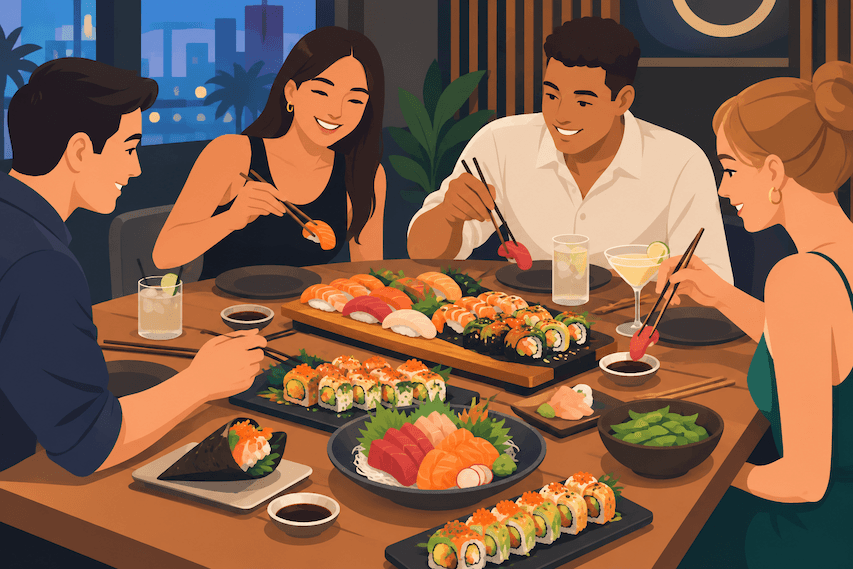
Ordering sushi for a group is easier when you combine familiar favorites, a few adventurous choices, and enough variety to accommodate everyone’s preferences. Start by asking about dietary restrictions, estimating portions based on appetite, and selecting a mix of classic rolls, nigiri, sashimi, and shareable small plates. With a little planning, you can create a meal that feels varied and satisfying without ordering too much or leaving anyone out.
Whether you’re organizing a birthday dinner, meeting friends after work, or planning a night out in Miami Beach, knowing how to order sushi for a group helps everyone enjoy the experience.
How Do You Order Sushi for a Group?
The easiest way to order sushi for a group is to plan around the number of diners, their appetites, and their food preferences. Choose a few crowd-pleasing dishes first, then add variety based on what everyone wants to try.
Follow these steps to keep the ordering process simple:
Confirm the group size. Know how many people are attending and whether anyone is arriving late.
Ask about dietary restrictions. Check for seafood allergies, vegetarian preferences, gluten restrictions, and ingredient sensitivities.
Choose familiar options. Include popular choices such as California rolls, salmon rolls, shrimp tempura rolls, or other accessible dishes available on the menu.
Add variety. Consider nigiri, sashimi, specialty rolls, and small plates for guests who want to explore different flavors.
Estimate portions. Consider whether sushi is the main meal or part of a larger dinner with appetizers and other dishes.
Coordinate the order. Designate one person to consolidate everyone’s preferences and communicate the order to the server.
This approach helps prevent duplicate orders and makes it easier to accommodate different tastes without turning dinner into a lengthy decision-making process.
How Much Sushi Should You Order Per Person?
The amount of sushi you need depends on appetite, roll size, the number of other dishes, and whether sushi is the main course. As a starting point, plan around 8–12 pieces per adult for a sushi-centered meal, then adjust for larger appetites, smaller appetites, and substantial appetizers.
These estimates are general planning guidelines rather than fixed restaurant serving standards.
Dining situation | Suggested starting point |
|---|---|
Light meal or sushi with several appetizers | 4–6 pieces per person |
Typical sushi dinner | 8–12 pieces per person |
Larger appetite or sushi-focused meal | 12–16 pieces per person |
Sushi alongside substantial shared dishes | Start with fewer pieces and order more as needed |
A standard specialty or classic roll often contains eight pieces, but serving sizes vary. Nigiri, sashimi, hand rolls, and small plates are counted differently, so consider the type of food rather than relying only on a piece count.
How Many Sushi Rolls Do You Need for Six People?
For six adults having a typical sushi dinner, you might begin with approximately six to nine standard eight-piece rolls, alongside a few small plates or other sushi selections. This is a planning example, not a guaranteed portion requirement; adjust the quantity according to appetite and the other dishes you order.
For example, a balanced starting order could include:
Two familiar classic rolls.
Two specialty rolls with different flavor profiles.
One seafood-focused roll.
One vegetable-forward roll, if available and suitable for the group.
A small plate or two to share.
You can add nigiri, sashimi, or another roll after seeing how much everyone eats. Ordering in stages can reduce waste and give the group more flexibility.
Should You Order Extra Sushi for a Large Group?
You do not necessarily need to order extra food simply because the group is large. It is more useful to account for individual appetites, the length of the meal, and whether guests will also order appetizers, desserts, or drinks.
For a large gathering, ask the restaurant whether it can accommodate a coordinated group order. If you’re planning a special event, confirm reservation arrangements and any group dining requirements in advance.
How Do You Choose Sushi When Everyone Has Different Tastes?
The best strategy is to build a varied order around familiar dishes before introducing more adventurous selections. This allows guests to enjoy foods they already like while giving curious diners opportunities to try something new.
A useful group order includes several categories rather than multiple rolls with nearly identical ingredients.
Which Sushi Options Are Best for Beginners?
Classic rolls and familiar cooked ingredients can help first-time sushi diners feel comfortable. California rolls, shrimp tempura rolls, and other approachable options may be good starting points, depending on the restaurant’s menu.
Consider including:
Classic rolls: Familiar combinations that are easy to share.
Cooked seafood options: Useful for guests who prefer not to eat raw fish.
Vegetable rolls: Options for diners who enjoy cucumber, avocado, or other vegetables.
Mild-flavored choices: Suitable for guests who prefer less spice or rich sauces.
Ask the server about the ingredients if a dish’s name does not make its preparation clear. A roll that sounds simple may include spicy mayo, cream cheese, shellfish, or other ingredients that someone in the group avoids.
How Can You Include More Adventurous Sushi Choices?
Add one or two less familiar dishes rather than making the entire order experimental. This gives experienced sushi diners something interesting to try without leaving beginners with few suitable options.
Depending on the current menu, adventurous selections might include specialty rolls, hamachi nigiri, sashimi, or combinations featuring contrasting textures and sauces.
If your group is unfamiliar with different preparations, Tokyo Sushi Speakeasy’s sushi types guide explains the differences between nigiri, maki, sashimi, hand rolls, and other sushi styles.
That knowledge can help everyone make more informed choices before the food arrives.
What Is the Best Mix of Sushi Rolls, Nigiri, and Sashimi?
A balanced group order combines different sushi formats so guests can choose between rice-based rolls, fish-topped nigiri, and sashimi served without rice. The right mix depends on what your group enjoys and how adventurous everyone wants to be.
Sushi format | What it offers | Best for |
|---|---|---|
Classic rolls | Familiar combinations of rice, fillings, and seaweed | Beginners and traditional favorites |
Signature rolls | Creative combinations of seafood, sauces, and toppings | Guests who enjoy bold flavors |
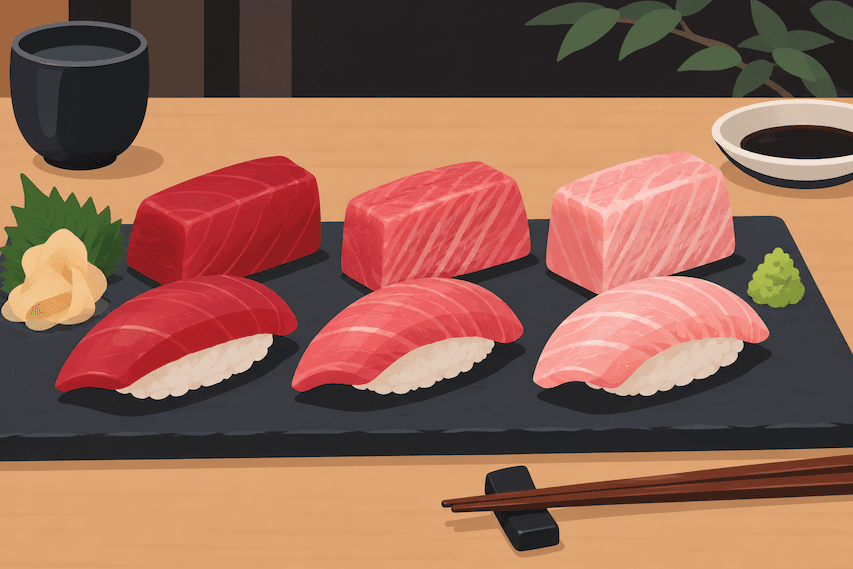
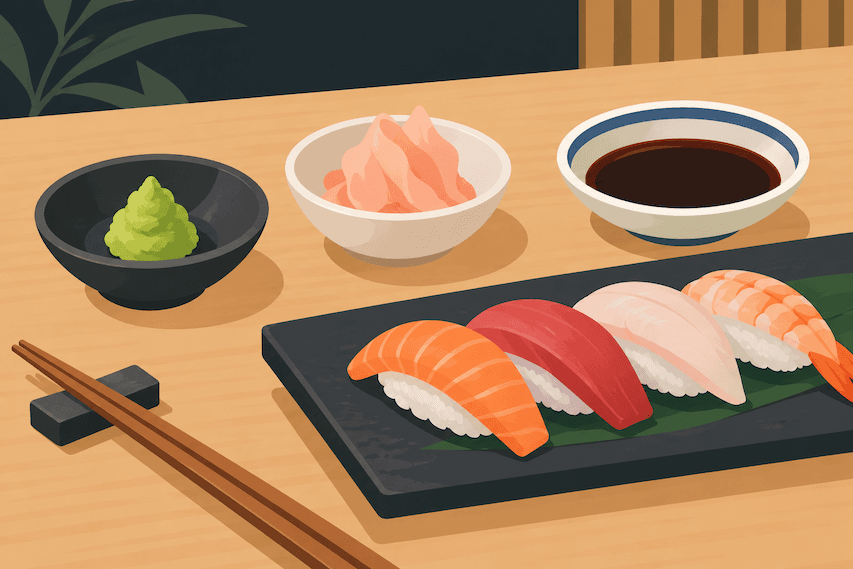
Nigiri | Fish or seafood served over a small portion of rice | Diners who want to appreciate individual ingredients |
Sashimi | Sliced fish or seafood without rice | Guests who prefer a fish-focused option |
Hand rolls | Cone-shaped seaweed with rice and fillings | Diners who want an individual serving |
Vegetable rolls | Vegetable-based fillings, depending on ingredients | Vegetarian diners when suitable options are available |
You do not need every category for every gathering. For a small group, two or three different formats may be enough. Larger groups can benefit from additional variety, especially when everyone wants to sample different dishes.
Should You Order Signature Rolls or Classic Rolls?
Order both if your group has a range of preferences. Classic rolls provide familiar flavors, while signature rolls offer creative ingredients and combinations that can make the meal more interesting.
A practical strategy is to choose a few classics first, then add specialty rolls with different flavor profiles. Avoid ordering several rolls that all contain the same main ingredients unless those are clear favorites.
You can explore Tokyo Sushi Speakeasy’s current sushi menu to review its categories and available dishes before deciding what to share.
Menu ingredients, prices, and availability can change, so confirm details with the restaurant when placing your order.
How Do You Accommodate Dietary Restrictions When Ordering Sushi?
The safest way to accommodate dietary needs is to identify restrictions before ordering and confirm ingredients and preparation methods with restaurant staff. Never assume that a dish is suitable based only on its name or appearance.
What Should You Ask About Food Allergies?
Sushi menus can include fish, shellfish, soy, sesame, wheat, eggs, and other ingredients that may be relevant to food allergies. Sauces, garnishes, marinades, and shared preparation surfaces can introduce ingredients that are not obvious from the dish description.
Before ordering, tell the server about any allergies and ask:
Does this dish contain the ingredient in question?
Are there sauces or toppings that contain allergens?
Can the kitchen accommodate the allergy safely?
Is there a risk of cross-contact during preparation?
If someone has a serious allergy, explain its severity clearly and let the restaurant confirm whether it can safely accommodate the guest. Do not rely on removing a topping after a dish has been prepared.
What Sushi Options Can Vegetarians Choose?
Vegetarians may be able to enjoy vegetable rolls, cucumber rolls, avocado rolls, edamame, and selected small plates, depending on the restaurant’s menu and preparation methods.
However, not every vegetable-based dish is automatically vegetarian. Some sauces contain fish-derived ingredients, and certain preparations may involve shared equipment or cooking surfaces.
Tokyo Sushi Speakeasy lists vegetarian options among its dietary offerings. Check the restaurant’s menu and ask your server which dishes are currently suitable for your group’s needs.
What About Guests Who Do Not Eat Raw Fish?
Include cooked options and other dishes that do not require raw fish. Shrimp tempura rolls, cooked seafood preparations, vegetable rolls, and suitable small plates can provide alternatives, depending on availability and individual dietary needs.
When placing the order, make it clear which guests prefer cooked food so the group does not end up with a table dominated by raw-fish selections.
How Should You Organize a Shared Sushi Order?
A shared sushi order works best when everyone agrees on the main preferences and one person coordinates the final selection. This reduces duplicate dishes, simplifies communication with the server, and helps the group stay within its intended budget.
Try this simple system:
Collect preferences. Ask each person for one or two must-have dishes and any foods they avoid.
Identify shared favorites. Look for common choices that several people would enjoy.
Add variety. Include different proteins, preparations, and flavor profiles.
Separate restricted dishes. Make allergies and other dietary requirements clear to the server.
Confirm the budget. Check menu prices and whether everyone is comfortable sharing the selected dishes.
Order in stages. Start with a reasonable amount and add more if the group is still hungry.
For a birthday dinner or larger celebration, coordinate the plan with the restaurant ahead of time. A little preparation can make the experience more relaxed for everyone at the table.
Should Everyone Share the Same Sushi Rolls?
No. Sharing is useful for trying several dishes, but the group should still have enough individual choices to accommodate different tastes and dietary requirements.
A good balance is to order some dishes for the center of the table and allow guests to select additional items for themselves. This works particularly well when some diners prefer traditional rolls while others want sashimi, nigiri, or more elaborate specialty creations.
How Do You Keep a Group Sushi Dinner Within Budget?
The simplest way to manage the cost is to agree on a spending range before ordering and review prices for specialty rolls, sashimi platters, drinks, and appetizers. Premium ingredients and multiple shared dishes can increase the total quickly.
Use these strategies to keep spending predictable:
Set a per-person budget. Agree on a reasonable range before looking at the menu.
Balance premium and familiar dishes. You do not need to order only the most expensive specialty rolls.
Check portion sizes. Understand how many pieces come with each roll or platter.
Order gradually. Avoid ordering more than the group can comfortably eat.
Discuss drinks separately. Cocktails, sake, and other beverages can add significantly to the bill.
Confirm shared costs. Decide in advance whether the bill will be split evenly or by individual orders.
If you’re comparing chef-guided and individual ordering, Tokyo Sushi Speakeasy’s guide to omakase versus à la carte sushi explains how the two formats differ in flexibility and control.
For groups with varied preferences or spending limits, à la carte ordering can make it easier for each person to choose what suits them.
Where Can You Order Sushi for a Group in Miami Beach?
Tokyo Sushi Speakeasy, located at 1000 Collins Avenue in Miami Beach, offers Japanese-inspired dining with classic rolls, signature rolls, nigiri, sashimi, hand rolls, small plates, cocktails, and sake. Its menu provides several categories to consider when planning a shared meal.
For a group dinner, review the menu before arriving and contact the restaurant if you have questions about reservations, larger parties, dietary requirements, or current offerings.
The restaurant lists dining hours as Thursday through Sunday, 5 PM to midnight. Confirm current hours and availability directly before your visit.
If your group is planning a full evening out, its guide to weekend dining in South Beach offers additional context for planning dinner in the neighborhood.
Frequently Asked Questions
How many sushi rolls should you order for a group of four?
For four adults, four to six standard eight-piece rolls can be a reasonable starting point for a sushi-focused dinner, depending on appetite and other dishes. Add or reduce the quantity based on portion sizes, appetizers, and whether everyone wants to try several types of sushi.
What sushi should you order for someone who has never tried it?
Start with familiar, approachable options such as California rolls, cooked shrimp rolls, or vegetable rolls, provided they meet the person’s dietary needs. You can add a specialty roll or nigiri for anyone interested in exploring new flavors.
How do you order sushi for a large party?
Confirm the number of guests, collect dietary requirements, set a budget, and coordinate the order with the restaurant. Ask whether advance arrangements are recommended for large groups, and consider ordering in stages to avoid excess food.
Is it better to order sushi individually or share plates?
Sharing makes it easier to sample different rolls and preparations, while individual ordering gives guests more control over ingredients, portions, and spending. A combination of shared favorites and individual selections often works best for mixed groups.
Can vegetarians eat at a sushi restaurant?
Many sushi restaurants offer vegetable rolls and other vegetarian-friendly dishes, but ingredients vary. Ask about sauces, broths, fish-derived ingredients, and preparation methods before ordering.
Should you order sushi before everyone arrives?
For a casual meal, it is usually better to confirm the group’s preferences before placing a large order. If timing is important, coordinate with the restaurant in advance rather than assuming food can be prepared or held until everyone arrives.
Final Thoughts
Ordering sushi for a group with different preferences comes down to balancing variety, portion sizes, dietary needs, and budget. Start with familiar favorites, add a few dishes for adventurous diners, and make sure everyone has suitable options before finalizing the order.
For the smoothest experience, communicate clearly, review the current menu, and order a reasonable amount before deciding whether to add more. With the right mix of classic rolls, signature creations, nigiri, sashimi, and small plates, a group sushi dinner can feel varied and enjoyable without becoming complicated.
At Tokyo Sushi Speakeasy in Miami Beach, reviewing the menu and coordinating your preferences ahead of time can help your group make the most of its Japanese-inspired dining experience.