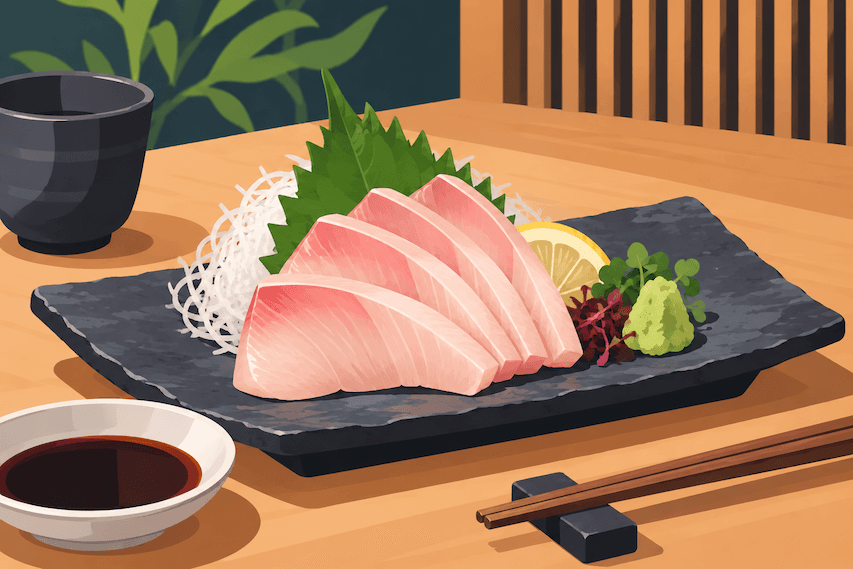
Hamachi sashimi is thinly sliced yellowtail — a prized, fatty fish from the amberjack family — served raw without rice. It is dressed minimally to let the fish speak for itself. It is one of the most consistently ordered sashimi cuts in Japanese restaurants. Its buttery texture and mild, clean flavour reward both first-time sashimi eaters and seasoned diners equally.
Key Takeaways
Hamachi refers to yellowtail (Japanese amberjack), a fish valued for its high fat content and silky texture that distinguishes it from leaner cuts like tai or hirame.
The fish is served as sashimi — sliced raw, without rice — and is typically accompanied by ponzu, yuzu kosho, or thinly sliced jalapeño in modern Japanese preparations.
Quality hamachi sashimi depends almost entirely on freshness and cut precision; the angle and thickness of each slice directly affect both texture and flavour.
Yellowtail is widely regarded as one of the more popular seafood choices in the United States, with demand driven largely by Japanese restaurant consumption — though it does not typically appear on the National Fisheries Institute’s formal top-ten list of consumed species.
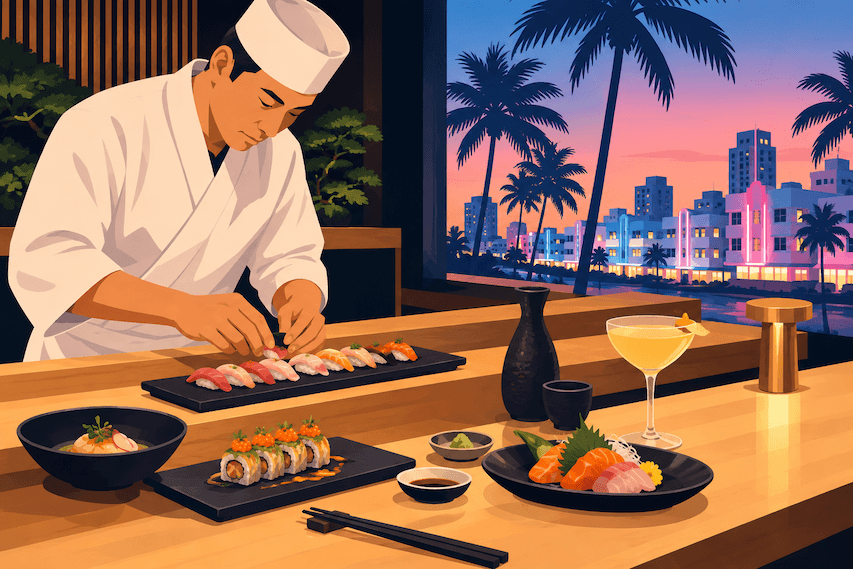
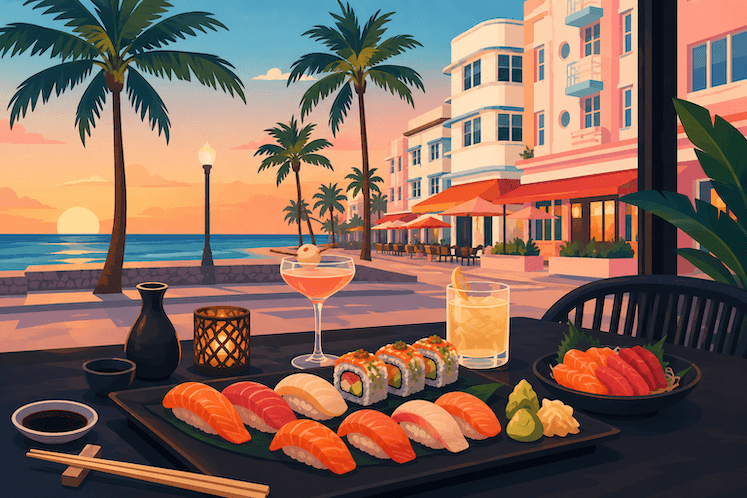
At Tokyo Sushi Speakeasy in South Beach, hamachi sashimi is plated with sharp contrast and clean texture — part of a broader sashimi programme built on Edomae discipline.
Hamachi pairs well with crisp, dry sake or citrus-forward cocktails; heavy or tannic drinks suppress the fish’s natural fat.
What Is Hamachi, Exactly?
Hamachi is the Japanese term for yellowtail amberjack (Seriola quinqueradiata), a fish found primarily in the Pacific Ocean and widely farmed off the coasts of Japan, particularly in Kagawa prefecture and other regions of western Japan. It is not the same fish as yellowfin tuna, a distinction that confuses many first-time diners who encounter both on the same menu.
The name hamachi typically refers to young yellowtail at an intermediate stage of growth. Once the fish matures further — the precise threshold varies by region and source, with some references citing length and others weight — it is reclassified as buri, a heavier, fattier fish often used in winter preparations. Both are excellent; hamachi is considered more delicate, while buri carries a deeper, more pronounced richness.
What makes hamachi great for sashimi is its fat distribution. The flesh is marbled throughout — not just at the belly. This means every slice is buttery without being overwhelming, unlike toro. This balance is why hamachi is often the fish that converts sashimi sceptics.
How Hamachi Sashimi Is Cut and Why It Matters
The way hamachi is cut is not incidental — it determines the eating experience entirely.
Hirazukuri is the most common cut used for hamachi sashimi: a straight, vertical slice pulled toward the chef at a consistent angle, producing a flat, rectangular piece that is typically around 8–10 mm thick, though exact dimensions vary by kitchen and chef preference. This cut exposes the maximum surface area of the fish, allowing soy sauce or ponzu to coat it evenly without the fish absorbing too much liquid.
Sogizukuri, an angled cut, is used when the chef wants to produce a wider, thinner slice that fans elegantly across the plate. This technique is more common with leaner fish like flounder, but skilled kitchens apply it to hamachi when the portion is being plated as a lead sashimi course.
Kaku-zukuri, a cube cut, appears in modern Japanese preparations where hamachi is presented more sculpturally — sometimes stacked, sometimes arranged with microgreens or a citrus gel. This cut is less traditional but has become common in South Beach and Miami’s contemporary Japanese dining scene.
In practice, knife sharpness matters as much as technique. A dull blade tears muscle fibres rather than slicing through them cleanly, and you can taste the difference: torn fish has a slightly grainy, uneven texture, while cleanly cut fish dissolves uniformly on the palate.
What Does Hamachi Sashimi Taste Like?
Hamachi has a mild, clean flavour with a pronounced buttery richness that distinguishes it from leaner sashimi options like hirame (flounder) or tako (octopus). The fat content sits somewhere between salmon and toro — substantial enough to feel luxurious, restrained enough that the fish’s natural sweetness still registers.
The flavour changes depending on the season. Wild hamachi caught in winter months, when the fish has been feeding heavily to prepare for colder water, carries noticeably more fat and a deeper, more complex taste. Farmed hamachi — which accounts for the majority of what arrives in American restaurants — is more consistent year-round but often slightly milder than its wild counterpart.
There is a faint oceanic note in hamachi that is distinct from salmon’s more pronounced mineral character. Paired with a thin brush of ponzu and a sliver of yuzu kosho (a condiment made from yuzu zest, chilli, and salt, which ferments together into a pungent paste), the fish’s flavour lifts considerably without being masked. Jalapeño slices, widely associated with Nobu-style preparations, add heat that cuts through the fat — a combination that has become increasingly common in Miami’s contemporary Japanese dining scene over the past decade or so.
How Is Hamachi Sashimi Different from Hamachi Nigiri?
Sashimi and nigiri use the same fish. But they deliver fundamentally different eating experiences. Understanding the distinction helps you order more deliberately.
Rice
Hamachi Sashimi: None
Hamachi Nigiri: Seasoned sushi rice (shari)
Portion Size
Hamachi Sashimi: 3–5 slices per order
Hamachi Nigiri: 2 pieces per order
Flavor Focus
Hamachi Sashimi: Fish-forward, sauce-led
Hamachi Nigiri: Fish and rice together
Best For
Hamachi Sashimi: Appreciating the fish itself
Hamachi Nigiri: Balanced, structured bite
Typical Price Range (South Beach)
Hamachi Sashimi: $22–$30 per order
Hamachi Nigiri: $10–$16 per two pieces
Dipping Sauce
Hamachi Sashimi: Ponzu, yuzu kosho, soy
Hamachi Nigiri: Light soy, wasabi
Sashimi puts the fish completely in the foreground. Without rice to buffer it, every quality variable — freshness, fat content, cut precision, seasoning — is immediately apparent. This is why serious Japanese chefs consider sashimi the truer test of a kitchen’s fish programme.
Nigiri, by contrast, introduces the interplay between fish and rice, and the way a chef seasons and forms the rice becomes as important as the fish quality itself. If you want to understand how good a kitchen’s hamachi is on its own terms, order the sashimi first. If you want the complete Edomae experience, follow with nigiri.
For a deeper look at the distinctions between these two preparations, the nigiri vs sashimi guide at Tokyo Sushi Speakeasy covers the full breakdown.
What to Order With Hamachi Sashimi
Sauces and Condiments
The default pairing for hamachi sashimi is light soy sauce with fresh wasabi — not the paste that comes pre-formed from a tube, but wasabi grated from a real root, which carries a floral, nasal heat rather than a flat burn. At quality Japanese restaurants, the difference is immediately apparent.
Ponzu — a citrus-forward soy sauce made with yuzu or sudachi — is the more interesting pairing for hamachi because the acid brightens the fish’s fat without overwhelming it. A small amount of yuzu kosho on the side allows the diner to add heat gradually.
Avoid heavy, thickened sauces on hamachi sashimi. The fish’s texture is delicate, and a sauce like eel sauce or spicy mayo — excellent on rolls — will bury the very qualities that make hamachi worth ordering as sashimi. The house sauces guide at Tokyo Sushi Speakeasy explains how each sauce is built and which dishes they’re designed for.
Drink Pairings
Hamachi’s fat content calls for drinks with either acidity or effervescence to cleanse the palate between bites.
Sake is the classic pairing. A junmai daiginjo — highly polished, light, and faintly fruity — works exceptionally well because it does not compete with the fish’s delicate sweetness. Avoid heavily umami-forward sake styles, which can make the fish taste flat. For guidance on selecting the right pour, the sake comparison guide breaks down the key styles and what they work with.
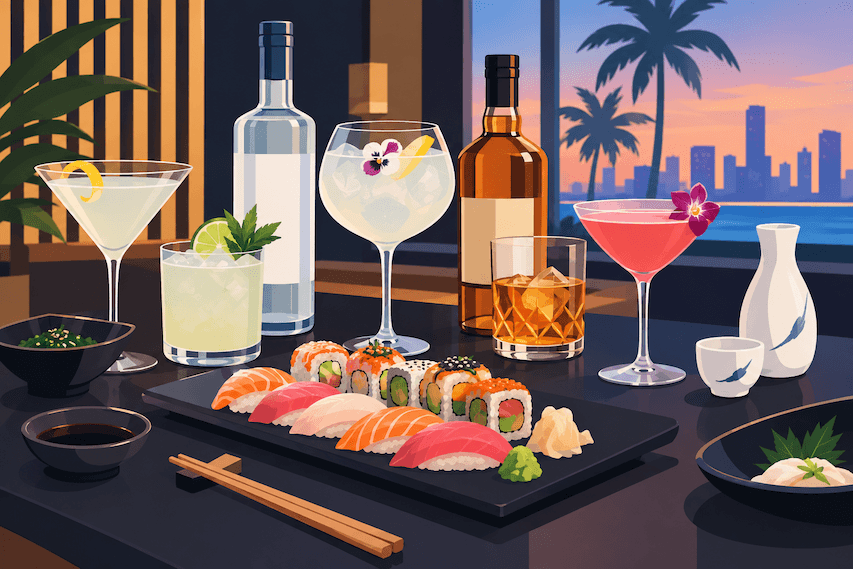
Cocktails with citrus as a lead ingredient pair well. The Lychee Martini at Tokyo Sushi Speakeasy — vodka, lychee sake, lychee juice, and fresh lime — has the right acid structure to reset the palate after a fatty bite of hamachi without overpowering it. The best cocktails to pair with sushi post covers the full logic behind these combinations.
How to Identify Quality Hamachi Sashimi Before You Take a Bite
There are four visual signals that tell you whether the hamachi in front of you is worth eating before a single piece touches your tongue.
Colour: Quality hamachi is a pale, creamy yellow-white with a faint pink blush. If the flesh looks grey, translucent to the point of opacity, or has brown edges, it has been cut too long ago or stored at inconsistent temperatures.
Sheen: Fresh hamachi has a light, natural sheen across the surface — the visual result of intact fat cells. Fish that looks dull or matt has begun to oxidise.
Clean separation: Each slice should hold its shape cleanly on the plate without separating into fibres or appearing torn at the edges. Torn edges indicate either a dull knife or fish that has been frozen and thawed improperly.
No pooling liquid: A small amount of natural moisture on the plate is normal. A pool of liquid surrounding the fish indicates that cellular breakdown has begun — a sign of age or freeze damage.
According to the U.S. Food and Drug Administration, raw fish served for sashimi consumption must be frozen to specific temperatures to eliminate parasites before it reaches the plate. At responsible establishments, this step is standard; asking your server whether the hamachi is sashimi-grade is a reasonable and worthwhile question.
Hamachi Sashimi at Tokyo Sushi Speakeasy
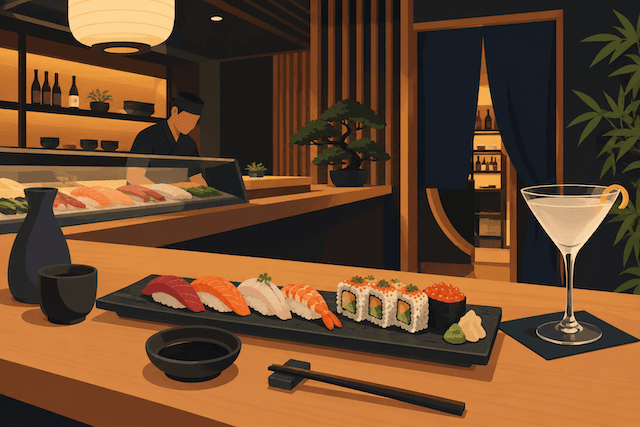
At Tokyo Sushi Speakeasy, located at 1000 Collins Ave in South Beach, the sashimi program is built on Edomae principles: clean cuts, minimal intervention, and sourcing that prioritizes texture and fat over visual novelty. Hamachi sashimi is plated with sharp contrast and fresh texture — the description on the menu is spare, which is appropriate, because the fish itself is the argument.
The restaurant’s kitchen applies hirazukuri cuts to hamachi at a consistent thickness that allows ponzu to coat the surface without the slice absorbing excess liquid before it reaches the table. The result is a piece of fish that still tastes like fish at the moment it’s eaten — not like soy sauce with fish undertones.
For first-time visitors deciding how to build their order, the first-timer’s ordering guide maps out how to move through the menu in the right sequence. Starting with sashimi before moving to rolls is the approach most consistent with how the kitchen intends the menu to be experienced.
Tokyo Sushi Speakeasy is open Thursday through Sunday from 5PM to 12AM. Tables can be reserved at tokyosushispeakeasy.com.
Frequently Asked Questions
What is hamachi sashimi?
Hamachi sashimi is raw yellowtail amberjack sliced thin and served without rice, accompanied by condiments such as soy sauce, ponzu, or yuzu kosho. Hamachi refers specifically to young yellowtail (Seriola quinqueradiata), prized for its high fat content and clean, buttery flavor. It is one of the most widely ordered sashimi cuts in Japanese restaurants across the United States.
Is hamachi the same as yellowtail tuna?
No. Hamachi is yellowtail amberjack (Seriola quinqueradiata), a member of the jack family. It is not tuna. The confusion arises because “yellowtail” is sometimes used loosely in English to describe different species. On a Japanese restaurant menu, hamachi and yellowtail refer to the same fish; neither term applies to any variety of tuna.
How is hamachi sashimi different from hamachi nigiri?
Sashimi is fish served alone, without rice, which places the full focus on the fish’s quality and flavor. Nigiri pairs the same fish with seasoned sushi rice, creating a balanced bite where the rice and fish interact. Hamachi sashimi allows the fat and texture of the fish to take centre stage; nigiri distributes those qualities across a more structured, two-component bite.
What does hamachi sashimi pair with?
Hamachi sashimi pairs best with drinks that have acidity or effervescence — junmai daiginjo sake, dry sparkling wine, or citrus-forward cocktails. Light ponzu and fresh wasabi are the preferred condiments. Heavy sauces or tannic red wine will suppress the fish’s natural fat and sweetness rather than complement it.
Is hamachi sashimi safe to eat raw?
At reputable Japanese restaurants, hamachi served as sashimi has been handled to meet FDA guidelines for raw fish consumption, which require freezing to specific temperatures to eliminate parasites. The key is sourcing from a restaurant with a verified sashimi-grade fish supply and consistent cold-chain handling. Always ask your server if you are uncertain about the sourcing.
What is the difference between hamachi and buri?
Both hamachi and buri are yellowtail amberjack — the difference is the size and maturity of the fish. Hamachi refers to younger fish (typically under 60 cm), which produce leaner, more delicate flesh. Buri refers to fully matured fish, caught primarily in winter when fat levels are at their peak. Buri is richer and more intensely flavoured; hamachi is cleaner and more restrained.
Hamachi sashimi is one of the most reliable benchmarks for any Japanese restaurant’s fish program — if the hamachi is precise and fresh, the rest of the menu usually follows suit. At Tokyo Sushi Speakeasy in South Beach, the sashimi plates are built for exactly that standard. View the full menu or reserve your table to plan your visit Thursday through Sunday.