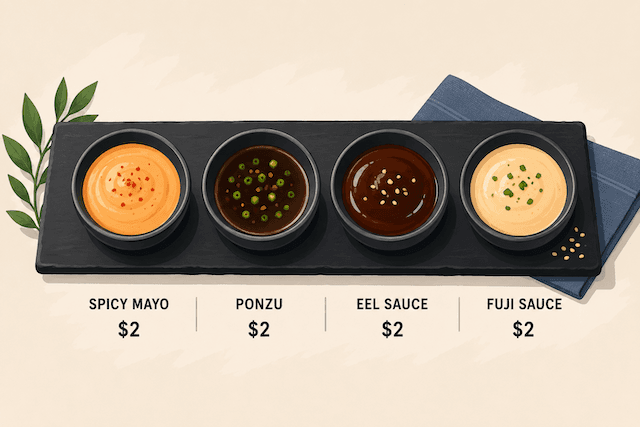
The four house sauces at Tokyo Sushi Speakeasy in Miami Beach — spicy mayo, ponzu, eel sauce, and Fuji sauce — are the flavor backbone of the entire menu. Each one is crafted to complement specific fish, proteins, and textures. Understanding how they work makes every order more intentional.
Key Takeaways
Tokyo Sushi Speakeasy offers four house sauces — spicy mayo, ponzu, eel sauce, and Fuji sauce — each priced at $2 and available as add-ons.
These sauces are not condiments as an afterthought; they are integral to the flavor architecture of the restaurant’s signature rolls and share plates.
Ponzu is citrus-forward and best suited to lean, clean fish like flounder and yellowtail, while eel sauce adds sweetness and body to richer, fattier preparations.
Spicy mayo is the most versatile of the four, functioning equally well as a drizzle, dipping sauce, or roll component.
Fuji sauce is the house original — a proprietary blend that does not have a direct equivalent in standard Japanese-American dining.
Knowing which sauce pairs with which dish dramatically improves the ordering experience, particularly for first-time guests.
What Makes a Great Sushi Sauce?
A great sushi sauce does one thing above all else: it supports the fish without replacing it. The most common mistake in Japanese-American dining is treating sauces as flavor corrections — piling on heat or sweetness to mask mediocre ingredients. At restaurants operating at a higher level, sauces are compositional tools.
In Japanese cuisine, balance between fat, acid, heat, and umami is widely regarded as the defining principle behind any successful sauce. Each element should amplify one quality in the protein or rice. It should not compete with it.
At Tokyo Sushi Speakeasy, all four house sauces are built around that principle. They appear in plated dishes as deliberate design choices, and they are available as add-ons (priced at $2 at time of writing — confirm current pricing when ordering) when guests want to extend or customize their experience at the table.
Spicy Mayo: The Most Versatile Sauce on the Menu
Spicy mayo is among the most consistently ordered condiments in Japanese-American sushi restaurants, and for good reason — it bridges richness, heat, and creaminess in a way that works across an enormous range of textures.
What Spicy Mayo Is Made From
Traditional spicy mayo combines Japanese mayonnaise — most commonly Kewpie, which uses egg yolks only and a milder vinegar (typically apple or grain vinegar) rather than the distilled vinegar used in standard Western mayo — with sriracha or togarashi. The result is a sauce that is simultaneously fatty, tangy, and moderately hot.
The fat content in the mayo acts as a carrier for the chili heat, which means the burn arrives slowly and lingers without becoming sharp. That slow heat profile is what makes spicy mayo work so well with raw fish — it does not shock the palate before the fish can register.
How Tokyo Sushi Speakeasy Uses Spicy Mayo
At Tokyo Sushi Speakeasy, spicy mayo appears as a drizzle on several signature rolls and as a dipping companion for share plates. The Tokyo Gold Roll — shrimp tempura, eel, and avocado topped with tuna and ikura — uses spicy mayo as a layering element, applying heat against the sweetness of eel sauce beneath it.
In practice, the sauce does different work depending on where it lands. When drizzled over the top of a completed roll, it adds visual contrast and surface heat. When used as a dipping sauce at the table, guests control the ratio, which allows more restrained pairing with delicate nigiri cuts.
If you are ordering spicy mayo as an add-on, it works best alongside:
Shrimp tempura rolls where the crunch benefits from additional moisture and heat
Seared proteins where the fat in the mayo mirrors the char
Tuna-forward preparations where moderate heat pulls out the iron richness of the fish
Ponzu: The Citrus-Acid Counterpoint
Ponzu is the most technically Japanese sauce of the four — it is believed to have developed during Japan’s early trade era and remains one of the defining condiments in traditional Japanese cuisine. The name is commonly thought to derive from the Dutch word “pons,” loosely associated with citrus punch, reflecting its possible origins as a trade-era fusion product, though the precise etymology varies across sources.
What Ponzu Contains
Ponzu is a citrus-based soy sauce produced by combining soy sauce with the juice of citrus fruits — historically yuzu, but also sudachi, kabosu, or a blend of lemon and lime in modern applications. Tamari is sometimes used as a substitute. Mirin and dashi are often added to round the sharpness, though formulations vary by producer and region.
The result is a sauce that is simultaneously salty, sour, and umami-rich, with almost no fat content. That low-fat profile makes it fundamentally different from every other sauce on this list. Where spicy mayo coats and clings, ponzu cuts and brightens.
What to Order with Ponzu
Ponzu is best suited to fish and preparations where the natural flavor of the protein is the point. Ponzu-based condiments are widely recognized as among the most culturally embedded table sauces in Japanese domestic cuisine — used across sashimi, shabu-shabu, and grilled fish.
At Tokyo Sushi Speakeasy, ponzu works best alongside:
Sashimi platters, where it replaces the heavier flavor weight of soy sauce with something brighter and more aromatic
Yellowtail and flounder, which have enough fat to hold up to the acid without being overwhelmed
The tuna tartare and torched salmon bao, where the sauce cuts through the richness of torched fat
One thing to understand about ponzu in practice: it does not need to be used in volume. A small amount on the side of a sashimi plate will accomplish more than drowning the fish in it. The acid intensifies quickly on raw protein, so restraint is the correct instinct.
Eel Sauce: Sweetness, Depth, and Umami
Eel sauce — called unagi no tare in Japanese — is one of the oldest sauces in the sushi canon. Despite the name, most commercially prepared and restaurant-made eel sauce contains no eel — it is a reduction of soy sauce, mirin, and sugar, cooked until it reaches a syrupy, glaze-like consistency. Some traditional preparations may incorporate drippings from grilled eel, though this is uncommon in Japanese-American dining contexts.
The Flavor Profile of Eel Sauce
The defining characteristic of eel sauce is its balance between sweetness and savory depth. The sugar in the reduction caramelizes during cooking, which adds a layer of bitterness at the finish that prevents the sauce from becoming cloying. Mirin contributes umami and a gentle alcoholic warmth.
The viscosity matters as much as the flavor. Because eel sauce is thick, it adheres to the surface of a roll and delivers flavor in concentrated bursts rather than a thin wash. That behavior makes it a visual and textural tool as much as a flavor one.
How Eel Sauce Functions on a Composed Roll
At Tokyo Sushi Speakeasy, eel sauce appears prominently in several of the house signature rolls. The South Beach Roll — salmon, shrimp, and avocado topped with crispy crab and caviar — uses eel sauce as a grounding element, anchoring the lighter, saltier caviar notes with sweetness below.
Eel sauce pairs especially well with:
Rolls that contain fried or tempura elements, where the sweetness mirrors the caramelized batter
Avocado-heavy preparations, where the fat in the avocado carries the sauce evenly
Seared wagyu or heavier proteins, where the savory-sweet contrast works on a larger flavor canvas
As an add-on, eel sauce is the right choice when a dish already has significant umami weight and needs sweetness rather than acid to create contrast.
Fuji Sauce: The House Original
Fuji sauce is proprietary to Tokyo Sushi Speakeasy. It is the one sauce on the menu that does not have a direct equivalent in standard Japanese or Japanese-American dining, which makes it the most interesting and the most difficult to describe in isolation.
What to Expect from Fuji Sauce
Without disclosing the full recipe, Fuji sauce occupies a flavor space between umami depth and subtle heat, with a texture that is lighter than spicy mayo but more adhesive than ponzu. It was developed specifically to work with the restaurant’s roll architecture — designed to complement rather than replicate the other three sauces.
In practice, Fuji sauce tends to register as layered. Guests who order it frequently describe an initial savory note that shifts toward mild heat at the finish, without the obvious chili presence of spicy mayo. It is a more refined heat delivery — built for guests who find spicy mayo too heavy or too assertive.
When to Order Fuji Sauce
Fuji sauce performs best as a dipping sauce rather than a drizzle. Its lighter body means it does not hold on top of a completed roll the way eel sauce does. At the table, it works across a wider range of preparations because it is designed to integrate, not dominate.
It is the best add-on for guests who are:
Ordering nigiri and want something beyond standard soy sauce
Working through a mixed sashimi platter and want a single sauce that handles multiple fish types
Pairing food with one of the pre-dinner cocktail selections and need a sauce that will not clash with floral or citrus-forward cocktail notes
Comparing the Four House Sauces for Sushi Pairing
SauceBaseFat ContentHeat LevelBest UseSpicy MayoKewpie mayo + chiliHighModerateRolls, tempura, drizzlePonzuCitrus + soyNoneNoneSashimi, lean fish, dippingEel SauceSoy + mirin + sugarNoneNoneRolls, eel, glazingFuji SauceProprietaryLow-mediumMildNigiri, sashimi, multi-fish pairing
Pairing Sauces with Cocktails
The sauce you order interacts with whatever you are drinking, and the pairing deserves consideration. According to the James Beard Foundation, acid-on-acid pairings (ponzu with citrus cocktails, for example) can collapse the flavor of both elements — the better approach is contrast.
At Tokyo Sushi Speakeasy, the cocktail list includes citrus-forward pours like the Lychee Martini and smoky, spirit-driven options. The best cocktails to pair with sushi post covers this in detail, but the core principle applies to sauce selection too:
Spicy mayo works well against floral, sweeter cocktails — the heat and the sweetness reach equilibrium
Ponzu complements spirit-forward, drier pours where the acid in the sauce meets the spirit’s own sharpness without flattening either
Eel sauce pairs best with sake, where the mirin in both creates harmonic resonance rather than competition
Fuji sauce is the most cocktail-agnostic of the four, which is by design
Sauce Etiquette: What to Know Before You Order
Understanding when and how to use these sauces correctly shows genuine dining literacy. A few principles worth knowing:
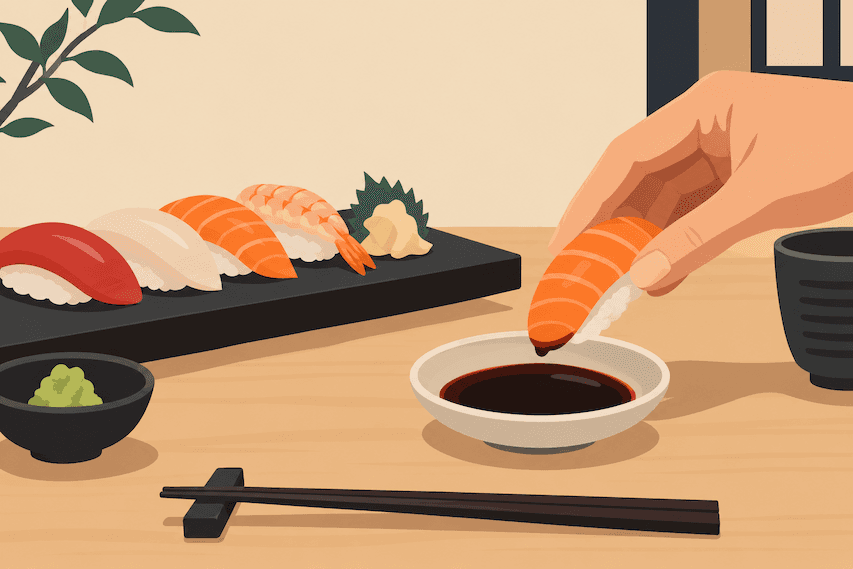
Do not dip nigiri rice-side down into any of these sauces. The rice absorbs liquid immediately and falls apart. Dip fish-side, briefly.
Add sauces to share plates at the table, not in advance. Adding sauce too early causes the crust on fried elements to soften and destroys the textural contrast the kitchen built in.
Order one sauce per dish as a starting point. Stacking all four sauces simultaneously is a common first-timer move that eliminates the individual character of each one.
Ask the server before adding ponzu to anything containing ikura or tobiko. The acid in ponzu can cook roe slightly and change the texture.
For a broader look at dining protocol, the sushi etiquette guide covers the full scope of table behavior for both first-time and experienced sushi diners.
Frequently Asked Questions
What are the four house sauces at Tokyo Sushi Speakeasy?
The four house sauces are spicy mayo, ponzu, eel sauce, and Fuji sauce. Each is available as an add-on — priced at $2 at time of writing; confirm current pricing with your server. They are also used as components within signature rolls and share plates throughout the menu.
What is Fuji sauce and what does it taste like?
Fuji sauce is a proprietary house sauce developed exclusively for Tokyo Sushi Speakeasy. It has a savory base with mild heat at the finish — lighter in fat than spicy mayo, more adhesive than ponzu, and designed to pair across multiple fish types without dominating any single preparation.
Does eel sauce actually contain eel?
No. Eel sauce — unagi no tare — is a reduction of soy sauce, mirin, and sugar. The name refers to its traditional use as a glaze for grilled eel (unagi), not to any eel content in the sauce itself. It is safe for pescatarians and those avoiding shellfish.
Which house sauce is best for sashimi?
Ponzu is the best pairing for sashimi. Its citrus-acid base brightens the natural flavor of lean fish without adding fat or heat. Fuji sauce is the next best option for mixed sashimi platters where a single sauce needs to handle multiple fish types.
Can I use these sauces with the cocktails?
Yes, though the pairing matters. Eel sauce harmonizes with sake. Spicy mayo balances well against sweeter, floral cocktails. Ponzu is best alongside drier, spirit-forward drinks. Fuji sauce is the most cocktail-neutral of the four and works across most of the drinks menu.
Are the house sauces gluten-free?
Ponzu and eel sauce traditionally contain soy sauce, which includes wheat. Guests with gluten sensitivities should ask the server for current preparation details. Tokyo Sushi Speakeasy can advise on which modifications are available for specific dietary needs.
The four house sauces at Tokyo Sushi Speakeasy are worth understanding before you sit down, not as an afterthought during the meal. Ordering deliberately — matching sauce to fish, to texture, and to what is in your glass — is the difference between a good table and a genuinely good dinner. Start with one sauce per dish, trust the pairings above, and add the $2 to the bill without hesitation.
To plan your full order before arriving, the first-timer’s guide to ordering at Tokyo Sushi Speakeasy walks through the complete menu structure from starters through to dessert.