Nigiri sushi is one of the simplest forms of Japanese sushi: a small mound of seasoned sushi rice topped with a slice of fish or seafood. The best way to eat nigiri is to keep the process simple—use your hands or chopsticks, dip the fish side lightly into soy sauce when appropriate, and eat the piece in one bite so the rice and topping come together.
For first-time sushi diners, nigiri can seem more complicated than it actually is. Should you use chopsticks? How much soy sauce is too much? Should you add wasabi? And why do some chefs serve certain pieces with sauce already on top?
The good news is that you do not need to be a sushi expert to enjoy nigiri. Understanding a few basic techniques and customs can make your meal more comfortable while allowing you to appreciate the balance between the fish, rice, seasoning, and preparation.
What Is Nigiri Sushi?
Nigiri is sushi made with a small, hand-formed portion of vinegared rice topped with a piece of fish or seafood. Unlike maki rolls, nigiri does not wrap the rice and fish in nori, allowing the topping and seasoned rice to remain the focus of the bite.
The word “nigiri” comes from the Japanese word for “grip” or “grasp,” referring to the way the sushi rice is shaped by hand.
A typical piece of nigiri includes:
Seasoned sushi rice, known as shari
A slice of fish or seafood, known as neta
Sometimes a small amount of wasabi between the rice and fish
Occasionally a finishing sauce, garnish, or seasoning
Nigiri is designed around balance. The amount of rice, the thickness of the fish, the temperature of the ingredients, and the seasoning all contribute to the finished bite.
Tokyo Sushi Speakeasy includes nigiri among its sushi offerings, alongside sashimi, signature rolls, classic rolls, hand rolls, and other Japanese-inspired dishes.
Should You Eat Nigiri With Your Hands or Chopsticks?
You can eat nigiri with either your hands or chopsticks, so choose whichever feels more comfortable. Traditionally, using your fingers to pick up nigiri is perfectly acceptable, while chopsticks are also common in modern sushi restaurants.
There is no need to feel awkward if you see another diner using a different method.
Is It Okay to Eat Nigiri With Your Hands?
Yes. Eating nigiri with your hands is a traditional and practical way to enjoy it.
The key is to handle the piece gently. Nigiri rice is intentionally formed with enough structure to hold together while remaining soft and airy. Squeezing it too tightly can damage the texture.
If you use your hands:
Make sure your hands are clean.
Pick up the nigiri gently from the sides.
Keep the fish and rice together.
Turn the piece slightly when dipping it into soy sauce.
Eat it promptly.
Using your hands can actually make it easier to control the angle of the nigiri and prevent the rice from falling apart.
Can You Eat Nigiri With Chopsticks?
Absolutely. Chopsticks are a convenient option, particularly if you prefer not to handle food directly.
Pick up the nigiri from the sides rather than squeezing the rice from above. Use enough pressure to hold the piece securely without crushing it.
The important thing is not whether you use hands or chopsticks. What matters more is keeping the nigiri intact and eating it in a way that preserves the intended combination of fish and rice.
How Do You Pick Up Nigiri Correctly?
The easiest way to pick up nigiri is to support the rice from underneath while keeping the fish attached to the top. Handle it gently because the rice should remain intact but should not be compressed.
If you’re using your hands, place your thumb and middle finger around the sides of the nigiri and use your index finger to provide light support.
If you’re using chopsticks, grip the sides carefully and lift the piece in one controlled movement.
Avoid grabbing the fish alone. Doing so can separate the topping from the rice and make the piece harder to eat.
Which Side of Nigiri Should Touch the Soy Sauce?
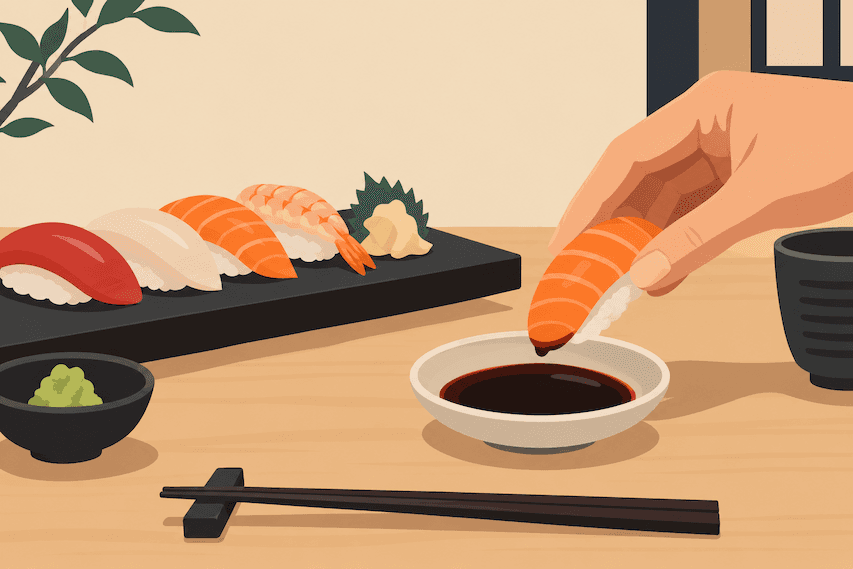
When soy sauce is appropriate, the fish side should generally touch the soy sauce rather than the rice. This lets you season the fish without soaking the rice and making it fall apart.
This is one of the most useful techniques for anyone learning how to eat nigiri.
How Do You Dip Nigiri Into Soy Sauce?
Follow these steps:
Pick up the nigiri carefully.
Turn it slightly so the fish faces downward.
Touch the fish lightly to the soy sauce.
Avoid submerging the piece.
Lift it immediately.
Eat it in one bite.
You only need a small amount of soy sauce. The goal is to complement the fish rather than cover its flavor.
Premium sushi is already carefully balanced, and excessive soy sauce can overwhelm the natural flavor of delicate seafood.
Tokyo Sushi Speakeasy’s existing sushi guidance similarly recommends using soy sauce sparingly so the fish and rice remain noticeable rather than allowing the condiment to dominate the bite.
Should Nigiri Be Eaten Fish-Side Down?
Many sushi diners prefer to turn nigiri so the fish touches the tongue first. This can help you experience the topping before the seasoned rice follows.
The technique is especially useful when the fish has a delicate flavor that you want to appreciate before the rice and other seasonings enter the bite.
To do this safely, rotate the nigiri gently rather than flipping it dramatically. The goal is simply to position the fish toward your palate while keeping the rice intact.
Why Does the Fish-Side-Down Method Matter?
The fish is usually the most prominent ingredient in nigiri, so presenting it first can make its texture and flavor more noticeable.
It also prevents the rice from being soaked with soy sauce when you dip the piece.
That said, you do not need to treat fish-side-down eating as a strict rule. Sushi etiquette is intended to support the dining experience, not make it stressful.
Should You Add Wasabi to Nigiri?
Usually, you do not need to add extra wasabi if the chef has already placed it between the fish and rice. If there is no wasabi included, you can add a small amount according to your preference.
Wasabi provides heat and aroma, but too much can overpower delicate fish.
A good approach is to start with a small amount and adjust based on the type of fish you’re eating.
Should You Mix Wasabi Into Soy Sauce?
You may see diners mixing wasabi into soy sauce, but this is not necessary for nigiri and is generally less useful when the chef has already balanced the piece.
Instead, consider applying a small amount of wasabi directly to the fish when appropriate.
This lets you control the amount of heat without turning the soy sauce into a strong wasabi mixture.
For delicate nigiri, less is usually more.
How Much Soy Sauce Should You Use With Nigiri?
Use just enough soy sauce to lightly season the fish. You should still be able to taste the seafood, rice, and other flavors after the bite.
A useful rule is:
If the nigiri tastes mostly like soy sauce, you probably used too much.
The right amount depends on the fish. Richer varieties may stand up to slightly more seasoning, while delicate white fish may need very little.
Should You Dip Every Piece in Soy Sauce?
No. Some nigiri is already seasoned by the chef with soy sauce, ponzu, salt, citrus, or another finishing ingredient.
If the chef has clearly prepared a piece with sauce or seasoning, taste it as served before adding anything.
Adding soy sauce automatically to every piece can interfere with the flavor balance the chef intended.
Should You Eat Nigiri in One Bite?
Yes, nigiri is generally designed to be eaten in one bite when practical. The size and proportions of the piece are intended to bring the fish and rice together at the same time.
Eating it in one bite allows you to experience:
The texture of the fish
The seasoning of the rice
The balance between fish and rice
Any wasabi or sauce
The temperature and freshness of the piece
If a particular piece is too large for you to comfortably eat in one bite, do not force yourself. The goal is to enjoy the food rather than follow a rule at the expense of comfort.
In What Order Should You Eat Nigiri?
There is no single mandatory order for eating nigiri, but starting with lighter flavors and gradually moving toward richer fish is a useful approach.
A typical progression might look like this:
Stage | Example | Why |
|---|---|---|
1 | Mild white fish | Clean, delicate starting point |
2 | Snapper or similar lean fish | Light but more pronounced flavor |
3 | Salmon | Richer texture and flavor |
4 | Yellowtail | Fatty, smooth and slightly richer |
5 | Tuna | More substantial flavor |
6 | Fatty tuna | Rich, buttery finish |
7 | Eel or specialty pieces | Sweet, savory or heavily seasoned |
The exact progression depends on the menu and the chef’s recommendations.
If you’re dining in an omakase-style setting, allowing the chef to determine the sequence can make more sense than trying to plan every piece yourself. Omakase is specifically built around giving the chef greater control over the progression of the meal.
What Is the Difference Between Nigiri and Sashimi?
Nigiri combines fish or seafood with seasoned sushi rice, while sashimi is sliced raw fish or seafood served without rice. The two can feature the same ingredients but provide very different dining experiences.
Feature | Nigiri | Sashimi |
|---|---|---|
Rice | Yes | No |
Fish | Usually | Yes |
Nori | Usually no | No |
Format | Hand-formed rice topped with fish | Sliced fish |
Main focus | Fish + rice together | Fish itself |
Typical eating method | Hands or chopsticks | Chopsticks or hands |
Soy sauce | Lightly, when appropriate | Commonly used |
If you want to understand the fish on its own, sashimi gives you that opportunity. If you want to experience the interaction between seasoned rice and seafood, nigiri is the better choice.
Tokyo Sushi Speakeasy’s existing content also distinguishes nigiri from sashimi by emphasizing that nigiri introduces the additional element of seasoned rice into the bite.
What Are the Best Nigiri Choices for Beginners?
Beginners often enjoy nigiri with familiar flavors and relatively approachable textures. Salmon, tuna, shrimp, and yellowtail can be good starting points, although personal preference matters more than any fixed ranking.
Salmon Nigiri
Salmon is popular with first-time sushi diners because it has a rich, buttery texture and a recognizable flavor.
It can also be a comfortable transition for people who are new to raw seafood.
Tuna Nigiri
Tuna provides a cleaner, firmer bite and comes in several varieties.
If you enjoy tuna, you can gradually explore different cuts and levels of richness.
Yellowtail Nigiri
Yellowtail, often listed as hamachi, has a smooth texture and balanced richness.
Hamachi is also commonly served as sashimi, making it an interesting ingredient to compare in both formats. Tokyo Sushi Speakeasy’s hamachi guide notes that nigiri creates a different experience from sashimi because the fish is paired with seasoned rice.
Shrimp Nigiri
Shrimp can be a good option if you prefer cooked seafood.
Depending on the preparation, shrimp nigiri can offer a slightly sweet flavor and firmer texture than many raw fish selections.
What Should You Avoid Doing When Eating Nigiri?
Most sushi mistakes are easy to avoid once you understand the basic purpose of nigiri. The biggest issue is usually adding too much sauce or handling the piece too aggressively.
Avoid these common mistakes:
Drowning the fish in soy sauce
Soaking the rice directly in soy sauce
Crushing the rice with chopsticks
Separating the fish from the rice
Adding large amounts of wasabi without tasting first
Holding nigiri for too long before eating it
Treating every piece as if it needs additional sauce
Mixing strong condiments without considering the fish
Eating around the fish instead of experiencing the complete bite
Fresh sushi is best enjoyed soon after it is served. Temperature and texture are part of the experience, particularly with carefully prepared nigiri.
Should You Eat Ginger Between Pieces of Nigiri?
Yes. Pickled ginger, or gari, is traditionally used as a palate cleanser between different pieces of sushi.
It is not normally meant to be piled on top of nigiri and eaten together with the fish.
Instead, have a small piece between different types of sushi when you want to refresh your palate.
For example:
Eat a piece of white fish.
Enjoy the flavors.
Have a small amount of pickled ginger.
Move on to the next piece.
This can make it easier to notice the differences between fish varieties.
Can You Drink Sake With Nigiri?
Yes. Sake can pair naturally with nigiri, but the best choice depends on both the fish and your personal preference.
Lighter sake styles can work well with delicate fish, while richer or more aromatic options can complement stronger flavors.
The key is balance.
Tokyo Sushi Speakeasy offers sake alongside its sushi menu, and its existing sake guide explains the differences between styles such as Junmai, Ginjo, Daiginjo, and Nigori.
If you’re unsure what to order, tell your server what nigiri you plan to eat and ask for a pairing recommendation.
Is Nigiri Better With Sake or Cocktails?
Neither is automatically better. Sake offers a more traditional pairing, while a well-balanced cocktail can add acidity, freshness, or contrast to sushi.
For delicate nigiri, lighter drinks generally make more sense because they are less likely to overpower the fish.
For richer fish or more heavily seasoned sushi, a drink with acidity can help refresh the palate.
Tokyo Sushi Speakeasy’s existing pairing guidance recommends starting with lighter drinks for delicate seafood and using acidity to balance richer ingredients.
If you’re planning a full evening rather than a quick meal, you can also move between sushi and drinks gradually instead of ordering everything at once.
What Is the Best Way to Enjoy Nigiri at a Sushi Restaurant?
The best approach is to slow down, taste each piece as served, and make small adjustments rather than immediately covering the sushi with sauces or condiments.
A simple first-time strategy is:
Step 1: Start With a Light Piece
Begin with something delicate, such as a mild white fish.
This gives your palate a clean starting point.
Step 2: Taste It Before Adding Anything
If the chef has already seasoned the piece, eat it as served.
Notice the fish, rice, seasoning, and texture.
Step 3: Use Soy Sauce Sparingly
If the piece needs soy sauce, lightly touch the fish to the sauce.
Avoid soaking the rice.
Step 4: Use Wasabi Carefully
If the chef has not already included wasabi, start with a small amount.
You can always add more later.
Step 5: Eat the Nigiri Promptly
Once the piece is prepared, enjoy it while its texture and temperature are at their best.
Step 6: Cleanse Your Palate
Use a small amount of pickled ginger before moving to another type of fish.
Step 7: Explore Richer Flavors
Move toward richer fish and more heavily seasoned pieces as the meal progresses.
This approach keeps the flavors from competing with one another and makes the dinner feel more like a progression than a random collection of dishes.
Is Nigiri Good for a First Sushi Experience?
Yes. Nigiri can be an excellent introduction to sushi because its structure is simple and easy to understand: seasoned rice plus a piece of fish or seafood.
Unlike heavily sauced specialty rolls, nigiri lets you taste the primary ingredient more directly.
For someone new to sushi, that simplicity can actually make the experience easier. You can start with familiar options and gradually explore different fish, textures, and preparations.
If you want to compare different sushi styles before ordering, Tokyo Sushi Speakeasy’s guide to sushi types explains how nigiri, sashimi, maki, hand rolls, and other formats differ.
How Can You Order Nigiri at Tokyo Sushi Speakeasy?
The easiest way to approach the menu is to start with a few pieces of nigiri, add sashimi or rolls based on your preferences, and ask the staff for recommendations if you’re unsure what to try.
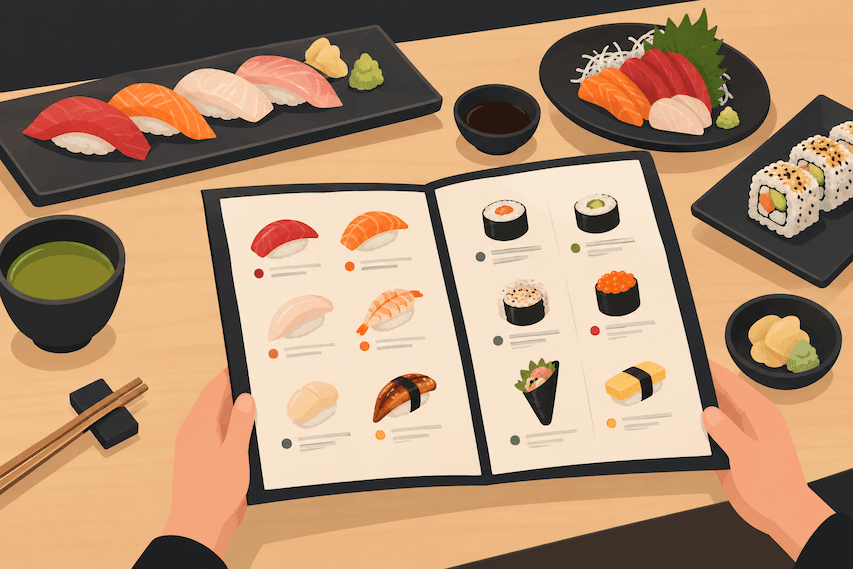
Tokyo Sushi Speakeasy’s menu includes dedicated nigiri and sashimi sections alongside signature rolls, classic rolls, hand rolls, cocktails, and sake.
For a first visit, consider building your order around variety:
Start with one or two lighter nigiri pieces.
Add a richer fish such as salmon or yellowtail.
Try a tuna selection if you enjoy it.
Add a signature roll for a different texture and flavor profile.
Pair the meal with sake or a cocktail.
Ask your server what is especially recommended that evening.
This approach lets you experience different sides of the menu without ordering too much of one style.
Why Does Proper Nigiri Technique Matter?
Proper nigiri technique is not about following a long list of strict rules. It is about preserving the balance that the chef created between the fish, rice, seasoning, and texture.
Small details can make a noticeable difference.
Turning the fish toward your palate, using less soy sauce, eating the piece promptly, and avoiding excessive handling all help you experience nigiri as intended.
That is particularly important when dining at a restaurant where sushi technique is a major part of the experience.
What Are the Most Important Nigiri Rules to Remember?
If you remember only a few things, keep them simple: handle nigiri gently, use soy sauce sparingly, avoid overpowering the fish with wasabi, and eat the piece soon after it is served.
Here is the short version:
Hands or chopsticks are both fine.
Pick up nigiri gently.
Dip the fish side into soy sauce when needed.
Use only a small amount of soy sauce.
Do not soak the rice.
Taste chef-seasoned pieces before adding anything.
Use wasabi sparingly.
Eat nigiri in one bite when comfortable.
Use ginger between different pieces to refresh your palate.
Move from lighter flavors toward richer ones.
Ask the chef or server questions when you’re unsure.
Most importantly, enjoy the sushi rather than worrying about perfect etiquette.
Enjoy Nigiri Without Overthinking It
The right way to eat nigiri is ultimately the way that allows you to appreciate the complete bite. A little knowledge helps, but you do not need to memorize complicated rules before sitting at a sushi counter.
Start with a gentle grip, keep the soy sauce light, respect the seasoning already on the fish, and give each piece a chance to speak for itself.
For diners exploring sushi in Miami Beach, nigiri is one of the easiest ways to experience the relationship between seafood and seasoned rice without the heavier sauces and toppings found on some specialty rolls.
At Tokyo Sushi Speakeasy, the menu brings together nigiri, sashimi, signature rolls, cocktails, sake, and an intimate South Beach setting at 1000 Collins Avenue. The restaurant is open Thursday through Sunday from 5 PM to midnight, with reservations available through the restaurant.
Whether you’re trying nigiri for the first time or simply want to improve your sushi etiquette, the best approach is straightforward: handle it carefully, season it lightly, eat it promptly, and enjoy the balance the chef has created.
Frequently Asked Questions About Eating Nigiri
Do you eat nigiri with your hands or chopsticks?
You can use either. Eating nigiri with your hands is traditional, while chopsticks are also completely acceptable. Choose the method that allows you to handle the sushi gently without crushing the rice.
Do you dip nigiri rice or fish in soy sauce?
Dip the fish side lightly when soy sauce is appropriate. Avoid soaking the rice because it can absorb too much sauce and cause the nigiri to fall apart.
Are you supposed to eat nigiri in one bite?
Nigiri is generally designed to be eaten in one bite so the fish and rice can be experienced together. However, if a piece is too large, eat it comfortably rather than forcing yourself to follow a strict rule.
Should nigiri be eaten upside down?
Many sushi diners turn nigiri so the fish touches the tongue first. This can help emphasize the fish’s flavor while keeping the rice from absorbing too much soy sauce.
Should you put wasabi on nigiri?
If the chef has already placed wasabi between the fish and rice, additional wasabi is usually unnecessary. If there is none, add a small amount according to your taste.
What should you eat first when ordering nigiri?
Start with lighter, more delicate fish and gradually move toward richer selections. This helps prevent strong flavors from overwhelming more subtle pieces.
Is ginger supposed to go on top of nigiri?
No. Pickled ginger is generally eaten separately between pieces of sushi as a palate cleanser rather than placed directly on top of nigiri.
What drink goes best with nigiri?
Sake is a natural pairing, but cocktails can also work well when they have enough acidity or freshness to complement the fish. Ask your server for a recommendation based on the nigiri you order.