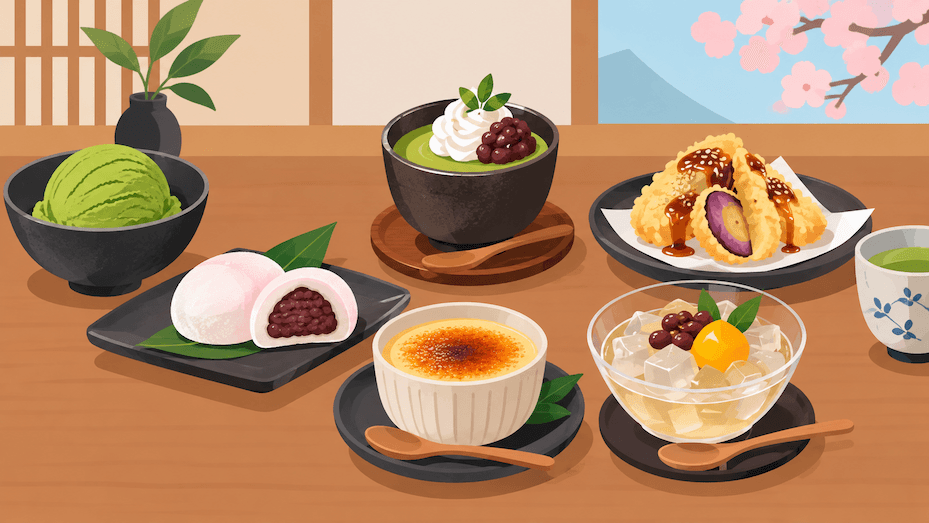
A great dessert after sushi should complement the meal rather than overpower it. Japanese desserts are often a natural fit because they offer a range of flavors and textures, from earthy matcha and delicate rice cakes to bright fruit, creamy custards, and light cheesecakes.
The best choice depends on what you ate. After delicate nigiri or sashimi, a subtle dessert can preserve the meal’s clean finish. After rich specialty rolls or spicy sushi, something fruity, creamy, or slightly tart can provide a satisfying contrast.
At Tokyo Sushi Speakeasy in Miami Beach, dessert is part of the overall Japanese-inspired dining experience. The current online menu lists two dessert options: Japanese Matcha Cheesecake with mango-yuzu sauce and a warm Panda Coconut Bun filled with coconut cream. These provide two distinct ways to finish a sushi dinner.
What Dessert Goes Best After Sushi?
The best dessert after sushi is one that balances the meal’s savory flavors without leaving you feeling overly full. Matcha desserts offer earthy bitterness, fruit-based sweets provide refreshing acidity, and mochi brings a soft, chewy texture.
Here are seven Japanese-inspired dessert ideas worth considering:
Dessert | Flavor profile | Best after |
|---|---|---|
Mochi | Soft, chewy, mildly sweet | A light sushi meal |
Matcha cheesecake | Earthy, creamy, slightly bitter | Rich rolls or a full dinner |
Fresh fruit | Juicy, bright, refreshing | Delicate nigiri and sashimi |
Yuzu desserts | Citrusy, tart, aromatic | Rich or fried sushi dishes |
Dorayaki | Sweet, soft, often filled with red bean paste | A comforting, traditional-style finish |
Japanese pudding | Silky, creamy, gently sweet | A simple, savory meal |
Coconut-based desserts | Creamy, tropical, fragrant | A meal with spicy or bold flavors |
These are general Japanese dessert recommendations, not a list of items available at every restaurant. Check the current menu before ordering a specific dessert.
Why Does Matcha Work So Well After Sushi?
Matcha works well after sushi because its earthy, slightly bitter flavor balances sweetness and provides contrast to the savory, umami-rich flavors of seafood, rice, and sauces.
Matcha is finely ground green tea powder used in Japanese drinks and desserts. Its flavor can range from grassy and vegetal to rich and bittersweet, depending on the preparation and ingredients.
What Makes Matcha Cheesecake a Good Choice?
Matcha cheesecake combines the gentle bitterness of green tea with the creamy richness of cheesecake. This combination makes it a good option when you want something more substantial than fruit but less sugary-tasting than a conventional chocolate dessert.
The balance depends on the recipe. A cheesecake with pronounced matcha flavor may taste more earthy, while one with extra sugar or a sweet topping will have a more dessert-forward profile.
At Tokyo Sushi Speakeasy, the listed Japanese Matcha Cheesecake combines matcha with mango-yuzu sauce. The earthy tea flavor and creamy cheesecake contrast with the tropical fruit and citrus notes of the sauce, creating a dessert with several layers of flavor.
When Should You Choose Matcha Dessert?
Matcha cheesecake is particularly appealing when:
You enjoy creamy desserts with a slightly bitter finish.
Your meal included rich specialty rolls or flavorful sauces.
You want a dessert that feels more indulgent than fresh fruit.
You enjoy Japanese tea flavors but prefer them in a familiar dessert format.
If you prefer very light desserts, consider sharing a cheesecake rather than ordering a full portion for yourself.
Is Mochi a Good Dessert After Sushi?
Yes, mochi can be an excellent dessert after sushi because its soft, chewy texture and typically modest portion size make it easy to enjoy after a full meal. The exact sweetness and richness depend on the filling.
Traditional mochi is made from glutinous rice that is pounded or processed into a soft, elastic texture. It appears in many Japanese sweets, including filled rice cakes and seasonal confections.
What Types of Mochi Should You Try?
Several varieties offer different experiences:
Daifuku: Soft mochi filled with sweetened red bean paste or another filling.
Fruit daifuku: Mochi wrapped around fresh fruit and sweet filling.
Mochi ice cream: A soft rice-dough exterior surrounding an ice cream center.
Seasonal mochi: Versions made with ingredients associated with particular seasons or celebrations.
Mochi ice cream is especially appealing when you want something cold after a savory dinner. Fruit-filled mochi can be a better choice if you prefer a fresher, fruit-forward flavor.
Is Mochi Lighter Than Cheesecake?
Mochi may feel less rich than cheesecake because it typically contains less cream or dairy, but that does not automatically make it lower in calories or sugar. Fillings, portion sizes, and recipes all affect its nutritional profile.
For a small sweet bite, choose a modest serving of mochi. If you want a richer, more layered dessert, cheesecake may be more satisfying.
Mochi is a general recommendation here, not a confirmed item on Tokyo Sushi Speakeasy’s current online menu.
Are Fruit-Based Desserts Better After Sushi?
Fruit-based desserts are an excellent option after sushi if you want a refreshing finish. Their natural acidity and juiciness can provide contrast to rich sauces, fatty fish, and fried ingredients.
Japanese desserts frequently incorporate fruit through fresh garnishes, fruit-filled rice cakes, jellies, and citrus-flavored sauces. Mango, strawberries, melon, and yuzu each bring different qualities to the end of a meal.
Which Fruits Pair Well With Japanese Food?
Consider these flavor combinations:
Mango: Sweet, tropical, and smooth; a good match for creamy desserts.
Strawberries: Bright and slightly tart, especially when paired with a light cream.
Melon: Delicate and refreshing, ideal when you want a subtle finish.
Yuzu: Aromatic and citrusy, with a tartness that can balance sweetness.
Mandarin or orange: Juicy citrus flavors that offer a clean contrast to richer dishes.
The best fruit dessert depends on the meal. After a rich roll with creamy sauces, a tart citrus dessert may provide more contrast than an intensely sweet mango confection.
Why Is Yuzu Especially Appealing After Sushi?
Yuzu is a Japanese citrus fruit known for its aromatic peel and distinctive tart flavor. Its fragrance and acidity make it a useful ingredient in desserts that need brightness without relying entirely on sugar.
At Tokyo Sushi Speakeasy, the listed Japanese Matcha Cheesecake is served with mango-yuzu sauce. The citrus element adds a tangy note to the creamy cheesecake and earthy matcha, making the dessert an option for diners who enjoy both rich and refreshing flavors.
What Other Japanese Desserts Are Worth Trying?
Beyond mochi and matcha cheesecake, Japanese desserts include soft pancakes, custards, sweet red bean pastries, and chilled jellies. These options vary in richness, sweetness, and texture, so you can choose one that suits your appetite.
What Is Dorayaki?
Dorayaki consists of two soft, pancake-like cakes filled traditionally with sweet red bean paste. Its familiar texture and gentle sweetness make it a comforting choice after a savory meal.
Some modern versions use custard, chocolate, or other fillings. If you enjoy pastries but want something different from Western cakes, dorayaki is worth exploring.
What Is Japanese Pudding?
Japanese pudding, often called purin, is a smooth custard dessert commonly served with caramel sauce. It has a silky texture and a balanced sweetness that can feel satisfying without the heavier structure of a large cake.
Purin is a good option if you prefer custards over chewy sweets or baked desserts. It is also easy to serve in a small portion after a multi-course dinner.
What About Other Matcha Desserts?
Matcha can also be used in ice cream, mousse, sponge cake, and traditional sweets. Each preparation changes the balance between tea bitterness, dairy richness, and sugar.
If you are choosing between matcha ice cream and matcha cake, consider how much you have already eaten. A small scoop may suit a full sushi dinner, while a slice of cake may be more appropriate when dessert is the main indulgence.
These desserts are suggestions for exploring Japanese sweets generally; their availability will vary by restaurant.
How Should You Choose Dessert Based on What You Ate?
The simplest way to choose dessert after sushi is to consider the meal’s dominant flavors, richness, and portion size. A light meal leaves room for something creamy, while a large meal may call for fruit or a smaller serving.
Use this quick guide:
If your sushi meal was… | Consider… | Why it works |
|---|---|---|
Light, with nigiri or sashimi | Fruit or a small mochi | Keeps the finish simple |
Rich, with creamy specialty rolls | Matcha cheesecake | Contrasts richness with earthy tea notes |
Spicy or heavily sauced | Coconut-based dessert | Adds creamy, sweet contrast |
Fried or crunchy | Yuzu or another citrus dessert | Provides a brighter flavor |
A long dinner with several shared dishes | A shared dessert | Lets everyone enjoy a sweet finish without overordering |
These are flavor suggestions rather than strict rules. Personal preferences matter, and a dessert you enjoy is more important than following a prescribed pairing.
Should You Order Dessert to Share?
Sharing dessert is a practical choice after sushi because a multi-item meal can be filling even when individual portions seem small. It also lets diners try different flavors without committing to a full dessert each.
For two people, consider sharing one creamy dessert if you have already enjoyed several rolls and small plates. If you prefer different textures, ask whether the restaurant can accommodate separate dessert orders or suggest an appropriate portion.
At a group dinner, check the available menu and ask your server about serving sizes before ordering multiple desserts.
What Desserts Can You Order at Tokyo Sushi Speakeasy?
Tokyo Sushi Speakeasy’s current online menu lists Japanese Matcha Cheesecake and Panda Coconut Bun. These are the two confirmed dessert options on the published menu, making them the most relevant choices to consider when planning your visit.
Japanese Matcha Cheesecake
The Japanese Matcha Cheesecake is described on the menu as a light cheesecake made with ceremonial-grade matcha and mango-yuzu sauce. Its combination of creamy texture, earthy green tea, and fruit-citrus notes makes it a natural option for diners who want a balanced dessert after sushi.
Choose this dessert if you enjoy matcha, cheesecake, or a mix of creamy and tangy flavors.
Panda Coconut Bun
The Panda Coconut Bun is a warm steamed bun filled with coconut cream. It offers a different experience from cheesecake, with a soft, warm exterior and a rich coconut center.
Choose this option if you prefer tropical flavors and a warm dessert rather than a chilled or baked cheesecake.
For current descriptions and availability, consult the Tokyo Sushi Speakeasy menu. Menu offerings and prices can change, so confirm details with the restaurant before your visit.
What Should You Know Before Ordering Japanese Desserts?
A few practical considerations can help you choose a dessert that suits your appetite, dietary preferences, and overall dining experience.
How Sweet Should Your Dessert Be?
If your meal included sweet sauces or a rich specialty roll, a dessert with matcha or citrus may provide a useful contrast. If your meal was relatively light and savory, you may enjoy a creamier or sweeter dessert.
There is no universal rule about dessert sweetness. Use your own preference as the starting point.
Should You Consider Allergens?
Yes. Japanese desserts may contain dairy, eggs, wheat, soy, sesame, nuts, or other allergens, depending on the recipe and preparation.
If you have a food allergy or dietary restriction, ask the restaurant about ingredients and possible cross-contact before ordering. Do not assume that a dessert is dairy-free, gluten-free, vegetarian, or vegan based on its name alone.
Is Dessert Necessary After Sushi?
No. Dessert is optional, and a satisfying sushi meal does not require a sweet finish. If you are full, you can finish with tea or another beverage, or simply enjoy the atmosphere a little longer.
For more context on the restaurant’s setting and dining experience, explore Tokyo Sushi Speakeasy’s experience before planning your evening.
Frequently Asked Questions About Japanese Desserts After Sushi
What is the best dessert to eat after sushi?
The best dessert depends on your taste and the meal. Matcha cheesecake offers creamy richness and earthy tea notes, while fruit-based desserts provide a fresher finish. Mochi is another popular Japanese sweet with a distinctive chewy texture.
Is mochi traditionally served after sushi?
Mochi and other Japanese sweets can be enjoyed after a meal, but there is no single dessert that must follow sushi. The choice depends on the restaurant, occasion, and diner’s preferences.
Is matcha cheesecake too heavy after sushi?
Not necessarily. A modest portion of matcha cheesecake can be satisfying after sushi, particularly if you enjoy creamy desserts. Sharing it is an easy way to enjoy the flavor after a larger meal.
What is a refreshing dessert after sushi?
Fresh fruit and citrus-forward desserts are good options when you want a refreshing finish. Yuzu-flavored sweets are particularly appealing if you enjoy tart, aromatic citrus.
Does Tokyo Sushi Speakeasy serve mochi ice cream?
Mochi ice cream is a popular Japanese dessert, but it is not listed among the two desserts on Tokyo Sushi Speakeasy’s current online menu. Check with the restaurant directly to confirm whether it is available.
What desserts are on Tokyo Sushi Speakeasy’s menu?
The published menu lists Japanese Matcha Cheesecake with mango-yuzu sauce and a warm Panda Coconut Bun filled with coconut cream. Check the current menu for the latest information.
Finish Your Sushi Dinner With the Right Dessert
The best Japanese dessert after sushi complements the meal rather than competing with it. Mochi offers a distinctive chewy texture, matcha brings earthy complexity, and fruit or citrus adds freshness. Your choice should reflect the flavors you enjoy and how full you feel after dinner.
At Tokyo Sushi Speakeasy in Miami Beach, the published dessert menu offers two different finishes: Japanese Matcha Cheesecake with mango-yuzu sauce and a warm Panda Coconut Bun filled with coconut cream. Review the current menu and choose the option that best suits your taste.
Whether you prefer creamy cheesecake or a warm coconut-filled bun, a thoughtfully chosen dessert can make the end of your sushi dinner just as enjoyable as the meal itself.