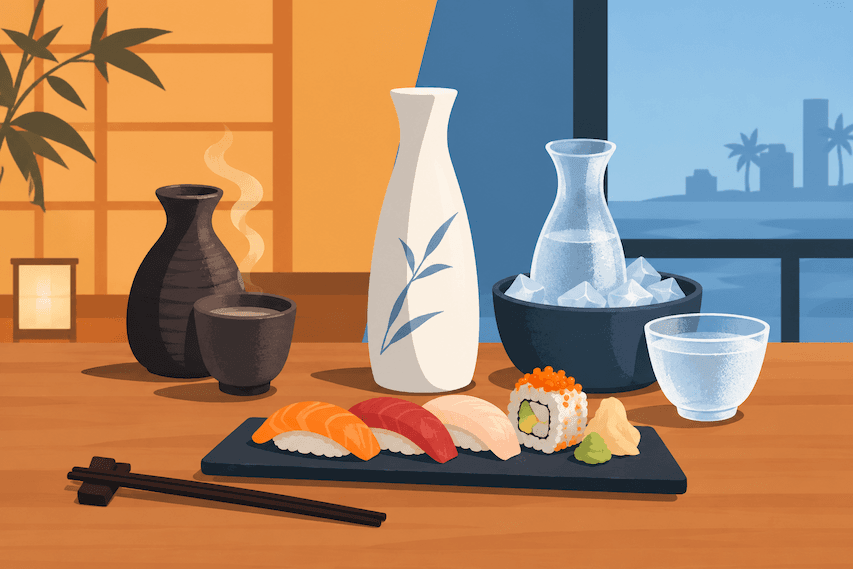
If you are ordering sake with sushi, temperature matters more than many first-time drinkers realize. Chilled sake tends to highlight delicate aromas, fruit, and floral notes, while gently warmed sake can bring out richer, rounder, and more savory flavors.
There is no universal rule that says premium sake must be served cold or that warm sake is inferior. The better choice depends on the sake style, the food on your table, and the flavor experience you want.
At a sushi restaurant, understanding the difference between warm and chilled sake can make ordering much easier. Instead of choosing based on temperature alone, you can use temperature as another way to match your drink to your meal.
What Is the Difference Between Warm and Chilled Sake?
Warm and chilled sake are the same type of Japanese rice beverage, but serving temperature can noticeably change how the sake smells, tastes, and feels. Chilled sake generally emphasizes freshness and aroma, while warmth can make savory and fuller flavors more noticeable.
The difference is especially important with premium sake because temperature can either reveal or mute certain characteristics.
Serving style | General effect | Often works well with |
|---|---|---|
Well chilled | Crisp, aromatic, refreshing | Delicate sushi, sashimi |
Chilled | Fresh, balanced, expressive | Nigiri, lighter rolls |
Room temperature | Fuller and more neutral | Balanced meals |
Gently warm | Rounder, softer, savory | Richer dishes |
Hot | More pronounced warmth | Certain traditional styles |
These are general guidelines rather than strict rules. Sake can behave differently depending on its brewing method, polishing level, acidity, sweetness, and overall structure.
That is why the best approach is to consider the bottle or style first and temperature second.
Why Does Sake Temperature Change Its Flavor?
Temperature changes the way your palate experiences aroma, sweetness, acidity, alcohol, and umami. Heating can make some flavors feel fuller and more pronounced, while chilling can make a sake feel cleaner, brighter, and more refreshing.
Think of temperature as a volume control for certain characteristics.
A delicate aromatic sake may lose some of its most interesting qualities when heated. On the other hand, a savory and rice-forward sake can become softer and more expressive when served gently warm.
This is one reason experienced sake drinkers do not automatically order every bottle at the same temperature.
What Happens When Sake Is Chilled?
Chilling sake generally makes it feel crisp and refreshing. It can also help highlight subtle fruit and floral aromas in styles designed to be aromatic.
Chilled sake can be particularly effective with sushi because the clean finish helps reset the palate between bites.
It is a natural choice when eating:
Delicate sashimi
Lean fish
Classic nigiri
Lightly seasoned sushi
Seafood with subtle flavors
Dishes where freshness is the focus
For example, Tokyo Sushi Speakeasy’s menu describes its Ginjo as delicate and slightly fruity with a floral nose and recommends serving it chilled.
What Happens When Sake Is Warmed?
Gently warming sake can soften the drink and bring greater attention to its savory, rice-forward character. Depending on the sake, warmth can also make the texture feel rounder and more comforting.
Warm sake can work particularly well when the food has stronger umami or richer flavors.
Consider it with:
Richer sushi rolls
Cooked seafood
Grilled dishes
Heavier sauces
Savory small plates
Dishes with pronounced umami
However, not every sake should be heated. Aromatic premium styles are usually better enjoyed chilled because excessive heat can overpower the delicate aromas that make them distinctive.
Is Warm Sake Better Than Chilled Sake?
Neither warm nor chilled sake is automatically better. Chilled sake is usually the better choice for aromatic, delicate styles, while gently warm sake can be excellent for fuller and more savory styles.
The choice comes down to what you want from the drink.
Choose chilled sake when you want:
Crispness
Floral aromas
Fruit-forward notes
A clean finish
A refreshing pairing
Choose warm sake when you want:
A softer texture
More savory character
Fuller flavors
A comforting drinking experience
A stronger match for rich food
If you are unsure, ask the person serving the sake. A good recommendation can account for both the bottle and the food you have ordered.
Which Sake Should Be Served Chilled?
Ginjo and Daiginjo are commonly served chilled because their aromatic character benefits from lower temperatures. Chilling helps preserve the floral, fruity, and refined qualities associated with these styles.
Tokyo Sushi Speakeasy’s current sake menu follows this approach: its Ginjo is listed as best served chilled, while its Daiginjo is recommended cold.
Should Ginjo Sake Be Chilled?
Yes. Ginjo is generally best served chilled because its delicate aromas and fruity or floral character can be easier to appreciate at a lower temperature.
Ginjo is an especially approachable choice if you are new to sake.
It can work well with:
Nigiri
Sashimi
White fish
Hamachi
Lightly seasoned seafood
The goal is to let the sake complement the fish rather than compete with it.
For example, Tokyo Sushi Speakeasy’s guide to hamachi sashimi recommends crisp, dry sake styles because the fish benefits from a drink that refreshes the palate without overwhelming its natural richness.
Should Daiginjo Sake Be Served Cold?
Yes. Daiginjo is typically best enjoyed cold or well chilled because its refined aromas and delicate flavors are part of the appeal.
Because Daiginjo is highly polished and often more aromatic, excessive heat can work against the characteristics you want to experience.
It is a strong choice for:
Premium nigiri
Delicate sashimi
Special occasions
A slower dinner
Guests who enjoy elegant, aromatic sake
If you are ordering premium sushi and want the sake to remain subtle and refined, chilled Daiginjo is a natural starting point.
Can Junmai Sake Be Served Warm?
Yes. Junmai is one of the sake styles that can work particularly well at warmer temperatures because its rice-forward, savory character can become more pronounced with gentle heat.
That does not mean every Junmai should be served hot.
Some Junmai are excellent chilled or at room temperature, while others become more interesting when warmed. The specific bottle matters.
Tokyo Sushi Speakeasy lists its House Dry Junmai as best served chilled or at room temperature, giving guests flexibility based on their preference.
What Does Warm Junmai Taste Like?
Warm Junmai can feel rounder, softer, and more savory than the same sake served cold. The change can make it particularly enjoyable alongside food with strong umami.
Try gently warm Junmai when your meal includes:
Rich sushi rolls
Eel
Grilled seafood
Savory sauces
Tempura
Hearty Japanese-inspired dishes
It can also be a good option when you want your drink to feel more substantial rather than crisp and refreshing.
What Temperature Is Best for Sushi?
For most sushi meals, chilled sake is an easy starting point because it preserves freshness and works naturally with delicate seafood. However, gently warm sake can be a better match when your meal moves toward richer, cooked, grilled, or heavily seasoned dishes.
A useful rule is to match the intensity of the sake to the intensity of the food.
Sushi or dish | Suggested sake temperature | Why |
|---|---|---|
Delicate sashimi | Chilled | Keeps the pairing clean |
White fish nigiri | Chilled | Preserves subtle flavors |
Hamachi | Chilled | Refreshes the palate |
Fatty tuna | Chilled or room temperature | Depends on the sake |
Rich signature rolls | Room temperature or gently warm | Handles stronger flavors |
Eel | Room temperature or warm | Complements savory richness |
Tempura | Chilled or gently warm | Depends on the sauce and sake |
Spicy rolls | Chilled | Provides refreshing contrast |
These pairings are starting points, not rules. Your personal preference should always have the final say.
Should You Drink Sake Cold With Sashimi?
Yes. Chilled sake is generally an excellent choice for sashimi because its clean and refreshing character allows the seafood to remain the focus.
Sashimi relies heavily on freshness, texture, and subtle flavor. A highly aromatic or intensely warm drink can distract from those qualities.
For delicate sashimi, consider:
Start with a chilled Ginjo.
Taste it with a piece of sashimi.
Notice whether the sake enhances or competes with the fish.
Move to another style if you want more body or savory character.
Tokyo Sushi Speakeasy’s menu positions its Ginjo as a chilled pairing for nigiri and sashimi, making it an easy place to start if you prefer a lighter sake experience.
Should You Drink Warm Sake With Sushi Rolls?
You can, especially when the rolls contain richer ingredients, sauces, cooked seafood, or strong umami flavors. A fuller sake can stand up to ingredients that might overpower a delicate pour.
This is where temperature becomes particularly useful.
For example, a roll featuring eel sauce, spicy mayo, tempura, or rich proteins has a different flavor profile from simple sashimi. A more substantial sake may provide better balance.
Tokyo Sushi Speakeasy’s menu includes richer signature creations such as the Tokyo Gold Roll, which combines shrimp tempura, eel, avocado, tuna, ikura, spicy mayo, eel sauce, and 24K gold leaf.
With a dish like this, you have more room to experiment with a fuller sake rather than limiting yourself to the most delicate chilled pour.
When Should You Choose Room-Temperature Sake?
Room-temperature sake is a useful middle ground when you do not want the sharpness of a very cold pour or the pronounced warmth of heated sake. It can reveal more body and texture without adding noticeable heat.
Room-temperature sake can be a smart option when:
You are unsure what temperature you prefer.
You are drinking Junmai.
Your meal includes a variety of flavors.
You want to taste the sake more clearly.
You are sharing several dishes with the table.
It is also a practical choice when you want to compare how the same sake changes as its temperature naturally rises during dinner.
Is Warm Sake Only for Cold Weather?
No. Warm sake is not limited to winter or cold climates. Temperature should be based primarily on the sake and the food rather than the weather outside.
That said, Miami’s warm climate can make chilled sake especially appealing.
A cold Ginjo or Daiginjo can feel refreshing during an evening in South Beach, while a gently warmed Junmai can still work beautifully when paired with a rich dinner.
The restaurant itself describes its sake program as a selection designed to accompany the full dining experience, alongside its cocktails and sushi.
How Should You Order Sake if You Are New to It?
If you are new to sake, start with a style that is easy to understand and then decide whether you prefer it chilled, at room temperature, or warm. You do not need to know every Japanese sake term before ordering.
Try this simple approach:
Tell your server what you are eating.
Mention whether you are ordering sashimi, nigiri, rolls, or richer dishes.Describe what you normally drink.
If you enjoy crisp white wine, fruity cocktails, or richer spirits, that information can help.Ask about temperature.
Ask whether the sake is best chilled, at room temperature, or gently warmed.Start with one glass.
A glass lets you explore the style before committing to a bottle.Adjust as your meal progresses.
You do not have to drink the same sake or temperature all night.
This approach takes the pressure out of ordering and turns the sake selection into part of the meal.
Can the Same Sake Taste Different When Warm and Cold?
Yes. The same sake can taste noticeably different at different temperatures because temperature changes the way aromas and flavors are perceived.
A chilled pour may seem:
Crisp
Clean
Bright
Light
Refreshing
As it warms, it may become:
Fuller
Softer
More aromatic
More savory
More expressive
This can be a fun experiment if you are genuinely interested in learning about sake.
Instead of immediately deciding that you prefer warm or cold sake, try tasting the same style at two temperatures. You may find that your preference changes depending on the food.
What Are the Most Common Warm vs. Chilled Sake Mistakes?
The biggest mistake is assuming that every sake should be served the same way. Temperature should be treated as part of the sake’s character rather than a simple personal preference.
Avoid these common mistakes:
Heating Every Sake
Premium aromatic sake can lose some of its delicate character when heated too much. Ginjo and Daiginjo are generally better chilled.
Assuming Warm Means Cheap
Warm sake is not automatically low quality. Some styles are intentionally suited to gentle warming, and temperature can be an important part of their character.
Ordering Based Only on the Weather
A hot Miami evening does not automatically mean every sake should be ice cold. Consider the food and the sake style first.
Ignoring the Food
A sake that tastes excellent on its own may not be the best match for a particular dish.
Overheating the Sake
There is a significant difference between gently warming a sake and serving it extremely hot. Excessive heat can make alcohol feel more pronounced and hide subtle flavors.
Warm vs. Chilled Sake: Which One Should You Choose?
If you want a quick answer, choose chilled sake for delicate, aromatic, and seafood-focused meals, and consider gently warm sake for fuller, savory, and richer dishes.
Use this quick guide:
If you want… | Try… |
|---|---|
Floral aromas | Chilled Ginjo |
Elegant, refined flavors | Cold Daiginjo |
Crisp and refreshing | Chilled sake |
More rice-forward character | Room-temperature Junmai |
Fuller savory flavors | Gently warm Junmai |
A pairing for delicate sashimi | Chilled sake |
A pairing for rich rolls | Room temperature or warm sake |
An easy first sake | Chilled Ginjo |
The most important rule is simple: temperature should enhance the sake rather than overpower it.
How Does Sake Fit Into a Sushi Dinner at Tokyo Sushi Speakeasy?
Sake works naturally with a sushi dinner because the restaurant’s beverage program includes several styles designed to complement different parts of the menu. Guests can choose between sake and a range of cocktails depending on the food and the kind of evening they want.
The current menu features Junmai, Ginjo, Daiginjo, and Nigori, with serving recommendations ranging from chilled and cold to room temperature.
If you want to understand the broader differences between these sake styles before visiting, the restaurant’s sake style comparison guide is a useful starting point.
For guests who want to compare sake with cocktails, the restaurant’s guide to pairing liquor with sushi explains how different drinks can complement delicate seafood, richer rolls, and other dishes.
And if hamachi is on your order, the hamachi sashimi guide offers additional insight into the fish and drink pairings that work well with its rich but delicate flavor.
For a broader look at sushi ordering, the complete sushi types guide can help you understand the difference between nigiri, sashimi, maki, and other menu styles.
What Is the Best Way to Explore Warm and Chilled Sake?
The best way to learn is to taste rather than memorize rules. Start with a chilled sake, then try a fuller style at room temperature or gently warm and pay attention to how the experience changes.
You can make the comparison simple:
Start with chilled Ginjo or another aromatic style.
Order a few pieces of nigiri or sashimi.
Notice the sake’s aroma and finish.
Try a Junmai at room temperature.
If available, ask whether the Junmai can be gently warmed.
Compare how the flavors change with richer sushi or cooked dishes.
You will quickly start noticing which temperatures you enjoy and which styles work best with your favorite foods.
Final Takeaway: Warm or Chilled Sake?
Chilled sake is usually the best starting point for sushi, especially when you are eating delicate nigiri, sashimi, or aromatic sake styles. Warm sake has its place too, particularly with fuller Junmai and richer, savory dishes.
There is no need to treat warm and chilled sake as competing categories. They are simply different ways to experience the same Japanese tradition.
At Tokyo Sushi Speakeasy in South Beach, the sake menu gives diners several styles to explore, from clean Junmai and floral Ginjo to premium Daiginjo and creamy Nigori.
The best choice is the one that makes the food in front of you taste better.