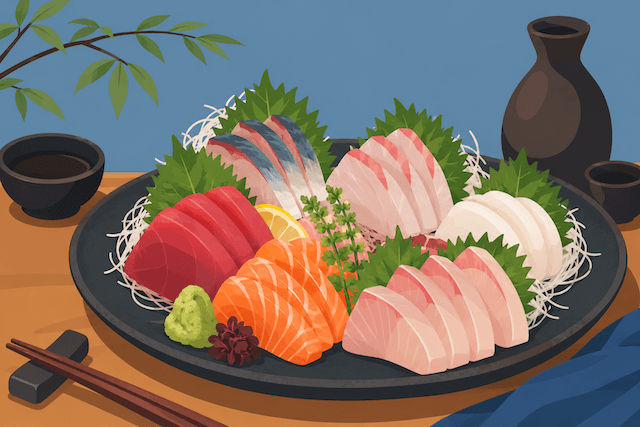
This sashimi guide covers everything you need to know about raw fish done right. Sashimi is thinly sliced raw fish or seafood served without rice. At Tokyo Sushi Speakeasy, the sashimi menu features four options — salmon, tuna, hamachi, and eel — each sourced and cut the day of service, served five pieces per order.
Key Takeaways
Sashimi contains no rice and is defined entirely by the quality of the fish, the precision of the cut, and the restraint of the accompaniments.
Tokyo Sushi Speakeasy serves four sashimi varieties: salmon ($18), tuna ($20), hamachi ($22), and freshwater eel ($24), all cut fresh daily. Note that eel is served cooked — it appears on the sashimi menu in the broader Japanese tradition of thinly sliced preparations, not as a raw item.
Each sashimi variety has a distinct fat profile, texture, and flavor that determines how it is cut, plated, and paired.
Ponzu — a citrus-based soy condiment — appears across the sashimi menu as a clean, acidic counterpoint that lifts rather than masks the fish.
Sashimi is best ordered at the start of a meal, before richer rolls or heavier plates, so the palate registers its clarity without interference.
Sourcing and same-day cutting are the operational baseline for sashimi quality — fish that sits loses moisture, oxidizes, and softens in texture.
What Is Sashimi, and How Does It Differ from Sushi?
Sashimi is raw fish or seafood sliced and served alone, with no rice component. The word itself is sometimes translated as “pierced body” in Japanese — one theory links it to the technique of keeping the tail or fin attached for identification during preparation — though the etymology remains debated among culinary historians and linguists, and no single explanation is universally accepted.
The critical distinction between sashimi and sushi is structural, not just compositional. Sushi is defined by the presence of seasoned rice (shari). Sashimi is defined by the absence of it. Sashimi lives or dies on two things: fish quality and the skill of the cut. That’s it.
If you want a deeper breakdown of how these two preparations compare across texture, presentation, and ordering approach, the nigiri vs sashimi guide covers that ground in full detail.
In practical terms, sashimi is the most unforgiving item on any Japanese menu. There is nowhere to hide. A piece of nigiri has rice seasoning, hand temperature, and compression working with the fish. Sashimi has none of that. The fish is on its own.
Why Sourcing and Same-Day Cutting Matter
Every sashimi order at Tokyo Sushi Speakeasy is sourced and cut the day of service. That operational commitment is not a marketing point — it is the baseline requirement for sashimi to function as a dish.
Raw fish degrades in stages. In the first hours after cutting, the surface begins to oxidize, losing its clean color and developing a film that affects both texture and taste. Moisture migrates from the interior to the surface. The muscle fibers, no longer under the tension that kept them firm, begin to soften. By the time fish has sat cut for 24 hours, it may be technically safe but it is texturally compromised — and on a plate with nothing else to mask it, that compromise is immediately obvious.
The U.S. Food and Drug Administration publishes parasite destruction guidelines for fish intended for raw consumption — guidelines that typically involve freezing at controlled temperatures before service, and that apply most directly to food service establishments and retail operations handling raw fish. This process, when done correctly, is generally considered by culinary professionals to have minimal impact on the taste or texture of high-quality fish, though some food scientists note that outcomes can vary depending on the species and the freezing method used. What it does affect is what happens after thawing — which is precisely where same-day cutting becomes the deciding factor in quality.
The knife work itself is equally important. Sashimi is not simply “sliced fish.” Different species require different cuts. A fatty fish like salmon is sliced on a bias to control how the fat distributes across the tongue. Lean tuna is cut slightly thicker to maintain substance. Hamachi, with its medium fat content and clean grain, is cut to accentuate length and visual contrast. Eel, already cooked and glazed, is cut to showcase its layered interior.
Your Sashimi Guide to the Four Varieties at Tokyo Sushi Speakeasy
Salmon Sashimi — $18
Five fresh salmon slices, served with ponzu and sesame.
Salmon — both Atlantic and Pacific varieties — is widely recognized as one of the fattier fish commonly served as sashimi, with intramuscular fat content that gives each slice a distinctly buttery quality. That fat is also what makes salmon visually striking — the white marbling set against deep orange flesh is among the most recognizable plate presentations in Japanese dining.
The ponzu pairing here is deliberate. Salmon fat is rich but not aggressive, and ponzu’s citrus-soy balance cuts through it cleanly without stripping the flavor. The sesame adds a dry, nutty finish that grounds the dish and prevents the ponzu from making the slice feel too acidic.
Salmon sashimi is often the entry point for guests eating raw fish for the first time. The fat content makes the texture approachable — it is soft, yielding, and not at all “fishy” in the way that lower-quality or older fish can be. Fresh salmon has a clean oceanic sweetness that is difficult to mistake for anything else.
Tuna Sashimi — $20
Five fresh tuna slices, served with ponzu and pickled ginger.
Tuna used for sashimi comes from specific cuts of the fish, each with a different fat profile. Akami — the lean red loin — is typically the most widely served sashimi cut and the one most people picture when they think of tuna sashimi, though availability and preference vary by region and restaurant. It is firm, deeply flavored, and notably higher in iron than the fattier cuts of the same fish — a nutritional characteristic that some attribute to akami’s distinctly clean, direct taste, which rewards a confident palate.
The pairing of pickled ginger (gari) alongside tuna is functional rather than decorative. Ginger is a palate cleanser — it resets the tongue between pieces, which matters more with lean tuna than with fatty salmon because the iron-forward flavor of tuna can accumulate across the plate. Ponzu provides the same acidic lift it does with salmon, though it functions slightly differently here, brightening rather than cutting through fat.
According to the National Oceanic and Atmospheric Administration, yellowfin and bigeye tuna are the primary species used in raw preparations in American sushi restaurants. Bluefin (honmaguro) represents the premium end of the category and commands significantly higher prices when available.
Tuna sashimi is often the point of comparison that divides serious sashimi eaters from casual ones. Its lean, muscular texture and deep flavor are less forgiving than salmon — which is exactly why it is the cleaner test of fish quality.
Hamachi Sashimi — $22
Five yellowtail slices, finished with citrus ponzu and scallions.
Hamachi — Japanese amberjack, also called yellowtail — sits between salmon and tuna in its fat profile. It has enough fat for a silky texture but is clean enough to register more brightness than salmon. Its flavor is often described as clean and mild with a subtle sweetness that becomes more apparent as the slice warms slightly on the palate.
The finishing combination of citrus ponzu and fresh scallions is the most composed preparation on the sashimi menu. Citrus ponzu is a more forward version of standard ponzu — the citrus component is heightened, creating a sharper, more aromatic note. Scallions add a faint bite and a green freshness that completes the plate visually and on the palate.
Hamachi is a staple of upscale Japanese menus for a reason: it photographs well, has universal appeal, and demonstrates technique clearly. A well-cut hamachi slice is slightly translucent at its center, with clean edges and no tearing. Any roughness in the cut shows immediately because the fish is pale and smooth — there is no color variation to obscure imprecision.
In the context of ordering at Tokyo Sushi Speakeasy, hamachi sashimi pairs particularly well with the sake flights on offer. A junmai ginjo — clean, floral, and slightly fruity — is a textbook complement to yellowtail’s mildness.
Eel Sashimi — $24
Five freshwater eel slices, finished with light eel sauce and sesame.
Freshwater eel (unagi) is the only cooked option on the sashimi menu, and it is worth stating clearly: this is not a raw preparation. Eel must be cooked before consumption — raw eel contains toxins in its blood that are neutralized by heat, making cooking a food safety requirement rather than a stylistic choice. Its inclusion here reflects a broader usage of the term “sashimi” in Japanese dining, where the word sometimes extends to thinly sliced preparations beyond strictly raw fish — but guests should know they are ordering a cooked item. Unagi contains toxins in its blood that are neutralized by heat.
What makes eel sashimi distinct is its layered interior. The flesh is soft, slightly smoky, and rich with a sweetness that reflects both the freshwater environment and the glazing process. Eel sauce (tare) is a sweet-savory reduction of soy, mirin, and sake. Applied lightly, it accentuates without overwhelming. Sesame adds texture and a dry, roasted counterpoint to the glaze.
At $24, eel sashimi is the highest-priced option on the menu, which reflects both the labor of preparation — unagi requires careful butterflying, steaming, and grilling — and the quality of the ingredient itself. It is also the most complex flavor on the sashimi menu, which makes it a natural final course within a sashimi progression if ordering multiple varieties.
How to Order Sashimi at the Table
Sashimi is best approached in order of fat content, starting light and building toward richness. A recommended progression at Tokyo Sushi Speakeasy would run: hamachi, then tuna, then salmon, then eel. This allows the palate to acclimate progressively rather than starting with the richest option and losing sensitivity for what follows.
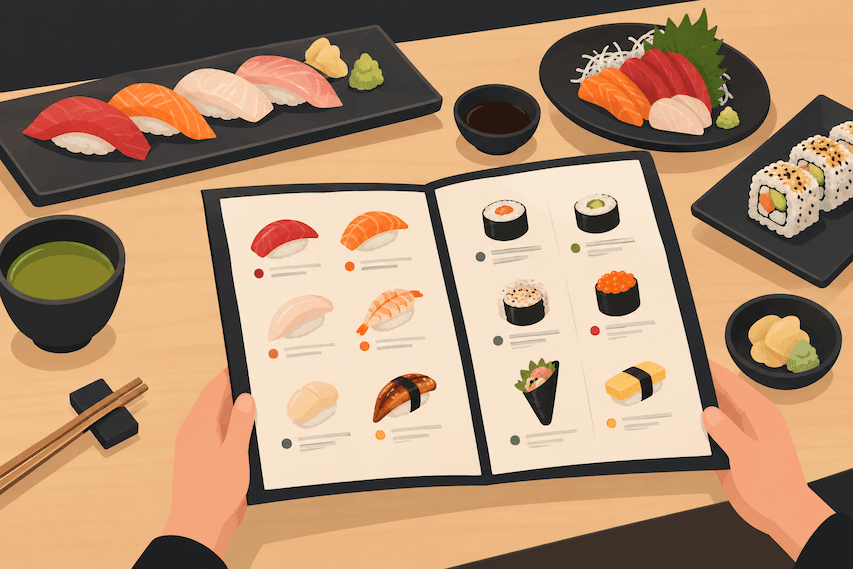
Ordering sashimi before signature rolls is also a structural choice with practical logic. Rolls like the Tokyo Gold Roll — shrimp tempura, eel, avocado, tuna, ikura, spicy mayo, and 24K gold leaf — are complex, rich, and intentionally bold. If those come first, sashimi will register as flat afterward. The reverse order lets the clean flavors of sashimi establish a baseline that makes the rolls feel like a natural escalation.
For guests unfamiliar with how to navigate a full Japanese menu, the first-timer’s ordering guide for Tokyo Sushi Speakeasy provides a complete sequence from starters through cocktails.
What Is Ponzu and Why Does It Appear Across the Sashimi Menu?
Ponzu is a Japanese condiment made from citrus juice — traditionally yuzu, though sudachi, kabosu, or a blend of Western citrus are common substitutes — combined with soy sauce, rice wine, and sometimes dashi. The result is a liquid that is simultaneously bright, acidic, salty, and faintly umami.
Its appearance across three of the four sashimi varieties at Tokyo Sushi Speakeasy is not coincidence. Ponzu is structurally suited to raw fish because its acidity performs two functions simultaneously: it brightens the natural sweetness of the protein and it cleanses the palate between bites. Neither straight soy sauce nor plain citrus achieves both at once.
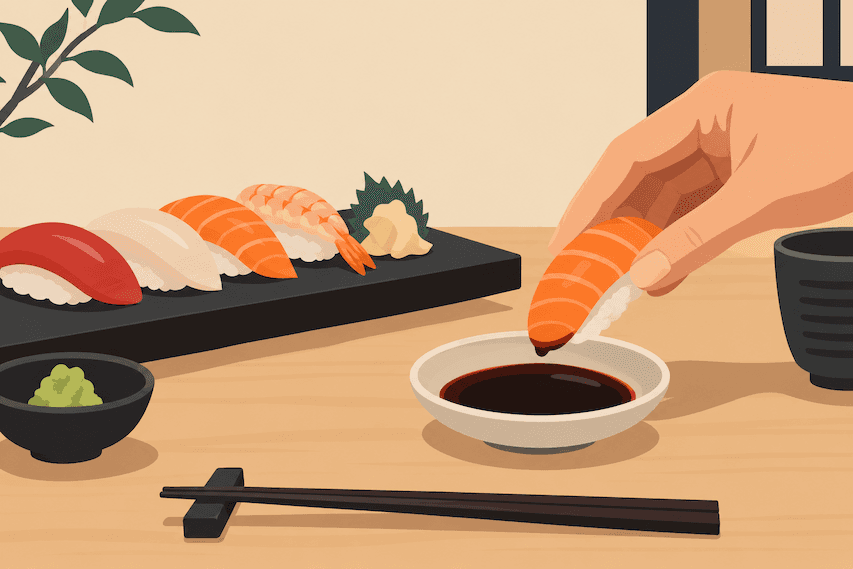
In practice, the correct approach to ponzu with sashimi is to use it sparingly. A light dip — not a soak — is enough. Over-saucing sashimi defeats the purpose of ordering it: the fish disappears behind the condiment, and what you are tasting is ponzu, not the quality of the cut.
This is the same restraint principle that applies across the wider Edomae tradition that informs the kitchen at Tokyo Sushi Speakeasy. For more on how that philosophy shapes the menu, the Edomae piece goes into the technique and its South Beach application in depth.
Frequently Asked Questions
What is the difference between sashimi and nigiri?
Sashimi is sliced fish served alone, with no rice. Nigiri is a formed ball of seasoned rice with a slice of fish pressed on top. Both highlight raw fish quality, but nigiri adds the variable of rice seasoning and hand temperature to the experience. Sashimi is the purer test of the fish itself.
Is sashimi always raw?
Not always. Freshwater eel (unagi) sashimi is always cooked because raw eel contains toxins in its blood that must be neutralized by heat. Shrimp and octopus are also commonly cooked before being served as sashimi. At Tokyo Sushi Speakeasy, the eel sashimi is the one cooked option on the sashimi menu.
How many pieces of sashimi should I order per person?
As a standalone starter, one order of five pieces is typically enough per person before moving to rolls or other plates. If building a meal around sashimi, two to three varieties per person — ten to fifteen pieces — with small accompaniments creates a complete experience without overextending the palate.
What should I drink with sashimi?
Sake is the traditional pairing. A junmai or junmai ginjo — clean, lightly fruity, and low in tannin — complements most sashimi without competing with it. Citrus-forward cocktails work well with fattier varieties like salmon. Avoid heavily tannic red wines, which flatten the delicate flavor of raw fish.
Does the order in which I eat sashimi matter?
Yes, practically speaking. Starting with lighter, leaner fish (hamachi or tuna) before moving to fattier options (salmon, then eel) keeps the palate calibrated. Eating in reverse order means the fat of salmon or eel coats the tongue before the cleaner flavors register, which reduces the perceptible distinction between varieties.
How do I know the sashimi I am eating is fresh?
Fresh sashimi has a clean oceanic scent — not a strong or “fishy” odor. The flesh holds its shape under the slice and does not appear wet, mushy, or discolored at the edges. The color should be vivid and consistent: deep orange for salmon, rich red for tuna, pale gold for hamachi. Any graying at the cut edge indicates age.
The sashimi menu at Tokyo Sushi Speakeasy is built on the premise that restraint is a form of confidence. Four varieties, sourced daily, cut to order, plated without distraction. If you are planning a visit, reserve a table at Tokyo Sushi Speakeasy and order the sashimi first — everything after it will taste better for it.