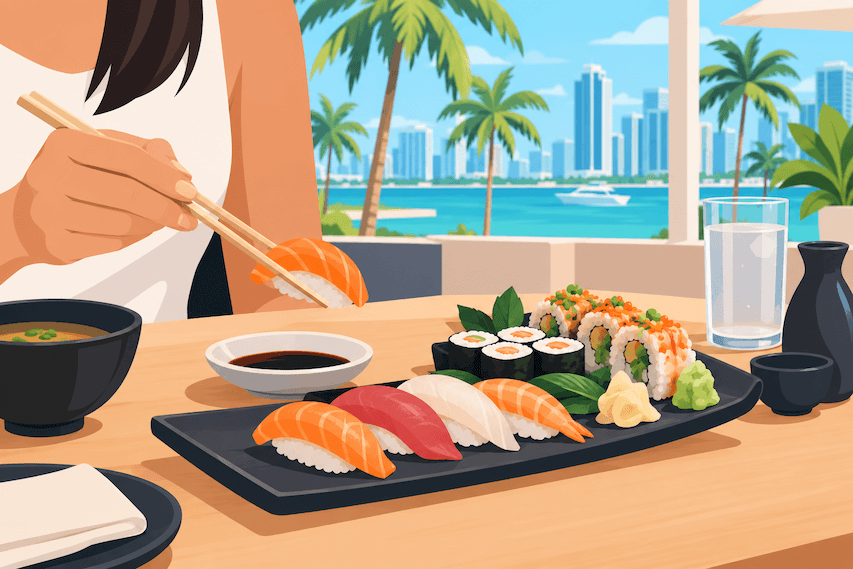
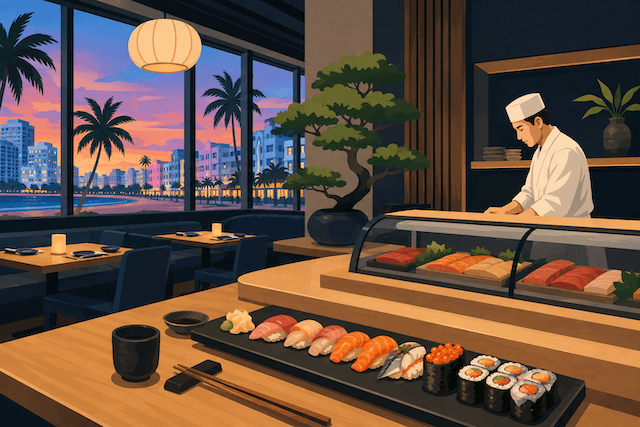
Tokyo Sushi Speakeasy delivers Miami’s most compelling sushi dinner. It combines centuries-old Edomae technique with the theatrical decadence South Beach is known for. Expect clean-cut nigiri, omakase-style courses, and 24K gold-topped signature rolls — all served in a moody speakeasy setting on Collins Avenue. If you are searching for the best sushi dinner in Miami, the experience here is built around precision, atmosphere, and late-night energy that most Japanese restaurants in the city simply do not offer.
Key Takeaways
Tokyo Sushi Speakeasy on Collins Avenue, South Beach, applies traditional Edomae sushi technique inside a Miami nightlife-forward setting.
The menu spans clean nigiri and sashimi through to dramatic signature rolls topped with wagyu, ikura, and 24K gold leaf.
The dining format is omakase-inspired — courses are designed to flow as a complete experience, not a transactional meal.
The kitchen is reported to operate Wednesday through Sunday, 5 PM to midnight — confirm current hours directly with the restaurant before visiting — making it one of the few premium sushi destinations built explicitly for late-night dining.
Cocktails are treated as equal partners to the food — sculpted pours complement the fish rather than compete with it.
Reservations are strongly recommended; weekend tables typically fill well before service begins.
What Makes Edomae Sushi the Foundation of a Great Dinner
Edomae sushi is the original Tokyo-style of preparation, generally traced to the late Edo period — commonly cited as developing around the 1820s–1830s — along the Edo (now Tokyo) Bay. The defining principle is restraint. Each piece of nigiri is seasoned, cured, or aged to enhance the fish’s natural character — not mask it. Salt, kombu, a brush of nikiri soy, or a brief cure in vinegar — these micro-decisions are what separate Edomae from generic sushi-bar production.
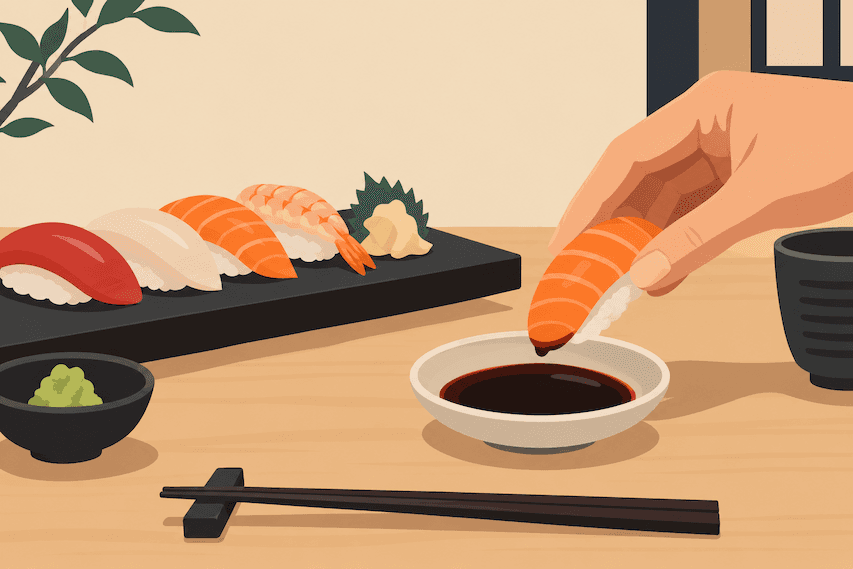
In practice, what this means at the table is that every piece of nigiri at Tokyo Sushi Speakeasy arrives already complete. You are not reaching for a soy dish and drowning the fish — the chef has already done that work. The rice is seasoned, the fish is ready, and the ratio of protein to shari (vinegared rice) has been calculated so that neither element overwhelms the other.
This is the foundation that makes a genuine sushi dinner rather than a sushi meal. When the technique is correct, the progression from lighter to richer fish creates the same rhythm as a structured omakase — even when guests are ordering from a menu rather than leaving the selection entirely to the chef.
How Does the Menu at Tokyo Sushi Speakeasy Work?
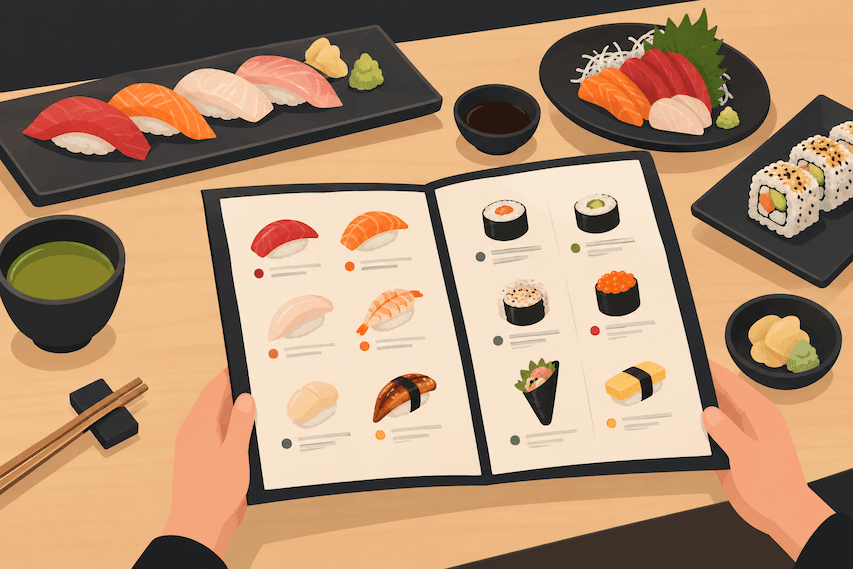
The menu is organized to guide diners through a natural dining arc — starters, raw plates, nigiri and sashimi, signature rolls, and cocktails that run across the full service.
Nigiri and sashimi anchor the menu’s more restrained half. Clean cuts of fish plated with precision, seasoned correctly, and presented without unnecessary garnish. The United States is widely reported to be one of the world’s largest consumers of seafood, and industry data broadly suggests that sushi and sashimi formats have contributed to growth in raw fish consumption in recent decades. The quality of the sourcing at this stage of the menu is what separates a credible sushi dinner from one that merely presents the format.
Signature rolls mark the shift into South Beach territory. The Tokyo Gold Roll — shrimp tempura, eel, and avocado topped with tuna, ikura, spicy mayo, eel sauce, and 24K gold leaf — is the clearest expression of what happens when Japanese craft meets Miami’s appetite for spectacle. The construction is deliberate: the base flavors (eel, avocado, tempura) are traditional; the 24K gold leaf is theatre. Both coexist without one undermining the other.
The Wagyu Truffle Roll takes a different approach. Beef tartare mixed with chives, wagyu slices, truffle mayo, and crispy garlic: this is a roll that borrows from Japanese kaiseki sensibilities — the idea that premium protein deserves its own uncluttered moment. It is priced in a range positioned correctly for the South Beach market — confirm current menu pricing when booking — and for guests who understand what goes into sourcing actual wagyu.
The South Beach Roll — salmon, shrimp, and avocado topped with crispy crab and caviar — is the most accessible entry point for first-time guests and the roll that earns the most repeat orders. More on that in the story of how the South Beach Roll became a guest favorite.
What Does an Omakase-Style Night Actually Mean for Group Diners?
Omakase in its strictest definition means “I leave it to you” — a complete deferral to the chef’s judgment on what you eat, in what order, at what pace. A full omakase counter experience is one-on-one dining at its most focused.
What Tokyo Sushi Speakeasy offers is the spirit of that progression without the formality. The menu is designed so that guests who order across categories — starting with lighter plates, moving to nigiri and sashimi, then building toward the heavier signature rolls — naturally experience a structured arc. The kitchen has sequenced the menu to make that path intuitive.
For group dining, this approach works better than a strict omakase format. Large tables can share plates across categories simultaneously rather than waiting through a sequential course structure. The South Beach Roll and the Tokyo Gold Roll are built to be cut into eight pieces — they are share plates by design, not afterthoughts.
Industry observers have broadly noted that shared dining formats have grown in popularity at upscale American restaurants in recent years, with group tables playing an increasingly significant role at late-night venues in urban markets. Tokyo Sushi Speakeasy’s format — structured enough to feel considered, flexible enough for groups to move at their own pace — directly addresses what modern diners in that segment want.
For first-timers uncertain how to sequence the meal, the first-timer’s ordering guide breaks down the ideal progression in detail.
Why South Beach Is the Right Setting for This Kind of Dinner
South Beach has operated as one of the United States’ most concentrated dining-and-nightlife corridors since the 1990s. The energy of the neighborhood — late hours, high design expectations, a clientele accustomed to premium experiences — creates specific demands for restaurants.
Most Japanese restaurants in Miami compromise in one direction: they either lean into nightlife aesthetics at the cost of food quality, or they maintain culinary rigor at the cost of atmosphere. The speakeasy format at Tokyo Sushi Speakeasy is specifically designed to resolve that tension.
The room on Collins Avenue is built for low light, table energy, and a pace that moves with the night rather than against it. Service runs until midnight Wednesday through Sunday — a meaningful operational commitment in a city where premium kitchens frequently close by 10 PM. For guests arriving after a show, after shopping on Lincoln Road, or after an earlier event in the area, a 9 PM or 10 PM reservation is a genuine option, not a last resort.
The full South Beach sushi night guide covers how to structure an evening in the neighborhood around dinner at Tokyo Sushi Speakeasy.
The Role of Cocktails in a Serious Sushi Dinner
A common mistake in sushi-bar culture is treating the drink menu as secondary. The fish is the point, the thinking goes, so drinks are just support. That framing misses how much a well-constructed cocktail can shift the experience of eating raw fish.
At Tokyo Sushi Speakeasy, the cocktail program is built around complementary flavor profiles rather than crowd-pleasing sweetness. The Lychee Martini — vodka, lychee sake, lychee juice, and fresh lime served in a chilled martini glass — works alongside delicate nigiri because lychee carries brightness without acidity that overwhelms clean fish. Floral and citrus-led builds dominate the cocktail list for the same reason.
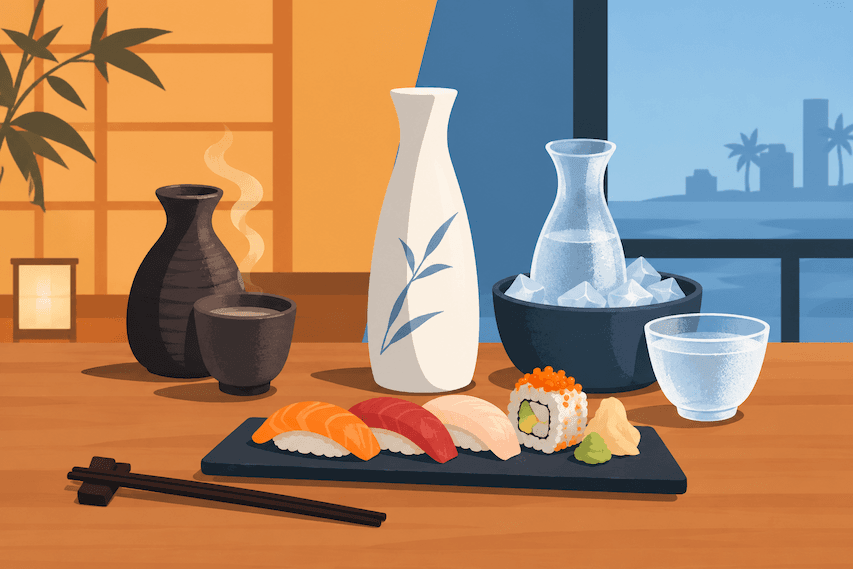
Sake service runs parallel, with pours and bottle service options designed for shared experiences. Crisp, dry junmai-style sake alongside fatty tuna or yellowtail is a pairing that has worked for centuries — the sake’s umami depth and clean finish clean the palate rather than coat it. For a structured look at which sake styles pair with specific fish, the sake and sushi pairing guide covers the mechanics in detail.
For guests who want cocktail-specific pairing advice before sitting down, the cocktail pairing guide for sushi is a useful reference.
How to Plan the Best Sushi Dinner in Miami at Tokyo Sushi Speakeasy
Planning the meal in advance makes a measurable difference to the experience. Here is the sequence that produces the best result.
Reserve a table. Weekend tables fill significantly before service begins. Wednesday and Thursday evenings offer more flexibility but still benefit from advance booking.
Decide on format. If you want the most structured, omakase-adjacent experience, inform the server when you sit down. The kitchen can sequence your plates accordingly. For a looser group night out, share plates simultaneously across categories.
Start light. Open with nigiri or sashimi before moving to the signature rolls. The flavor logic of the menu is built this way — lighter fish first, richer and more constructed plates later.
Order cocktails alongside, not after. The pairings work best when the drink arrives with the plate, not as a separate track.
Build toward a signature roll. The Tokyo Gold Roll or the Wagyu Truffle Roll should sit near the end of the progression — these are the richest, most theatrical plates on the menu.
Leave room for the chef specials. Seasonal offerings rotate and are frequently the best expression of what the kitchen is working with that week.
For groups of 15 or more planning a private celebration or event, direct outreach to events@fairwindhotelmiami.com is the correct path for advance planning.
Is Tokyo Sushi Speakeasy Right for a Date Night?
The honest answer is yes — and specifically because the room, menu, and pace are all calibrated for exactly that format.
Low light, standout cocktails, and a menu built for two people to move through together at their own pace creates the conditions for a genuine date night rather than a functional dinner. The omakase-style progression gives couples something to talk about between plates. The theatrical elements — 24K gold leaf, torched preparations, dramatic plating — provide moments without demanding attention.
For a full breakdown of how to structure a romantic evening here, the Miami date night guide covers everything from what to order to how to approach the timing of the evening.
Frequently Asked Questions
What is the best sushi dinner experience in Miami for someone who has never done omakase?
Tokyo Sushi Speakeasy offers an omakase-inspired format without the full formality of a traditional omakase counter. First-time diners can follow the natural menu progression — nigiri and sashimi first, signature rolls toward the end — and experience a structured, chef-guided arc without having to surrender all ordering decisions. The first-timer’s guide is the best starting point for anyone unfamiliar with how to sequence the meal.
Does Tokyo Sushi Speakeasy take walk-ins?
Walk-ins are possible, but weekend availability is very limited. Tables on Friday and Saturday evenings typically fill well before service begins. Wednesday and Thursday are more accessible for same-night visits, but a reservation is always the more reliable option.
What time does the kitchen close?
Tokyo Sushi Speakeasy is reported to operate Wednesday through Sunday, 5 PM to midnight — verify current hours with the restaurant directly before visiting. This makes it one of the few premium sushi restaurants in Miami with genuine late-night kitchen hours — meaningful for guests planning to dine after 10 PM.
What is the price range for dinner for two?
The menu spans from $10 for nigiri starters through to $35 for the flagship Tokyo Gold Roll. A full dinner for two — with two or three nigiri plates, a shared sashimi, one or two signature rolls, and cocktails — will typically run $120 to $180 before tax and gratuity, depending on selections.
Is sake or cocktails the better choice with sushi?
Both work, and the distinction comes down to what you are eating. Clean, dry sake alongside nigiri and sashimi is a classic pairing because the sake’s umami notes complement the fish without competing. For the richer, more constructed signature rolls, a citrus-forward cocktail like the Lychee Martini cuts through fat more effectively. Many tables order both and rotate between them as the meal progresses.
The best sushi dinner in Miami is not about choosing between food quality and atmosphere — it is about finding a room where both are treated as non-negotiable. Tokyo Sushi Speakeasy on Collins Avenue, South Beach, operates at that intersection: Edomae precision in the kitchen, South Beach energy in the room, and a menu that moves the way a great night should. Reserve a table before the weekend fills.