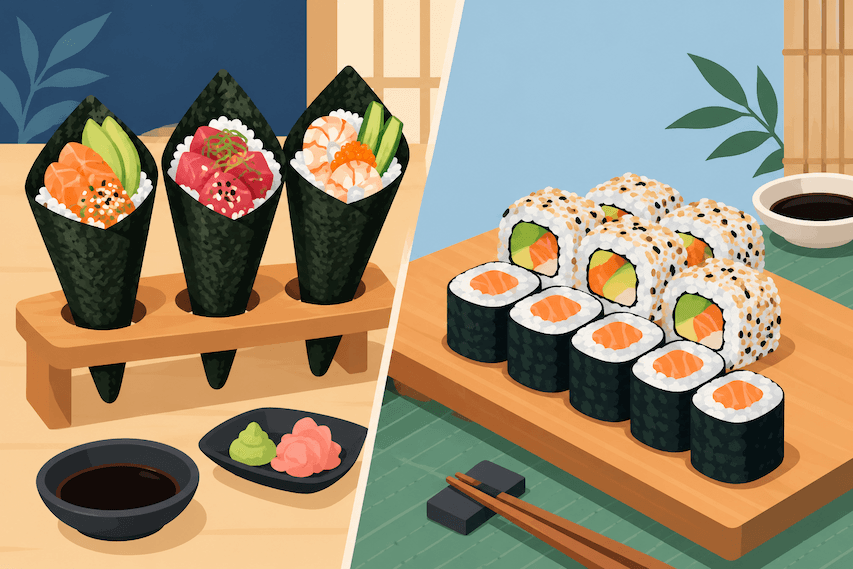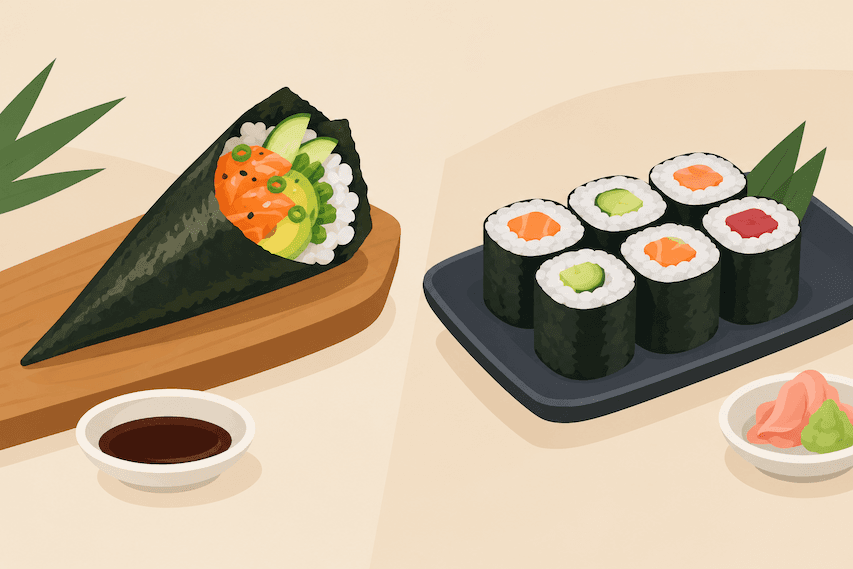
Temaki and maki are two popular types of Japanese sushi, but they differ in shape, preparation, texture, and how they are eaten. Temaki is a cone-shaped hand roll designed to be enjoyed by hand, while maki is a cylindrical sushi roll cut into individual bite-sized pieces. Both combine seasoned sushi rice, nori seaweed, and a variety of fillings, but each offers a different dining experience.
Understanding the difference between temaki vs. maki can help you choose the right sushi for your appetite, preferences, and occasion. Whether you prefer a casual hand roll or a traditional platter of sliced sushi, both styles offer plenty of ways to enjoy Japanese flavors.
What Is the Difference Between Temaki and Maki?
The main difference between temaki and maki is their shape and preparation. Temaki is rolled by hand into a cone, while maki is formed into a cylinder and sliced into individual pieces before serving.
Both styles typically use vinegared sushi rice, nori, and fillings such as seafood, vegetables, or cooked ingredients. The biggest distinction is how the ingredients are assembled and presented.
Feature | Temaki | Maki |
|---|---|---|
Shape | Cone-shaped | Cylindrical and sliced |
Preparation | Rolled by hand | Rolled into a cylinder using a mat or similar technique |
Serving style | Usually served as one hand roll | Usually served as several bite-sized pieces |
How to eat it | With your hands | Commonly with chopsticks or your hands |
Nori texture | Best when freshly made and crisp | Depends on the roll and time after preparation |
Typical fillings | Fish, rice, vegetables, and other toppings | Fish, vegetables, rice, sauces, and other fillings |
Dining experience | Casual and interactive | Convenient for individual bites or sharing |
The simplest way to remember the difference is that temaki is a hand-held sushi cone, while maki is a sliced sushi roll.
What Is Temaki Sushi?
Temaki is a Japanese hand roll made by wrapping sushi rice and selected fillings in a sheet of nori to create a cone. It is designed to be eaten with your hands, making it a convenient option for diners who enjoy a more casual sushi experience.
The word temaki combines the Japanese words te, meaning hand, and maki, meaning roll. Unlike sushi rolls that are cut into multiple pieces, temaki is shaped individually and typically served whole.
What Ingredients Are Used in Temaki?
Temaki usually contains three main components: nori, seasoned sushi rice, and one or more fillings. The ingredients can be simple or elaborate, depending on the chef’s preparation and the style of the hand roll.
Common ingredients include:
Nori: Dried seaweed that forms the outer cone and provides a crisp, savory flavor.
Sushi rice: Vinegared rice that adds a slightly tangy flavor and soft texture.
Seafood: Options may include tuna, salmon, shrimp, crab, or yellowtail.
Vegetables: Cucumber, avocado, and scallions can add freshness and crunch.
Sauces and seasonings: Spicy mayonnaise, soy-based sauces, or other condiments may complement the filling.
Not every temaki contains raw fish. Depending on the ingredients, hand rolls can also feature cooked seafood or vegetables.
Why Is Temaki Usually Eaten Immediately?
Temaki is best enjoyed shortly after preparation because moisture from the rice and fillings can soften the nori. Eating it while the seaweed is crisp creates a satisfying contrast between the crunchy exterior and the soft, flavorful ingredients inside.
For the best experience, hold the cone near its wider end and eat from the open top toward the pointed end. This helps keep the filling together while allowing you to enjoy the ingredients in each bite.
What Does Temaki Taste Like?
Temaki combines the savory flavor of seaweed with seasoned rice and the texture of its chosen fillings. Depending on the ingredients, a hand roll can taste fresh and delicate, creamy and rich, or spicy and savory.
For example, salmon and avocado can create a soft, buttery combination, while shrimp tempura and cucumber offer a contrast between crispy and refreshing textures. The flavor ultimately depends on the filling rather than the cone shape alone.
What Is Maki Sushi?
Maki, also called makizushi, is sushi made by rolling seasoned rice and fillings in nori or, in some styles, placing the rice on the outside. The roll is then cut into individual pieces, making it easy to serve as a platter or share with others.
Maki is one of the most recognizable sushi styles. Its consistent shape makes it convenient to eat, and its variety of fillings allows chefs to create everything from simple traditional rolls to elaborate modern combinations.
What Ingredients Are Used in Maki?
Maki commonly contains sushi rice, nori, and one or more fillings. The ingredients may be arranged in different combinations to create distinctive flavors and textures.
Popular fillings include:
Tuna or salmon
Cucumber and avocado
Crab or imitation crab
Shrimp tempura
Yellowtail
Cooked eel
Spicy seafood mixtures
Cream cheese or other modern additions
Some rolls emphasize a single ingredient, while others combine seafood, vegetables, sauces, and toppings for a more complex flavor.
What Are the Main Types of Maki?
Maki includes several variations, each with its own construction and appearance.
Hosomaki: Thin rolls that typically contain one main filling, such as cucumber or tuna. They are simple, compact, and easy to eat.
Futomaki: Thick rolls containing several ingredients. They often combine vegetables, seafood, and other fillings to create a more substantial bite.
Uramaki: Inside-out rolls with rice on the outside and nori around the fillings. Sesame seeds, fish roe, or other toppings may be added to the exterior.
These styles differ in size, ingredients, and construction, but they all fall under the broader category of rolled sushi. For a wider overview of nigiri, sashimi, temaki, and other Japanese sushi styles, see the Sushi Types: The Complete Guide to Ordering Like a Pro.
Why Is Maki Cut Into Pieces?
Cutting maki into individual portions makes the roll easier to serve and eat. It also exposes the cross-section of the ingredients, showing how the rice, seaweed, and fillings fit together.
The number of pieces depends on the roll’s size and the restaurant’s serving style. Because each piece contains a combination of ingredients, diners can enjoy a balanced bite without needing to hold an entire roll.
How Do Temaki and Maki Differ in Texture?
Temaki and maki can contain similar ingredients, but their shape and serving style affect the eating experience. Temaki emphasizes the contrast between crisp nori and soft fillings, while maki provides a compact bite in which the ingredients are held together in a uniform shape.
Which Has Crispier Seaweed?
Temaki often offers a more noticeable crunch when served immediately after preparation. Because the cone is assembled for individual eating, the nori can retain its crispness before moisture from the rice and fillings softens it.
Maki can also have crisp seaweed, particularly when freshly prepared. However, moisture may spread through the roll as it sits, especially when the filling contains wet ingredients or sauces.
Neither style is automatically crispier in every situation. Freshness, preparation, ingredients, and time before eating all influence the final texture.
Which Has a Better Balance of Ingredients?
Both styles can deliver balanced flavors, but they distribute ingredients differently. Maki usually creates a compact cross-section with a relatively consistent combination of rice and filling in each piece.
Temaki offers a more open structure, allowing diners to experience the filling as they bite into the cone. The texture may vary from the top to the lower portion depending on how the ingredients are arranged.
If you enjoy uniform bites, maki may be your preference. If you like a more casual, layered eating experience, temaki may be a better fit.
Is Temaki Healthier Than Maki?
Neither temaki nor maki is automatically healthier. The nutritional value of either style depends on portion size, rice quantity, seafood, vegetables, sauces, and preparation methods.
A simple hand roll with fish and vegetables may offer a different nutritional profile from a large specialty roll containing tempura, mayonnaise, and sweet sauces. The same principle applies when comparing different types of maki.
Consider these factors when choosing:
Rice quantity: Rice contributes carbohydrates and calories.
Protein: Fish, shrimp, crab, and other seafood can provide protein.
Vegetables: Cucumber, avocado, and other vegetables add different nutrients and textures.
Fried ingredients: Tempura fillings typically add more fat and calories than comparable non-fried ingredients.
Sauces: Creamy or sweet sauces can increase the overall calorie content.
Portion size: One hand roll and a full plate of maki may represent very different amounts of food.
If you have a specific dietary requirement, ask the restaurant about ingredients, sauces, and preparation methods rather than assuming a particular sushi style will meet your needs.
Which Is Easier to Eat: Temaki or Maki?
Maki is often easier for beginners because each piece is small, self-contained, and simple to pick up. Temaki is also approachable, but its cone shape requires you to hold the roll carefully and eat it before the nori loses its crisp texture.
How Do You Eat Temaki Properly?
Temaki is traditionally eaten with your hands. You do not need chopsticks to enjoy it, and using your hands makes it easier to control the cone.
Follow these simple steps:
Hold the temaki near the wider end of the cone.
Keep the open end facing upward so the fillings remain inside.
Take bites from the open end rather than trying to eat the entire cone at once.
Enjoy it soon after serving to experience the intended texture.
Use a napkin if the filling or sauce becomes messy.
There is no need to make the process complicated. Temaki is designed to be convenient and enjoyable.
How Do You Eat Maki Properly?
Maki can be eaten with chopsticks or your hands, depending on your preference and the restaurant’s setting. Pick up an individual piece carefully and eat it in one bite when practical.
A few simple tips can help:
Use chopsticks to lift a piece without squeezing it too firmly.
If you prefer eating with your hands, pick up the piece gently.
Use soy sauce sparingly if you choose to add it.
Avoid soaking the rice, which can cause the piece to become overly salty or fall apart.
Enjoy different rolls at a comfortable pace, especially when sharing several varieties.
Both styles are meant to be enjoyed without unnecessary fuss. Choose the method that feels most comfortable.
When Should You Choose Temaki Instead of Maki?
Choose temaki when you want a freshly assembled hand roll with a casual, hands-on eating experience. Choose maki when you prefer bite-sized pieces, a wider selection of roll styles, or sushi that is easy to share across the table.
The best option depends on your preferences and the type of meal you want.
Is Temaki Better for a Casual Sushi Meal?
Temaki is a good choice for diners who enjoy eating with their hands and appreciate the texture of freshly prepared nori. Its individual serving style can make it feel relaxed and personal.
It is also worth considering when you want to focus on a small number of ingredients rather than a heavily topped specialty roll. A straightforward combination of seafood, rice, and vegetables can highlight the individual flavors.
Is Maki Better for Sharing?
Maki is often convenient for sharing because a single roll is divided into several pieces. A table can order different varieties and sample multiple combinations without committing to a full serving of each style.
This makes maki a practical option for date nights, group dinners, and celebrations where everyone may want to try something different.
At a restaurant with a diverse Japanese menu, you can also combine rolls with nigiri, sashimi, and small plates to create a more varied meal.
Can You Order Temaki and Maki Together?
Yes, temaki and maki can be enjoyed as part of the same meal, provided both styles are available on the restaurant’s menu. Ordering both lets you compare their textures and serving styles while enjoying different ingredients.
For a balanced sushi meal, consider building your order around variety rather than choosing several dishes that taste almost identical.
For example, you could combine:
One hand roll for a fresh, crisp contrast.
A simple maki roll with fish or vegetables.
A specialty roll with more complex toppings.
Nigiri or sashimi if you want to explore the flavor of individual seafood ingredients.
A small plate or drink to round out the meal.
The right combination depends on appetite, budget, and the menu. If you are dining with other people, sharing a few maki varieties and ordering individual hand rolls can provide a good mix of convenience and personal preference.
For diners who enjoy pairing Japanese dishes with drinks, the Liquor and Sushi Pairing Guide offers additional ideas for thinking about flavors across a meal.
What Should Beginners Order: Temaki or Maki?
Maki is often the easiest starting point for beginners because it comes in familiar bite-sized portions and offers a wide variety of fillings. Temaki is another approachable option if you enjoy hand-held food and want to experience the contrast between nori, rice, and filling.
If you are new to sushi, consider starting with ingredients and textures you already enjoy.
For mild flavors: Try a simple cucumber or avocado roll.
For cooked seafood: Look for a roll with cooked shrimp or another cooked filling.
For richer textures: Consider salmon or avocado combinations, depending on your preferences.
For a little crunch: Explore rolls with crispy ingredients.
For a more traditional flavor profile: Ask about straightforward fish and rice combinations.
If you are unsure about raw seafood, check whether the dish contains raw or cooked ingredients before ordering. Restaurant menus and preparations vary, so asking your server is the best way to make an informed choice.
Frequently Asked Questions About Temaki vs. Maki
Is temaki the same as a sushi hand roll?
Yes. Temaki is the Japanese name for a hand-rolled sushi cone. It typically contains seasoned rice, nori, and fillings such as seafood or vegetables, and it is usually eaten by hand.
Is maki the same as a sushi roll?
Maki is a type of sushi roll made by rolling rice and fillings into a cylindrical shape, often with nori, and cutting it into individual pieces. The term includes different variations, such as hosomaki, futomaki, and uramaki.
Does temaki contain rice?
Most traditional temaki contains seasoned sushi rice along with nori and other fillings. The exact ingredients depend on the recipe and restaurant.
Does maki always contain raw fish?
No. Maki can contain raw seafood, cooked seafood, vegetables, or combinations of ingredients. Shrimp tempura rolls and cucumber rolls are examples of maki that do not require raw fish.
Can you eat temaki with chopsticks?
You can, but temaki is traditionally eaten with your hands. Its cone shape makes it easier to hold and bite into directly.
Which is more filling, temaki or maki?
It depends on the size of the serving and the ingredients. One large hand roll may be more filling than a few small maki pieces, while a full plate of maki may contain considerably more food than one temaki.
Is temaki more traditional than maki?
Both are established Japanese sushi styles. Temaki is distinguished by its hand-rolled cone shape, while maki covers a broader range of cylindrical rolls. Neither style is inherently more authentic simply because of its shape.
Which should I order for my first sushi experience?
Maki is a convenient starting point because it comes in small, easy-to-eat portions with many familiar fillings. Temaki is also a good choice if you want a freshly assembled hand roll and enjoy eating with your hands.
Final Thoughts: Temaki vs. Maki
The difference between temaki and maki comes down to shape, preparation, texture, and serving style. Temaki is a cone-shaped hand roll designed to be eaten fresh with your hands, while maki is a cylindrical roll cut into bite-sized pieces that are convenient for individual dining or sharing.
If you prefer crisp nori and a casual, hands-on experience, temaki may be the right choice. If you want variety, uniform bites, and easy sharing, maki is an excellent option.
Ultimately, you do not have to choose just one. Trying both styles is a simple way to explore different sushi textures and ingredients while discovering what you enjoy most.