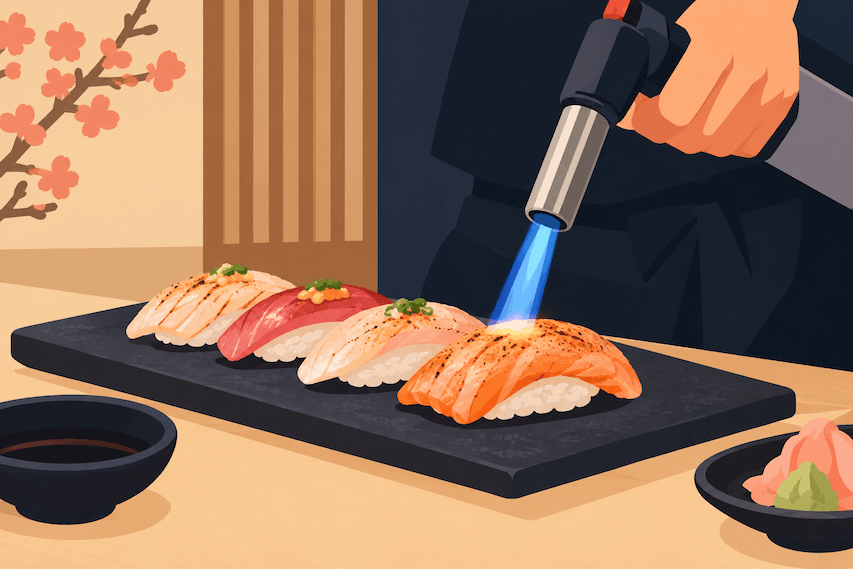
Aburi sushi is a Japanese sushi preparation in which the surface of the fish or another topping is briefly seared with a flame, often using a culinary torch. This quick application of heat creates a lightly charred exterior, a warm surface, and deeper savory flavors while the center may remain raw or only partially cooked.
The result is a contrast of textures and flavors that makes aburi sushi appealing to diners who enjoy traditional sushi but want something with a little more richness, smokiness, and aroma. Understanding how it is prepared, how it differs from other sushi styles, and what to expect when ordering can help you appreciate this distinctive Japanese technique.
What Is Aburi Sushi?
Aburi sushi is sushi finished with a brief application of direct heat, usually to sear the surface of the fish or its toppings. The Japanese word aburi refers to a flame-searing or torching technique rather than one specific type of sushi.
Unlike fully cooked sushi preparations, aburi sushi often retains a raw or tender center beneath its lightly seared exterior. The exact result depends on the fish, the thickness of the topping, the intensity of the flame, and the chef’s technique.
Aburi is a preparation method, not a separate category of sushi rice or a particular shape of sushi. It can be applied to different ingredients and sushi styles.
How Is Aburi Sushi Prepared?
Aburi sushi is prepared by assembling sushi and briefly searing the exposed surface of the fish or topping with a controlled flame. The chef applies heat for just long enough to change the exterior without necessarily cooking the entire piece.
A typical preparation follows these steps:
Prepare the sushi rice. The rice is seasoned with vinegar and shaped according to the style being served.
Add the topping. Fish or another suitable ingredient is placed on the rice or incorporated into a roll.
Apply direct heat. A culinary torch briefly sears the exposed surface, creating light browning and releasing aromatic oils.
Finish the dish. Depending on the recipe, the chef may add a sauce, seasoning, citrus, or another garnish.
Serve promptly. Aburi sushi is generally enjoyed soon after preparation, while the contrast between its warm exterior and tender interior is most noticeable.
The technique requires control. Too little heat may produce minimal browning, while excessive heat can dry out delicate fish or overpower its natural flavor.
Why Do Sushi Chefs Use a Torch?
A culinary torch allows a chef to apply concentrated heat to the surface of an ingredient without cooking the entire piece for an extended period. This creates a different flavor and texture from serving the same ingredient completely raw.
Torching can also help render some of the fat near the surface of richer fish, releasing aromas and producing a more pronounced savory character. The technique gives chefs another way to balance the natural flavor of seafood with rice, sauces, and seasonings.
What Does Aburi Sushi Taste Like?
Aburi sushi often tastes richer, warmer, and more savory than the same ingredient served completely raw. Brief searing adds toasted aromas and subtle smoky notes, while the center may retain the delicate texture and flavor of uncooked fish.
The precise taste depends on the ingredient and how it is prepared. Fatty fish may become especially rich and buttery, while leaner fish can develop a more pronounced roasted surface without losing all of their delicate character.
Common flavor characteristics include:
Light smokiness: Direct heat creates toasted aromas and a lightly charred surface.
Savory depth: Browning can produce additional roasted flavors.
Richness: Heat can render some surface fat, making certain fish taste more buttery.
Texture contrast: The exterior may be warm and lightly firm while the interior remains tender.
Balanced seasoning: Sauces, citrus, and other toppings can add sweetness, acidity, saltiness, or heat.
Aburi sushi is not necessarily spicy, heavily smoked, or fully cooked. Those characteristics depend on the recipe rather than the technique itself.
Does Aburi Sushi Taste Different From Raw Sushi?
Yes. Aburi sushi develops toasted aromas and surface browning that are absent from completely raw preparations. However, it can retain much of the same underlying seafood flavor, particularly when the chef uses only a brief sear.
For example, a piece of salmon served raw may taste clean, soft, and rich. When lightly torched, its surface can develop a deeper roasted aroma while the interior remains tender. The difference comes from the interaction between heat, surface fat, and the fish’s natural flavor.
The technique does not automatically make every piece better. Some diners prefer the clean taste of raw fish, while others enjoy the additional complexity created by searing.
What Ingredients Are Commonly Used in Aburi Sushi?
Aburi sushi can be made with several types of fish and seafood, although the best choice depends on the ingredient’s texture, fat content, and how it responds to heat. Richer fish are often well suited to brief searing because their surface fat can contribute to a fuller flavor.
Common examples include:
Ingredient | What torching can add |
|---|---|
Salmon | A richer aroma and a lightly roasted surface |
Fatty tuna | Warmth and additional savory notes from surface fat |
Yellowtail | A more pronounced surface aroma while retaining a tender center |
Scallop | Light browning and a sweeter, more toasted flavor |
Eel | Additional warmth and a complementary roasted finish when prepared appropriately |
These are examples of ingredients used in aburi-style preparations, not a guarantee that every restaurant offers them.
The choice of fish is only one part of the experience. Rice temperature, seasoning, torching time, sauce, and serving technique all affect the final result.
What Sauces and Toppings Pair Well With Aburi Sushi?
The best accompaniments complement the seared surface without overwhelming the seafood. A small amount of seasoning can enhance the roasted flavor, but too much sauce may hide the differences between the fish and the rice.
Common accompaniments include:
Ponzu: Adds citrusy acidity that can balance richer seafood.
Soy-based sauces: Provide saltiness and umami.
Spicy mayonnaise: Adds creaminess and heat.
Eel sauce: Offers a sweet and savory finish.
Scallions: Contribute freshness and a mild onion flavor.
Citrus zest: Adds aromatic brightness.
Sesame: Provides a nutty flavor and a little extra texture.
Not every combination works equally well. Delicate seafood generally benefits from restrained seasoning, while richer ingredients can handle more assertive flavors.
What Is the Difference Between Aburi Sushi, Nigiri, and Sashimi?
The main difference is that aburi describes a cooking technique, nigiri describes a style of sushi, and sashimi refers to sliced seafood served without sushi rice. These terms are related, but they do not describe the same thing.
Feature | Aburi sushi | Nigiri | Sashimi |
|---|---|---|---|
What the term describes | A flame-searing technique | A sushi shape made with rice and a topping | Sliced seafood served without sushi rice |
Rice included? | Often, but it depends on the preparation | Yes | No |
Fish cooked? | Surface is seared; the center may remain raw | Usually raw, but some toppings may be cooked | Usually raw |
Typical texture | Seared exterior with a potentially tender center | Depends on the topping and rice | Depends on the fish and cut |
Main appeal | Contrast between toasted and fresh flavors | Balance of rice, topping, and seasoning | Focus on the seafood’s texture and flavor |
Can Nigiri Also Be Aburi?
Yes. Nigiri can be prepared using the aburi technique when the chef briefly torches the fish or topping placed over the rice.
This means a piece of sushi can be both nigiri and aburi. The terms describe different aspects of the preparation: one identifies the form, while the other identifies the use of direct heat.
For a broader introduction to sushi styles, including nigiri, maki, and temaki, see our complete guide to sushi types.
Is Aburi Sushi the Same as Fully Cooked Sushi?
No. Aburi sushi is often only seared on the surface, whereas fully cooked sushi preparations use methods that cook the ingredient more thoroughly.
The center of an aburi piece may remain raw or partially cooked. The degree of cooking varies according to the ingredient, the thickness of the piece, and the chef’s method.
A brief torching process should not be assumed to cook the fish safely throughout. People who need to avoid raw or undercooked seafood should ask the restaurant about fully cooked alternatives.
Is Aburi Sushi Safe to Eat?
Aburi sushi is not automatically safe simply because the fish has been torched. Surface searing may leave the center raw, and the technique does not necessarily eliminate parasites or harmful microorganisms throughout the fish.
Food safety depends on sourcing, storage, handling, preparation, and the specific ingredient. Fish intended for raw consumption must be handled appropriately, and applicable parasite-control requirements should be followed.
Keep these considerations in mind:
Ask how the fish is prepared. A seared surface does not mean the entire piece is cooked.
Choose reputable restaurants. Proper refrigeration, hygienic preparation, and responsible sourcing matter.
Mention allergies and dietary restrictions. Sauces and garnishes may contain ingredients that are not immediately obvious.
Request fully cooked options when necessary. If you need to avoid raw seafood, ask for a preparation that is cooked throughout.
Consider personal health risks. Pregnant people, young children, older adults, and people with weakened immune systems are generally advised to avoid raw or undercooked seafood.
For more information, consult the U.S. Food and Drug Administration’s seafood safety guidance.
How Should You Order Aburi Sushi for the First Time?
If you are trying aburi sushi for the first time, start with a preparation that lets you appreciate the contrast between the seared exterior and the tender interior. Salmon or another richer fish can be a useful starting point, provided it is available and suits your preferences.
You do not need to know every Japanese sushi term to order confidently. A few simple questions about the fish, cooking method, and seasoning can help you choose something you will enjoy.
What Should You Look for When Choosing Aburi Sushi?
Look for a preparation that balances the natural seafood flavor with the aroma of the seared surface. The fish should not taste overwhelmingly burnt, and the sauce should complement rather than dominate the ingredient.
Consider these factors when ordering:
Choose your preferred fish. Start with a familiar ingredient if you are unsure which flavors you enjoy.
Ask how thoroughly it is cooked. Confirm whether only the surface is seared or whether the seafood is cooked throughout.
Check the sauce. Ask whether the preparation is sweet, spicy, citrusy, or savory.
Consider the richness. Fatty fish and creamy sauces can create a heavier bite than leaner seafood with simple seasoning.
Order a small selection first. Trying a few pieces lets you compare different flavors without committing to a large order.
If you are exploring Japanese dining in South Florida, our guide to sushi in Miami offers more context on sushi styles and what to consider when choosing a restaurant.
Should You Eat Aburi Sushi With Soy Sauce?
You can, but you may not need much additional soy sauce. Some aburi preparations already include seasoning or a finishing sauce designed to complement the fish.
Try the first piece as served before adding anything else. If it tastes balanced, additional soy sauce may be unnecessary. If you prefer more seasoning, use a small amount so the natural flavor of the seafood remains noticeable.
The goal is to enjoy the balance of rice, seafood, and seared aromas rather than covering every flavor with extra sauce.
Why Is Aburi Sushi Popular in Modern Japanese Dining?
Aburi sushi offers a way to combine traditional sushi craftsmanship with the flavor and aroma of direct heat. It introduces roasted notes and a different texture while allowing chefs to work with familiar ingredients in a new way.
The technique also gives diners more variety within a sushi meal. Someone who enjoys raw nigiri can explore a seared preparation, while a diner who is hesitant about completely raw fish may appreciate the warmer surface and more pronounced roasted flavors—although aburi should not be treated as a substitute for fully cooked seafood.
Modern Japanese restaurants often balance classic techniques with creative sauces, presentation, and contemporary dining experiences. If you are exploring different approaches to Japanese dining, you can also read our guide to omakase in Miami to understand how chef-guided meals can introduce diners to a wider range of preparations.
Frequently Asked Questions About Aburi Sushi
What Does Aburi Mean in Japanese?
Aburi refers to a method of flame-searing or lightly torching an ingredient. In sushi preparation, it generally means applying direct heat to the surface of fish or another topping to develop roasted aromas and a lightly seared texture.
Is Aburi Sushi Raw or Cooked?
Aburi sushi can be partially cooked, with a seared exterior and a raw or tender center. The exact result depends on the ingredient and cooking method, so ask the restaurant if you need to know whether the seafood is fully cooked.
Is Aburi Sushi Always Made With Salmon?
No. Salmon is one common option, but aburi techniques can be applied to other suitable fish and seafood, including fatty tuna, yellowtail, and scallops. Availability varies by restaurant.
Does Aburi Sushi Taste Smoky?
Aburi sushi often has a light smoky or roasted aroma from the searing process. The intensity depends on the ingredient, the flame, and how long the surface is exposed to heat.
Is Aburi Sushi Spicy?
Not necessarily. Aburi refers to the searing technique, not a particular seasoning. Some versions use spicy mayonnaise or chili-based sauces, while others rely on simple seasoning or citrus.
Is Aburi Sushi Good for People Who Do Not Like Raw Fish?
Some people enjoy aburi sushi because the seared surface changes its flavor and texture. However, the center may remain raw, so anyone who needs to avoid raw seafood should request a fully cooked preparation instead.
What Is the Difference Between Aburi and Seared Sushi?
The terms can overlap. Aburi commonly refers to flame-searing, often with a culinary torch, while “seared sushi” is a broader English description that may include other ways of applying heat to the surface.
Can Aburi Sushi Be Made Without Rice?
Yes. The aburi technique can be used on seafood served in different formats, including preparations without sushi rice. However, the term “aburi sushi” usually refers to a seared ingredient served as part of a sushi preparation.
Experience Japanese Sushi Beyond the Basics
Aburi sushi shows how a small change in preparation can transform the flavor and texture of familiar ingredients. By briefly searing the surface, a chef can introduce toasted aromas, savory depth, and a contrast between a warm exterior and a tender center.
Whether you already enjoy nigiri or are exploring Japanese cuisine for the first time, understanding aburi gives you another way to appreciate the technique behind sushi. Pay attention to the fish, the degree of searing, and the balance of seasoning to discover which preparations suit your taste.
When planning a Japanese dining experience in Miami Beach, explore the Tokyo Sushi Speakeasy menu to review the restaurant’s current selections. Ask the team about available preparations and ingredients before ordering, especially if you have dietary restrictions or prefer fully cooked seafood.