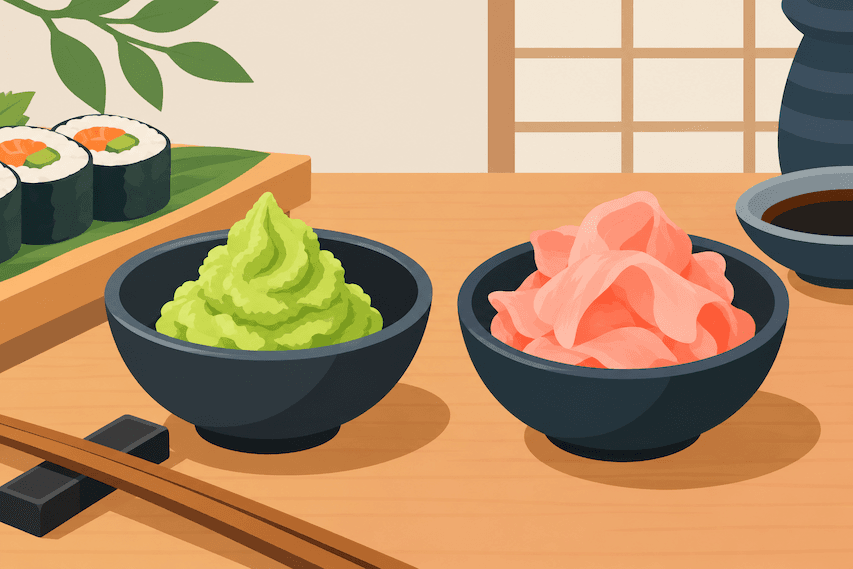
Wasabi and pickled ginger are two classic sushi accompaniments, but they serve different purposes. Wasabi adds a sharp, pungent heat that enhances the flavor of fish, while pickled ginger, known as gari, offers a sweet, tangy, refreshing bite that helps reset your palate between different pieces of sushi.
Understanding the difference can make a sushi meal more enjoyable, whether you’re ordering nigiri, sashimi, or specialty rolls. Both condiments have a place at the table, but knowing when and how to use them helps you appreciate the individual flavors of each dish.
What Is the Difference Between Wasabi and Pickled Ginger?
Wasabi is a pungent Japanese condiment traditionally made from the grated rhizome of the wasabi plant, while pickled ginger consists of thin slices of ginger preserved in a sweetened vinegar solution. Wasabi is primarily used to add heat and flavor, whereas pickled ginger is commonly eaten between different sushi selections to refresh the palate.
Although they are often served together, these condiments are not interchangeable. Each contributes a different taste, texture, and purpose to the dining experience.
Feature | Wasabi | Pickled Ginger |
|---|---|---|
Main ingredient | Wasabi plant; many commercial versions use horseradish and other ingredients | Fresh ginger |
Flavor | Sharp, pungent, peppery, and aromatic | Sweet, tangy, mildly spicy |
Texture | Smooth paste when prepared or sold as a paste | Thin, tender slices |
Main purpose | Add heat and complement savory flavors | Refresh the palate between bites |
Typical use | Small amounts with nigiri or sashimi | A small slice between different sushi selections |
Flavor intensity | Immediate, sharp sensation that fades relatively quickly | Milder, lingering sweet-and-sour flavor |
Common appearance | Pale green paste | Pale yellow to pink slices |
The key distinction is simple: wasabi adds intensity to a bite, while pickled ginger helps you transition from one flavor to another.
What Is Wasabi Used For When Eating Sushi?
Wasabi is used to add a sharp, aromatic heat that complements the savory flavor of fish and other sushi ingredients. Its pungency can bring contrast to richer seafood and enhance the overall balance of a bite without requiring a heavy sauce.
Why Does Wasabi Taste So Strong?
Wasabi’s distinctive heat comes from volatile compounds released when its plant tissue is crushed or grated. These compounds stimulate the nasal passages, creating a sharp sensation that differs from the lingering burn associated with chili peppers.
The result is an intense but relatively short-lived sensation. This makes wasabi particularly interesting alongside fish with delicate flavors or a richer texture.
However, not every product sold as wasabi contains a significant amount of genuine wasabi. Many commercial pastes rely largely on horseradish, mustard, and coloring, so the exact flavor depends on the product.
How Should You Use Wasabi With Sushi?
The best approach is to start with a very small amount and adjust according to your preference. Wasabi can be used with individual pieces of sushi, but the amount should complement the fish rather than overpower it.
Here are a few practical tips:
Start small. A little wasabi can make a noticeable difference, particularly if you’re unfamiliar with its intensity.
Consider the fish. Richer fish may stand up well to a little extra heat, while delicate fish can be overwhelmed by too much.
Taste before adding more. Some sushi preparations may already contain wasabi or other strongly flavored ingredients.
Ask your server. If you’re unsure whether a piece has already been seasoned, check before adding more.
Traditional nigiri may be prepared with a small amount of wasabi between the fish and the rice. In that case, adding another large portion can upset the balance intended by the chef.
For a closer look at how different sushi styles are prepared and served, read the complete guide to sushi types.
What Is Pickled Ginger Used For With Sushi?
Pickled ginger, commonly called gari, is used to refresh the palate between different sushi bites. Its combination of sweetness, acidity, and mild ginger heat helps clear lingering flavors, making it easier to appreciate the next piece.
Unlike wasabi, pickled ginger is generally not intended to add heat directly to the fish. Instead, it acts as a transition between flavors.
Why Is Pickled Ginger Served With Sushi?
Different types of sushi can have distinct levels of richness, sweetness, saltiness, and umami. After eating a piece with a strong sauce or a richer fish, the next bite may taste different because the previous flavors remain on your palate.
A small slice of pickled ginger offers a contrasting combination of acidity, sweetness, and ginger aroma.
It can be particularly useful when moving between:
Richer and more delicate fish.
Different sashimi varieties.
Traditional nigiri and heavily seasoned specialty rolls.
Sushi with mild flavors and preparations with stronger sauces.
Pickled ginger does not completely erase every flavor from your mouth. However, its bright, tangy character can help make the transition between different dishes feel cleaner.
Should You Eat Pickled Ginger Between Every Piece of Sushi?
You can eat pickled ginger between pieces when you want to refresh your palate, but there is no requirement to eat it after every bite. Use it when moving between noticeably different flavors rather than treating it as an obligatory part of every piece.
For example, if you’re enjoying several types of sashimi, a little ginger between selections can help you appreciate their individual characteristics. If you’re eating a series of similar sushi pieces, you may prefer to continue without it.
The goal is to enjoy the food, not follow a rigid set of rules.
Can You Eat Wasabi and Pickled Ginger Together?
Yes, you can eat wasabi and pickled ginger during the same sushi meal, but they usually serve different roles rather than being combined into one condiment. Wasabi adds pungency to a particular bite, while ginger is commonly eaten separately between selections.
For most diners, using them independently makes their flavors easier to appreciate.
Consider this simple sequence:
Choose your sushi. Start with a piece of nigiri or sashimi.
Add wasabi if desired. Use a small amount to complement the fish.
Enjoy the bite. Pay attention to the balance between the seafood, seasoning, and rice where applicable.
Refresh your palate. Eat a small slice of pickled ginger if you’re moving to a different flavor.
Continue with the next selection. Adjust your use of both condiments according to the dish.
You can also enjoy sushi without either condiment. Neither is essential to every preparation, and personal preference matters.
Should You Mix Wasabi Into Soy Sauce?
Mixing wasabi into soy sauce is common in some casual dining settings, but it is not the only way to enjoy the condiment. Applying a small amount directly to a piece of sushi can give you more control over how much heat you taste in each bite.
If you choose to mix wasabi into soy sauce, use a modest amount. Too much can dominate the sauce and obscure the flavor of the fish.
For traditional nigiri, it is worth tasting the piece as served before adding extra condiments. The chef may have already balanced the seasoning.
Should You Dip Pickled Ginger Into Soy Sauce?
Pickled ginger is generally eaten on its own rather than dipped into soy sauce. Its sweet-and-tangy flavor is designed to provide contrast, and additional soy sauce can make it saltier without improving its palate-refreshing role.
If you enjoy a different combination, you can experiment, but separate use is the more practical starting point.
Which Is Better for Nigiri and Sashimi?
Neither wasabi nor pickled ginger is universally better because they serve different functions. Wasabi can complement an individual piece of fish, while pickled ginger is more useful between different selections of nigiri or sashimi.
The best choice depends on the dish and the experience you want.
How Does Wasabi Work With Nigiri?
Wasabi can add contrast to nigiri by balancing the fish’s savory and rich qualities. Since nigiri combines seasoned sushi rice with a topping, even a small amount of wasabi can influence the flavor of the complete bite.
Different fish respond differently to seasoning. A richer piece may handle a more noticeable amount of wasabi, while a delicate selection may be better enjoyed with little or none.
How Does Pickled Ginger Work With Sashimi?
Pickled ginger can be especially useful when tasting several varieties of sashimi in one sitting. Because sashimi is served without sushi rice, the flavor and texture of the fish remain at the center of the experience.
Eating a little ginger between selections can help you transition between fish with different levels of richness.
At Tokyo Sushi Speakeasy, the menu features a Tokyo Sashimi Boat with chef-selected salmon, tuna, hamachi, and eel, accompanied by wakame salad, pickled ginger, wasabi, and ponzu. It offers a practical opportunity to experience how these accompaniments contribute differently to a shared sashimi selection.
Are Wasabi and Pickled Ginger Healthy?
Wasabi and pickled ginger can both add flavor to a meal in relatively small portions, but their nutritional profiles differ. Wasabi’s composition depends on whether it is made from genuine wasabi or a commercial substitute, while pickled ginger may contain added sugar and sodium from its pickling solution.
Neither condiment should be considered a substitute for a balanced diet.
What Should You Know About Wasabi?
Wasabi is typically consumed in small quantities, so its overall contribution to a meal depends on the serving size and the ingredients in the product.
If you have sensitivities to horseradish, mustard, or other ingredients used in a commercial wasabi paste, check the ingredient information before eating it.
What Should You Know About Pickled Ginger?
Pickled ginger can contain added sugar and sodium, depending on how it is prepared. If you’re monitoring either nutrient, check the product’s nutrition information or ask the restaurant about its preparation.
Fresh ginger and pickled ginger are also not identical nutritionally because the pickling process and added ingredients change the final product.
As with other condiments, portion size and individual dietary needs matter.
What Are Common Mistakes When Using Wasabi and Pickled Ginger?
The most common mistake is treating wasabi and pickled ginger as though they perform the same function. Using too much wasabi can overwhelm delicate fish, while eating large amounts of ginger with every bite may distract from the differences between sushi selections.
Avoid these common habits:
Using too much wasabi at once. Start with a small amount and adjust gradually.
Assuming every wasabi paste is genuine wasabi. Ingredients and flavor intensity vary by product.
Placing ginger on top of every sushi piece. Ginger is generally enjoyed separately as a palate refresher.
Adding extra soy sauce without tasting first. Some preparations already include seasoning or sauce.
Following etiquette rules too rigidly. Dining customs offer guidance, but individual preferences and the restaurant’s serving style matter.
Understanding the purpose of each condiment is more useful than memorizing strict rules about how every bite should be eaten.
How Should Beginners Order and Enjoy Sushi Condiments?
Beginners can enjoy wasabi and pickled ginger by tasting them in small amounts and paying attention to how they change the overall experience. You don’t need to be familiar with every Japanese dining custom to enjoy sushi confidently.
Try this approach during your next meal:
Begin with a simple selection. Choose a familiar nigiri or sashimi variety.
Taste the fish first when appropriate. This gives you a sense of its natural flavor before adding condiments.
Try a little wasabi. Notice the sharp, aromatic heat and whether it complements the fish.
Eat a small amount of pickled ginger separately. Pay attention to its sweet-and-tangy flavor.
Compare different pieces. Notice how the condiments affect richer fish, milder fish, and more strongly seasoned preparations.
If you’re planning a wider sushi meal, the Tokyo Sushi Speakeasy experience page offers more information about the restaurant’s Japanese dining concept and atmosphere.
The best way to develop your preferences is to taste thoughtfully, experiment with small amounts, and ask your server for recommendations when you have questions about particular dishes.
Frequently Asked Questions
Is wasabi the same as pickled ginger?
No. Wasabi is a pungent condiment that adds sharp heat, while pickled ginger is a sweet-and-tangy accompaniment commonly eaten between sushi selections to refresh the palate.
Why do sushi restaurants serve wasabi and ginger together?
Sushi restaurants serve them together because they complement the meal in different ways. Wasabi adds intensity to individual bites, while pickled ginger helps diners transition between different fish and flavor profiles.
Are you supposed to eat pickled ginger with sushi?
Pickled ginger is commonly eaten between sushi selections rather than placed on top of every piece. You can use it whenever you want to refresh your palate, but it is not necessary after every bite.
Should you put wasabi directly on sushi?
You can apply a small amount directly to sushi if you enjoy its flavor. Some nigiri is already prepared with wasabi, so tasting the piece first or asking your server can help you avoid adding too much.
Why is pickled ginger sometimes pink?
Pickled ginger can be naturally pale yellow or pink. Some traditional preparations develop a pink hue from young ginger, while commercial products may use coloring to achieve a consistent appearance.
Does wasabi make sushi spicy?
Wasabi creates a sharp, pungent heat that is usually felt around the nose and sinuses rather than the prolonged mouth burn associated with chili peppers. Its intensity depends on the ingredients and preparation.
Can you eat sushi without wasabi or ginger?
Yes. Both are optional accompaniments, and sushi can be enjoyed without either one. You can choose the amount of seasoning and condiments that best suit your taste.
Which is better for beginners: wasabi or pickled ginger?
Pickled ginger may be easier for beginners who prefer mild, tangy flavors, while wasabi is better for those who enjoy a sharper sensation. Trying a small amount of each separately is a good way to discover your preference.
Conclusion: Understanding Wasabi vs. Pickled Ginger
Wasabi and pickled ginger each have a distinct role in a sushi meal. Wasabi adds pungent heat and can complement the flavor of fish, while pickled ginger provides a sweet, tangy contrast that helps refresh your palate between selections.
You don’t need to use both with every piece of sushi. Start with small amounts, taste the food, and choose the accompaniment that enhances your experience without overpowering the ingredients.