Choosing between omakase and à la carte sushi comes down to how much control you want over your meal. Omakase puts more of the experience in the chef’s hands, while à la carte lets you choose individual dishes, control your pace, and build your dinner around your own preferences.
Both can be excellent ways to enjoy sushi in Miami. The better fit depends on your budget, appetite, dining occasion, comfort with unfamiliar ingredients, and whether you want a guided experience or the freedom to order exactly what you like.
What Is the Difference Between Omakase and À La Carte Sushi?
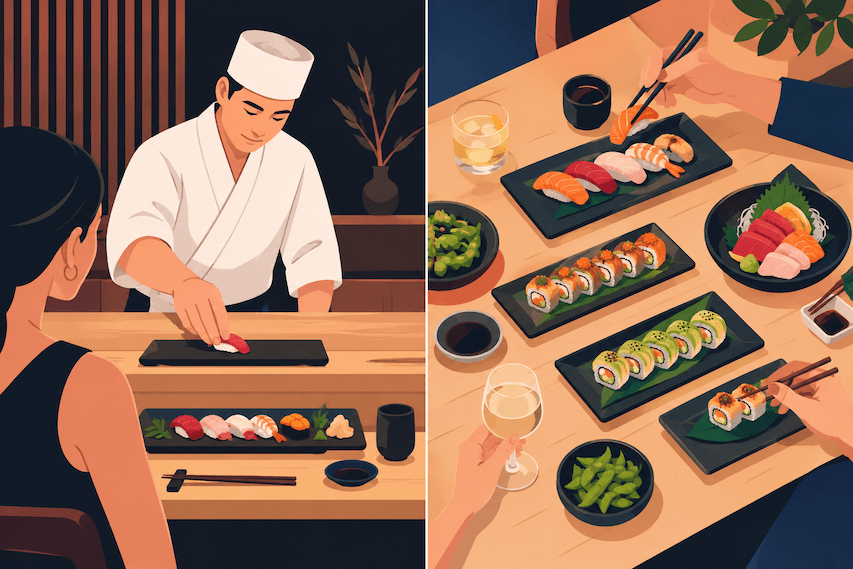
The biggest difference is who decides what you eat. In an omakase experience, the chef guides much of the meal, while à la carte sushi allows you to select individual dishes from the menu.
Here is the basic distinction:
Omakase | À La Carte |
|---|---|
Chef guides the meal | Guest chooses each dish |
Usually follows a progression | You control the order |
More discovery-focused | More preference-focused |
Less control over individual dishes | High level of control |
Often structured around multiple courses | Can be as simple or extensive as you want |
Works well for food-focused experiences | Works well for flexible dining |
Neither format is inherently better. They simply create different ways to experience sushi.
If you are still learning the difference between nigiri, sashimi, maki, and other preparations, the complete guide to sushi types can help you understand what you may encounter on either type of menu.
How Does Omakase Work?
Omakase is a chef-guided dining format in which the guest gives the chef greater control over the selection and progression of the meal. Instead of choosing every dish individually, you trust the kitchen to determine what to serve and when.
A typical experience may move through several stages, such as:
Small appetizers or seasonal preparations
Sashimi
Lighter nigiri
Richer fish or specialty preparations
Hand rolls or other sushi
A final dish or dessert
The exact format varies by restaurant. Some experiences are highly structured, while others use an omakase-style approach that gives diners more flexibility.
For a deeper explanation of what to expect before booking, see Omakase in Miami: What to Expect Before You Book.
What Does Omakase Mean for the Diner?
Omakase essentially means giving the chef more responsibility for shaping your meal. You are not simply ordering food; you are allowing the kitchen to determine a sequence based on its menu, ingredients, preparation methods, and style.
This can make the experience feel more personal.
Instead of asking, “Which roll should I order?” you can focus on tasting each course and understanding how the meal develops.
That makes omakase particularly appealing to diners who enjoy trying things they might not normally choose themselves.
What Does À La Carte Sushi Mean?
À la carte sushi means ordering individual dishes from the menu rather than following a chef-directed progression. You decide what to order, how much to order, and when you want each dish served.
For example, an à la carte dinner could include:
Hamachi sashimi
Salmon nigiri
Tuna nigiri
One or two signature rolls
A hand roll
A small plate
Sake or a cocktail
You can order everything at once or build the meal gradually.
This flexibility makes à la carte dining particularly useful when everyone at the table has different preferences.
Why Do Diners Choose À La Carte Sushi?
Many people prefer à la carte sushi because it gives them control.
You can:
Avoid ingredients you do not enjoy
Order only cooked seafood
Focus on your favorite fish
Try several types of sushi
Control how much food you order
Adjust your spending as you go
Share dishes with the table
Change your order based on your appetite
It is also an easy format for people who already know what they like.
Which Gives You More Control Over Your Meal?
À la carte sushi gives you more control because you select the dishes, portions, pace, and overall direction of the meal. Omakase gives the chef more control, which can be valuable if you want guidance rather than a long list of decisions.
Think about the difference this way:
Choose omakase if you want to say:
“Show me what the chef recommends.”
Choose à la carte if you want to say:
“I already know what I want to try.”
Neither approach requires you to be a sushi expert.
The important question is whether you enjoy making your own selections or would rather let the kitchen take the lead.
Which Is Better for Trying New Sushi?
Omakase can be a natural choice when your goal is discovery because the chef can introduce you to ingredients, preparations, and combinations you might not select yourself.
À la carte can also support exploration, but you have to make the choices yourself.
For example, a diner who normally orders salmon rolls might use an à la carte menu to intentionally add one unfamiliar nigiri or sashimi. An omakase experience may introduce that diner to several different fish and preparations without requiring them to know what to order in advance.
If you want to understand individual sushi styles before experimenting, the sushi types guide explains how nigiri, sashimi, maki, temaki, and other formats differ.
Is Omakase More Expensive Than À La Carte Sushi?
Omakase can cost more than a carefully controlled à la carte meal, particularly when the experience includes premium seafood and multiple courses. However, the final cost depends on the restaurant, ingredients, portion size, number of courses, and whether drinks are included.
À la carte gives you more direct control over your spending.
For example, you might decide to have:
A small sashimi selection
Two or three pieces of nigiri
One shared roll
One drink
Or you can expand the order if you are still hungry.
With a fixed omakase experience, the meal is generally more structured, so you should understand the price and what it includes before booking.
How Can You Control Your Sushi Budget?
If budget flexibility is important, à la carte is usually easier to manage because you can build the meal in stages.
A practical strategy is:
Start with one or two lighter dishes.
See how much food the table actually wants.
Add nigiri or sashimi.
Order a shared specialty roll.
Add drinks or another course if desired.
This approach lets you adjust the meal as you go rather than committing to a predetermined sequence.
Which Is Better for a Date Night?
Both formats can work for a date night, but they create different experiences. Omakase can make dinner feel more structured and exploratory, while à la carte gives couples more freedom to share dishes and choose what they both enjoy.
For a couple who enjoys discovering food together, omakase can turn dinner into a shared tasting experience.
For couples with different tastes, à la carte may be easier.
One person might want sashimi and nigiri while the other prefers specialty rolls and cooked dishes. Ordering individually means neither person has to compromise on the entire meal.
Atmosphere matters, too. For more ideas on creating a memorable evening around Japanese dining, see Miami Date Night at Tokyo Sushi Speakeasy.
Which Format Works Better for Groups?
À la carte sushi is often easier for groups because everyone can choose different dishes and share them around the table.
A group might order:
Several sashimi selections
Different nigiri
Multiple signature rolls
Hand rolls
Small plates
Cocktails or sake
This creates variety without requiring everyone to follow the same meal progression.
Omakase can still work for groups, especially when everyone is comfortable with the chef guiding the experience. However, you should confirm how the restaurant handles group omakase before making a reservation.
What If Everyone in the Group Likes Different Sushi?
À la carte is generally more flexible when preferences vary significantly.
For example:
Diner | Possible Preference |
|---|---|
Sushi enthusiast | Nigiri and sashimi |
First-time sushi diner | Cooked rolls |
Roll lover | Signature rolls |
Low-carb diner | Sashimi |
Adventurous eater | Chef specials |
Non-fish eater | Vegetable or cooked options |
A flexible menu makes it easier to create one dinner that works for everyone.
Which Is Better for Someone New to Sushi?
À la carte can feel less intimidating for first-time sushi diners because you can choose familiar ingredients and gradually explore new ones.
You do not need to start with the most adventurous option.
A beginner-friendly order might include:
Shrimp or cooked seafood
Salmon
Avocado or vegetable rolls
Chicken or other cooked preparations
A mild specialty roll
Sashimi or more traditional nigiri when comfortable
Omakase can also be appropriate for beginners if the restaurant is willing to explain the dishes and accommodate preferences.
The key is communicating clearly with the restaurant before the meal.
Can You Choose Your Own Dishes During Omakase?
It depends on the restaurant and the specific format. Traditional omakase generally gives the chef greater control, while an omakase-style experience may allow more flexibility or also offer an à la carte menu.
This distinction matters because “omakase” does not mean exactly the same thing at every Miami restaurant.
Before booking, ask:
Is the meal completely chef-selected?
Is there a fixed number of courses?
Is there an à la carte menu as well?
Can allergies be accommodated?
Can ingredients be substituted?
Are drinks included?
How long does the experience usually take?
Getting these details ahead of time helps you choose an experience that matches your expectations.
Which Is Better for a Longer Dinner?
Omakase naturally creates a paced meal because courses are typically served progressively. This can make the dinner feel like an experience rather than a quick order-and-eat meal.
À la carte dining can be just as relaxed, but the pace is more dependent on you and the restaurant.
If you want to linger, you can order gradually:
Drinks → small plates → sashimi → nigiri → rolls → dessert
That approach works especially well when dinner is part of a larger evening in Miami Beach.
For diners interested in combining sushi with cocktails, this guide to liquor and sushi pairings covers how different drinks can complement lighter seafood, richer rolls, and other sushi preparations.
Which Format Is Better for Dietary Restrictions?
À la carte generally provides more obvious control when you need to avoid specific ingredients. You can select individual dishes and ask questions about preparation, sauces, and toppings.
Omakase can still accommodate some dietary requirements, but you should communicate them before the meal.
Tell the restaurant about:
Seafood allergies
Shellfish allergies
Food intolerances
Vegetarian preferences
Restrictions involving sauces or ingredients
Ingredients you cannot eat
Do not assume that a chef-guided meal can automatically accommodate every restriction.
If your dietary needs are significant, confirm what is possible before making the reservation.
How Do Drinks Fit Into Omakase and À La Carte Sushi?
Drinks can complement either dining format, but à la carte dining gives you more freedom to adjust pairings as the meal changes. Omakase may provide a more naturally paced progression where drinks are selected to complement different courses.
Sake is a traditional option, but it is not the only choice.
Depending on the sushi, you might consider:
Junmai or other sake styles
Ginjo or daiginjo sake
Light, citrus-forward cocktails
Japanese whisky
Gin-based cocktails
Vodka-based cocktails
The goal is to match the intensity of the drink with the food rather than overpowering delicate flavors.
For a deeper look at sake styles, the guide to junmai, ginjo, daiginjo, and nigori explains how they differ and how they can fit different types of sushi dinners.
Omakase vs. À La Carte: Which Should You Choose?
The right format depends on what matters most to you during dinner.
If You Prioritize… | Consider… |
|---|---|
Chef guidance | Omakase |
Maximum control | À la carte |
Trying unfamiliar dishes | Omakase |
Favorite ingredients | À la carte |
Flexible budget | À la carte |
Structured experience | Omakase |
Different group preferences | À la carte |
Food discovery | Omakase |
Sharing several dishes | À la carte |
A relaxed, self-paced meal | À la carte |
A chef-led experience | Omakase |
The choice becomes much easier when you start with the type of evening you want rather than the name of the dining format.
When Should You Choose Omakase?
Omakase may be a good fit when you want the chef to guide your meal and you enjoy discovering different ingredients and preparations.
Consider omakase if you:
Enjoy trying unfamiliar foods
Trust the chef’s recommendations
Want a structured dinner
Prefer a tasting-style experience
Are celebrating a special occasion
Want food to be the main focus
Do not want to spend much time deciding what to order
It can be particularly enjoyable when you approach the meal with curiosity rather than a fixed list of dishes you want to eat.
When Should You Choose À La Carte Sushi?
À la carte is a practical choice when you want flexibility, control, and the ability to build your own meal.
Choose à la carte if you:
Have specific favorite sushi
Have a flexible or limited budget
Are dining with a group
Want to share different rolls
Have dietary restrictions
Prefer to control your portions
Want to decide what to order as you go
Are combining traditional sushi with creative rolls
It is also useful when the goal is simply to enjoy a relaxed dinner without committing to a particular tasting format.
Can You Combine Omakase-Style Dining With À La Carte Ordering?
Yes, depending on the restaurant. Some modern sushi restaurants offer an omakase-style experience while also maintaining a broader menu of nigiri, sashimi, signature rolls, hand rolls, small plates, and drinks.
This hybrid approach can give diners some of the discovery associated with chef-guided dining while maintaining the flexibility of individual ordering.
Tokyo Sushi Speakeasy, for example, combines an omakase-style approach with a broader Japanese menu and a South Beach atmosphere. The restaurant’s experience includes sushi, sashimi, nigiri, signature creations, cocktails, and sake.
What Should You Know Before Choosing a Sushi Experience in Miami?
The most important thing is to understand what the restaurant actually offers rather than assuming that every omakase or sushi menu follows the same format.
Before booking, check:
Dining format: Is it traditional omakase, omakase-style, or fully à la carte?
Price: Is the meal fixed-price or based on individual dishes?
Menu: What types of sushi and Japanese dishes are available?
Dietary options: Can allergies or restrictions be accommodated?
Drinks: Are sake and cocktails available?
Timing: How long should you expect to spend at dinner?
Reservations: Is advance booking recommended?
Atmosphere: Does the restaurant match the occasion?
These details can make a bigger difference than simply choosing between two labels.
Why Does the Setting Matter When Choosing Between the Two?
The dining format is only one part of the experience. The restaurant’s atmosphere, location, drinks, music, seating, and overall concept can change how the meal feels.
A traditional sushi counter may place most of the attention on the chef and food.
A modern South Beach sushi destination may make dinner part of a broader night involving cocktails, music, and nightlife.
Tokyo Sushi Speakeasy combines Japanese-inspired dining with a modern speakeasy environment in South Beach, making the setting part of the experience. Its menu gives diners room to explore both classic sushi preparations and more creative dishes.
For more context on this type of dining environment, see the Miami Beach sushi speakeasy guide.
Frequently Asked Questions About Omakase vs. À La Carte Sushi
Is omakase better than à la carte sushi?
Neither format is universally better. Omakase is designed for diners who want more chef guidance and discovery, while à la carte is better suited to people who want control over dishes, portions, pace, and spending.
Is à la carte sushi cheaper than omakase?
It can be, because you control how much you order. However, a large à la carte meal can also become expensive, while some omakase experiences provide a fixed price for multiple courses.
Is omakase good for beginners?
Yes, provided the restaurant explains the experience and can accommodate your preferences. Omakase can actually make a first sushi experience easier because the chef or restaurant guides the progression.
Can I order my favorite sushi during omakase?
Not always. Traditional omakase gives the chef greater control over the meal. Some omakase-style restaurants offer more flexibility, so check the format before booking.
Which is better for a group dinner?
À la carte is generally more flexible for groups because each person can order according to their own preferences and the table can share several dishes.
Which is better for a date?
Both can work. Omakase creates a guided experience that can make dinner feel more distinctive, while à la carte allows couples to choose and share dishes based on their individual tastes.
Do I need to know a lot about sushi to order omakase?
No. You can enjoy omakase without knowing every type of fish or sushi preparation. Asking the chef or server questions is part of the experience.
Can I control my budget with à la carte sushi?
Yes. À la carte gives you direct control over the number and type of dishes you order, making it easier to start small and add more food as needed.
Is omakase always served at a sushi counter?
No. While sushi counters are strongly associated with chef-led dining, restaurants can offer omakase or omakase-style experiences in other settings as well.
What should I choose if I have dietary restrictions?
À la carte generally gives you more control, but either format may be possible depending on the restaurant. Always communicate allergies and dietary restrictions before ordering.
Omakase or À La Carte: Start With the Experience You Want
The choice between omakase and à la carte sushi is really a choice between two different ways of dining.
Choose omakase when you want the chef to take the lead, introduce you to different flavors, and guide the meal from one course to the next. Choose à la carte when you want to control your order, share dishes, stay within a particular budget, or focus on specific ingredients.
For diners who want something in between, an omakase-style restaurant with a broader menu can provide a useful middle ground. You can enjoy the energy and creativity of chef-guided Japanese dining while still having access to individual sushi, sashimi, rolls, cocktails, and other dishes.
At Tokyo Sushi Speakeasy in South Beach, that flexibility fits naturally into a modern Japanese dining experience. Whether you prefer a chef-guided meal or want to build your own selection of sushi and drinks, the important thing is choosing the format that matches how you actually want to spend your evening.