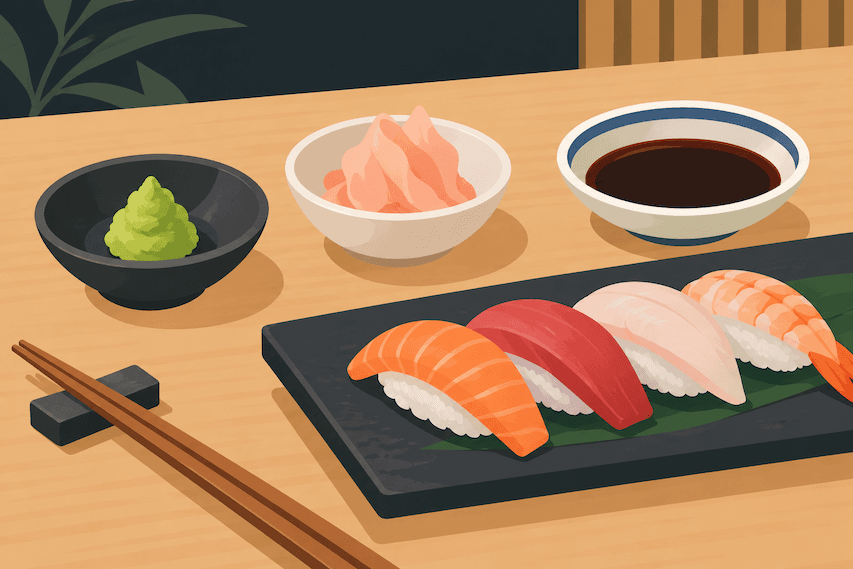
Wasabi, pickled ginger, and soy sauce are familiar parts of a sushi meal, but each serves a different purpose. Used thoughtfully, these condiments can complement the fish, balance flavors, and make every bite more enjoyable. Used carelessly, they can overpower the delicate ingredients that make sushi special.
If you’ve ever wondered whether to mix wasabi into soy sauce, eat ginger between pieces, or dip sushi rice-side down, you’re not alone. Understanding these simple customs helps you appreciate Japanese cuisine without making dining feel complicated.
At Tokyo Sushi Speakeasy in Miami Beach, where Japanese culinary techniques meet a modern South Beach dining atmosphere, learning how to use these traditional accompaniments can help you get more out of your sushi experience.
What Are Wasabi, Pickled Ginger, and Soy Sauce Used For?
Wasabi adds a sharp, aromatic heat, pickled ginger refreshes the palate, and soy sauce contributes savory umami. Although they’re often served together, they aren’t interchangeable, and each works best in different amounts and situations.
Condiment | Main purpose | Best way to use it |
|---|---|---|
Wasabi | Adds aromatic heat and sharpness | Use a small amount with selected bites |
Pickled ginger (gari) | Refreshes the palate between different flavors | Eat a small piece between sushi varieties |
Soy sauce | Adds saltiness and savory depth | Dip lightly when the sushi needs extra seasoning |
The key is moderation. Sushi is prepared with a balance of rice, seafood, seasoning, and texture, so condiments should complement those elements rather than cover them up.
How to Use Wasabi With Sushi
Wasabi is a traditional Japanese condiment known for its pungent aroma and quick, sharp heat. It can enhance the flavor of fish, but a little usually goes a long way.
Should You Put Wasabi Directly on Sushi?
Yes, you can apply a small amount of wasabi directly to sushi when you want more heat or aromatic intensity. This works particularly well with nigiri, where a little seasoning can complement the fish without overwhelming it.
Some nigiri is prepared with wasabi between the fish and rice by the chef. When that is the case, taste the piece before adding more. The chef may have already balanced the seasoning for you.
For a closer look at the differences between sushi styles, including nigiri and maki, read the Sushi Types Guide.
Should You Mix Wasabi Into Soy Sauce?
Mixing wasabi into soy sauce is common in casual sushi dining, but keeping them separate gives you more control over flavor. You can adjust the amount of wasabi on individual bites instead of blending everything into one strong sauce.
For traditionally prepared nigiri, try tasting the sushi as served before adding either condiment. If you want more heat, place a small amount of wasabi on the fish rather than covering the entire piece.
Mixing wasabi into soy sauce isn’t necessarily wrong. It’s a matter of preference, and the best approach depends on the sushi and the experience you want.
How Much Wasabi Should You Use?
Start with a small dab, roughly the size of a grain of rice or a little larger, and adjust to taste. Strong wasabi can quickly dominate mild fish, delicate shellfish, and other subtle ingredients.
If you’re new to wasabi, try it with one bite before adding it to everything on your plate. You’ll get a better sense of how its heat interacts with different fish and toppings.
Also, remember that the green paste served in many restaurants may be a prepared wasabi-style condiment rather than freshly grated wasabi root. Its flavor and intensity can vary.
How to Eat Pickled Ginger With Sushi
Pickled ginger, commonly called gari, is thinly sliced ginger preserved in a sweet-and-tangy vinegar mixture. It provides a refreshing contrast to rich or savory foods and helps reset your palate between different pieces of sushi.
Should You Eat Ginger Between Sushi Pieces?
Yes. The traditional approach is to eat a small piece of pickled ginger between different types of sushi, especially when moving from a richer or stronger-flavored fish to something more delicate.
For example, if you’re enjoying a fatty piece of salmon before trying a milder white fish, a little ginger can refresh your palate. This helps you notice the differences between the two flavors.
You don’t need to eat ginger after every single bite. Use it when you’re changing between sushi varieties or when you want a refreshing break.
Is Ginger a Topping or a Side Condiment?
Pickled ginger is generally served as a side condiment rather than a topping. Its role is to refresh the palate, not to become the main flavor of the sushi.
Although you can experiment with different combinations, placing a large amount of ginger directly on every piece can overwhelm the fish and distract from its natural taste.
Instead, take a small bite of ginger separately, then enjoy your next piece of sushi.
Does Pickled Ginger Make Sushi Taste Better?
It can, particularly when you move between different fish, sauces, and textures. Its acidity and gentle sweetness provide contrast to savory and rich ingredients.
However, ginger isn’t essential with every bite. If you’re enjoying a particularly delicate piece of nigiri, you may prefer to taste it on its own before reaching for another condiment.
How to Use Soy Sauce Without Overpowering Sushi
Soy sauce adds saltiness and umami, the savory taste associated with ingredients such as fermented soybeans. When used sparingly, it can complement seafood and rice. Too much, however, can mask the subtle flavors of carefully prepared sushi.
Which Side of Sushi Should You Dip in Soy Sauce?
When eating nigiri, dip the fish side lightly into the soy sauce rather than soaking the rice. This helps keep the rice intact and prevents it from absorbing too much liquid.
If the chef has already brushed the nigiri with seasoned sauce, you may not need to add any more. Taste it first and decide whether additional seasoning is necessary.
For sushi rolls, you can lightly dip an exposed edge or a small portion of the roll. Avoid submerging the entire piece, especially when it contains delicate toppings or a carefully balanced sauce.
How Much Soy Sauce Should You Use?
A light coating is usually enough. You don’t need to fill the dipping dish or leave sushi sitting in the sauce.
Start with a small amount in your dish and add more if needed. The goal is to enhance the sushi’s savory flavor without making the bite excessively salty.
This is especially important when eating sushi with rich toppings, spicy mayonnaise, eel sauce, or other seasoned ingredients. These additions may already provide enough flavor.
Should You Dip Every Piece of Sushi in Soy Sauce?
No. Some sushi is already seasoned by the chef, while other pieces benefit from a small dip.
Traditional Edomae-style nigiri may be finished with nikiri, a seasoned soy-based sauce applied in the kitchen. In that case, additional soy sauce can make the bite too salty.
When in doubt, try the sushi as served. If it tastes balanced, there’s no need to add anything.
Common Mistakes to Avoid When Using Sushi Condiments
Most condiment mistakes come from using too much or treating every piece of sushi the same way. A few simple adjustments can help you appreciate the food more fully.
1. Mixing Too Much Wasabi Into Soy Sauce
A large amount of wasabi can make the dipping sauce overpowering. It also makes it harder to adjust the heat for different types of fish.
Better approach: Keep the wasabi separate at first and add a little to individual bites as needed.
2. Soaking Sushi Rice in Soy Sauce
Rice absorbs liquid quickly and can become soggy or fall apart. Excess soy sauce also makes the bite much saltier than intended.
Better approach: For nigiri, turn the piece gently and dip the fish side. For rolls, use a light touch.
3. Eating Ginger With Every Bite
Pickled ginger is meant to refresh the palate, not necessarily accompany every piece of sushi. Eating it constantly can distract from the individual flavors.
Better approach: Save ginger for transitions between different sushi varieties or stronger flavors.
4. Adding Condiments Before Tasting the Sushi
Some sushi is carefully seasoned before it reaches the table. Adding wasabi and soy sauce automatically can hide that balance.
Better approach: Taste the sushi first, then decide whether it needs anything extra.
5. Assuming Every Sushi Dish Needs All Three Condiments
Wasabi, ginger, and soy sauce serve different purposes, and some dishes taste best without additional seasoning.
Better approach: Treat each condiment as an option rather than a requirement. Follow your preferences while giving the original preparation a chance to shine.
How to Pair Condiments With Different Types of Sushi
Different fish and preparations respond differently to seasoning. A mild piece of white fish may need little more than a touch of soy sauce, while a richer piece of salmon can handle a little more contrast.
Sushi type | Wasabi | Pickled ginger | Soy sauce |
|---|---|---|---|
Nigiri | Use sparingly if needed | Eat between varieties | Lightly dip the fish side if unseasoned |
Sashimi | Add a small amount if desired | Use between different fish | Dip the fish lightly |
Maki rolls | Adjust to the filling and sauce | Enjoy between different rolls | Lightly dip an edge |
Rich or fatty fish | A little heat can add contrast | Useful between richer and lighter bites | Use sparingly to avoid excess salt |
Sauced specialty rolls | Often optional | Can refresh the palate afterward | Usually use very little, if any |
These are general suggestions rather than strict rules. The ingredients, preparation, and seasoning of each dish matter more than following a fixed formula.
For example, if you’re exploring richer fish such as hamachi, the Hamachi Sashimi Guide offers more detail on its texture and complementary sauces.
Sushi Condiment Etiquette: What Matters Most?
Japanese dining customs can be helpful, but they shouldn’t make you feel nervous about eating sushi. The point is to enjoy the food while showing consideration for the chef’s preparation and the people dining with you.
A few practical habits are worth remembering:
Taste before seasoning. Give the chef’s preparation a chance before adding more sauce or wasabi.
Use a clean portion of your dipping dish. Avoid transferring food or excess condiment back into shared serving dishes.
Keep ginger separate. Use it as a palate cleanser rather than piling it onto every piece.
Avoid wasting soy sauce. Pour only what you expect to use.
Ask when you’re unsure. Restaurant staff can explain how a particular dish is intended to be eaten.
There isn’t one rigid rule for every situation. Some modern rolls are designed to be eaten with sauces, while traditional nigiri may need very little additional seasoning.
If you’re pairing sushi with drinks, consider how the flavors work together, too. This guide to liquor and sushi pairings explores how different drinks complement lighter seafood, richer rolls, and savory flavors.
Frequently Asked Questions
Should you mix wasabi and soy sauce when eating sushi?
You can, but keeping them separate gives you better control over the heat and saltiness. For traditionally prepared nigiri, taste the fish first and add condiments only if needed.
Do you eat pickled ginger before or after sushi?
You can eat a small piece between different types of sushi to refresh your palate. It’s particularly useful when switching from rich or strongly flavored fish to a more delicate variety.
Is it rude to use soy sauce with sushi?
No. Soy sauce is a common sushi accompaniment. The important thing is to use it sparingly, avoid soaking the rice, and recognize when the chef has already seasoned the dish.
Should wasabi go on top of sushi or in soy sauce?
Either approach is acceptable, depending on your preference. Applying a small amount directly to the fish gives you more control, while mixing it into soy sauce creates a combined dipping sauce.
Can you eat sushi without wasabi?
Absolutely. Wasabi is optional, and you can enjoy sushi without it. If you prefer milder flavors, leave it aside or ask whether the sushi has already been prepared with wasabi.
Why is ginger served with sushi?
Pickled ginger offers a sweet, tangy, and refreshing contrast to savory seafood. It’s commonly eaten between different sushi varieties to help distinguish their flavors.
Should you use soy sauce with every sushi roll?
No. Some rolls already contain seasoned toppings, sauces, or other ingredients that provide enough flavor. Try a bite first and add soy sauce only if it improves the taste.
Is it okay to eat sushi with your hands?
Yes. Traditionally, nigiri can be eaten with clean hands or chopsticks. For rolls, either method is generally fine. Choose whichever feels comfortable and allows you to handle the food neatly.
Enjoy Every Bite With the Right Balance
Wasabi, pickled ginger, and soy sauce each bring something different to a sushi meal. Wasabi adds aromatic heat, ginger refreshes the palate, and soy sauce contributes savory depth.
You don’t need to follow complicated rules to use them well. Start by tasting each piece as served, apply condiments in small amounts, and adjust according to the ingredients and your preferences.
When you understand the purpose of each accompaniment, sushi becomes less about following etiquette perfectly and more about appreciating the flavors, textures, and care behind every bite.