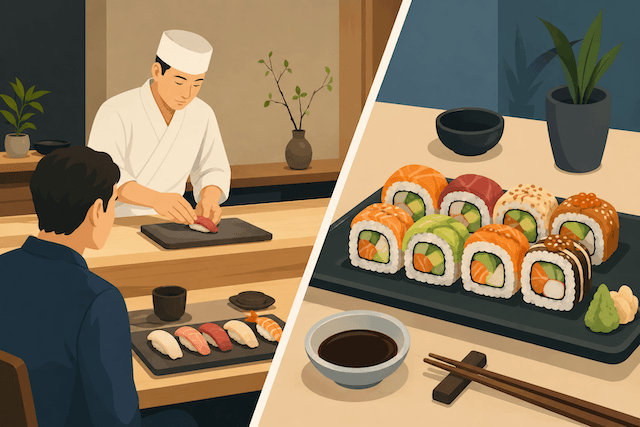
When comparing omakase vs sushi rolls, the distinction goes beyond the menu. Omakase is a chef-led dining format where you eat what the chef selects, in the order the chef decides — no menu, no modifications. Sushi rolls are individually ordered, guest-directed plates that typically combine multiple ingredients into a single cut. The two formats represent fundamentally different dining philosophies, and knowing which one suits your night matters before you sit down.
Key Takeaways
Omakase means “I leave it to you” in Japanese — the chef controls the entire sequence, pacing, and selection of dishes.
Traditional sushi rolls (makizushi) are guest-ordered items built around a defined recipe, offering predictability and choice.
Omakase experiences are typically priced per person at a fixed rate; rolls are priced individually per order.
Omakase is best suited to diners who trust the chef’s judgment and want a guided experience — rolls suit those who want control over what lands on the table.
High-end restaurants in South Beach increasingly blend both formats: an omakase-inspired sequence followed by signature rolls ordered à la carte.
The best way to experience both in one sitting is to start with a chef’s selection of nigiri, then order signature rolls that complement the flavors already established.
What Does Omakase Actually Mean?
Omakase (おまかせ) is a Japanese phrase derived from the verb makaseru (任せる), meaning “to entrust” or “to leave to someone.” It is commonly translated as “I leave it to you,” though “I trust you” is a looser, interpretive rendering rather than a literal one. In a dining context, it means handing complete control of your meal to the chef — the selection of fish, the order of courses, the pacing, and the portion size are all the chef’s decisions.
In practice, this means no printed menu arrives at your table. The chef reads what’s seasonal, what arrived fresh that day, and what would create the best progression of flavor and texture for the people sitting in front of them. A skilled omakase chef is not just cooking. They are curating an experience in real time.
The format originated in high-end sushi restaurants in Japan. Chefs with decades of training were trusted to express their craft without constraint. Omakase dining is widely regarded as one of the most intimate forms of hospitality in Japanese food culture, built on the relationship between chef and guest.
In the United States, omakase has grown significantly in recent years. Industry observers and reservation platforms have noted a marked rise in interest in omakase dining through the late 2010s and into the 2020s, reflecting a broader appetite for chef-led, experiential dining formats in American cities.
What Are Sushi Rolls?
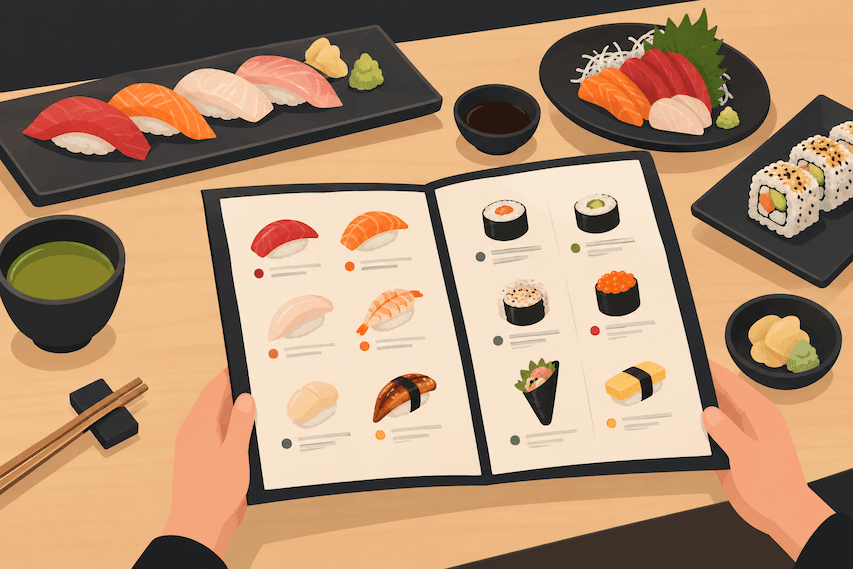
Sushi rolls — known in Japan as makizushi — are a broad category that typically involves nori (seaweed), vinegared rice, and a filling rolled and sliced into individual pieces. In most traditional forms the nori wraps the outside, though inside-out rolls (uramaki), where the rice faces outward and the nori sits within, are also a common variation. The guest selects from a printed or digital menu, and each roll arrives as a complete dish.
Rolls range from the simple (cucumber, salmon, tuna) to the elaborate. Signature restaurant rolls layer multiple proteins, sauces, and toppings into a single cut — like the Tokyo Gold Roll at Tokyo Sushi Speakeasy, which combines shrimp tempura, eel, avocado, tuna, ikura, spicy mayo, eel sauce, and 24K gold leaf into eight pieces.
The roll format gives diners full agency. You decide what arrives, in what order, and how much of it. That control makes rolls the default choice for groups with varied preferences, first-time sushi diners, and anyone who wants a specific flavor combination rather than a curated progression.
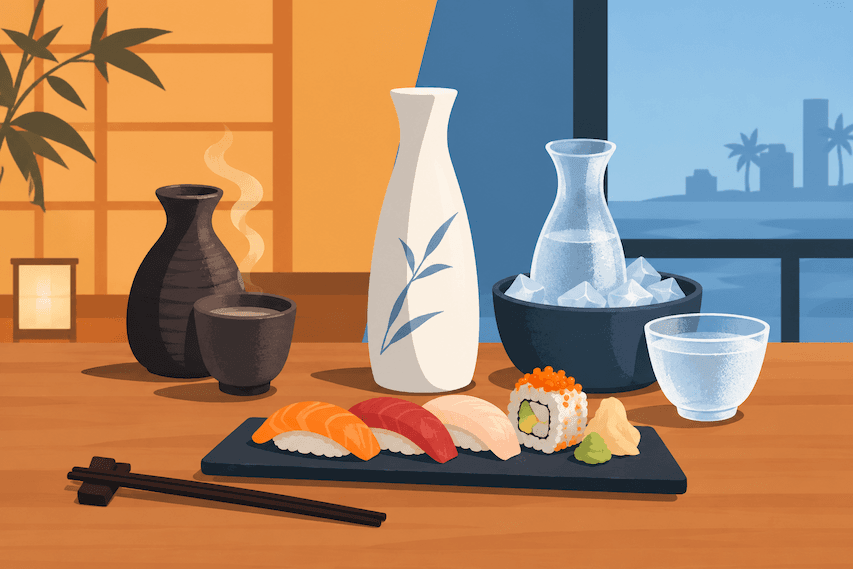
Rolls also pair naturally with cocktails in ways that omakase pacing does not always accommodate — a reason why the best cocktail pairings for sushi are almost always written in the context of individually ordered dishes rather than chef-led sequences.
How Does Omakase Work at a Restaurant?
The omakase experience follows a predictable structure even when the menu is unpredictable.
The chef greets the table and begins the sequence. There is no order-taking. Dishes arrive as the chef decides.
Courses move from lighter to richer. A classic Japanese omakase typically begins with delicate white fish, moves through medium-weight proteins like salmon and yellowtail, and builds toward richer, fattier cuts like toro. The precise sequence varies by chef, region, and restaurant style — wagyu, for instance, is more common in US omakase formats that blend sushi with broader Japanese cuisine than in traditional Japanese sushi-only sequences.
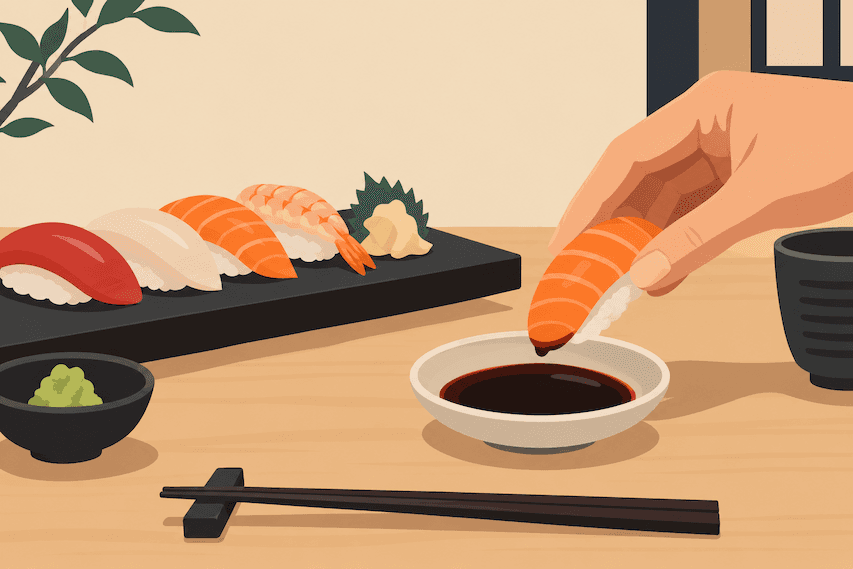
Nigiri is served one or two pieces at a time. Each piece is meant to be eaten immediately — the rice is warm, the fish is resting at the right temperature, and the seasoning is calibrated for that exact moment.
The chef adjusts based on the table. An experienced omakase chef watches the guests. If a piece lands exceptionally well, they may return to that fish. If a guest shows hesitation, the sequence may shift.
The meal ends when the chef concludes it. Some formats include a miso soup course or a small dessert to signal the close.
Pricing is fixed per person, often with a minimum spend, and reservations are typically required well in advance. In major US cities, omakase experiences typically range from around $100 to well over $350 per person depending on the venue and the grade of fish involved, though pricing varies widely by market and changes over time.
What Is the Difference Between Omakase and Nigiri?
This question comes up often because nigiri is the centerpiece of most omakase sequences, but the two terms are not interchangeable.
Nigiri is a specific type of sushi — a hand-pressed mound of vinegared rice topped with a single slice of fish or seafood. It is a format. Omakase is a service style. You can order nigiri à la carte from a regular menu, and you will almost certainly eat nigiri during an omakase — but eating nigiri does not make a meal omakase.
The complete guide to nigiri types and what to order covers the specific fish and preparation styles in detail. What matters here is the distinction: nigiri tells you what you are eating, omakase tells you who is deciding.
FormatGuest ControlPricingBest ForOmakaseNone — chef decides everythingFixed per personTrusting diners, special occasionsNigiri (à la carte)Full — guest selects each piecePer piece or per orderExperienced sushi diners, specific preferencesSushi RollsFull — guest selects from menuPer rollGroups, first-timers, cocktail pairingsOmakase-InspiredPartial — chef selects sequence, guest can add rollsHybrid pricingBoth worlds, date nights, celebrations
Omakase vs Sushi Rolls: Which Format Is Right for You?
Neither format is objectively superior — they serve different purposes at different moments.
Omakase delivers the highest potential ceiling of a sushi experience. A chef operating without constraint can express seasonal ingredients, technical precision, and creative judgment in a way that a fixed menu cannot. If you want to understand what a kitchen is truly capable of, omakase is the format that reveals it.
Sushi rolls deliver consistency, flexibility, and fun. The South Beach Roll at Tokyo Sushi Speakeasy — salmon, shrimp, and avocado topped with crispy crab and caviar — is a dish built to hit specific flavor notes that guests return for specifically. That reliability is a virtue. The story behind the South Beach Roll illustrates how a signature dish becomes part of a restaurant’s identity in a way that a rotating omakase course never could.
The honest answer: if you are marking a milestone, celebrating something, or want to understand a chef’s full range — consider an omakase or omakase-inspired sequence. If you are out with a group, pairing with cocktails, or already know exactly what you want — order the rolls.
How South Beach Restaurants Are Combining Both Formats
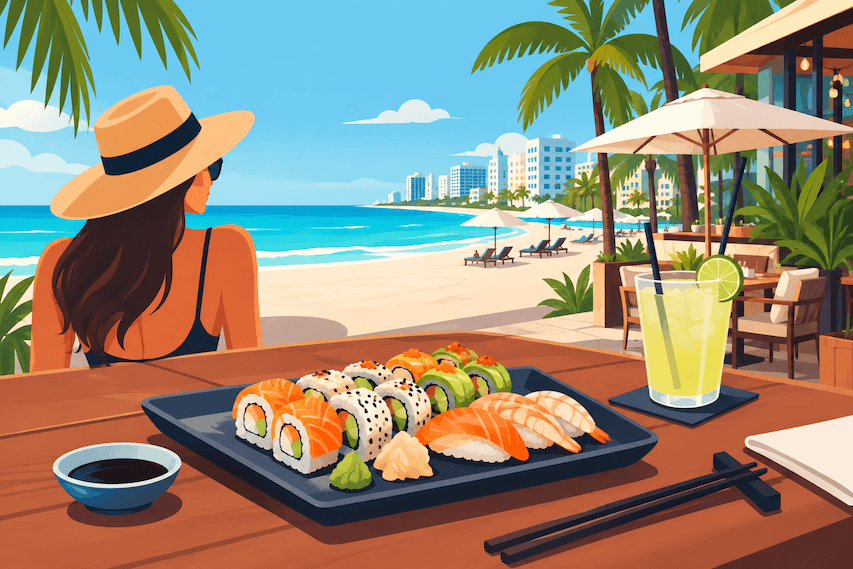
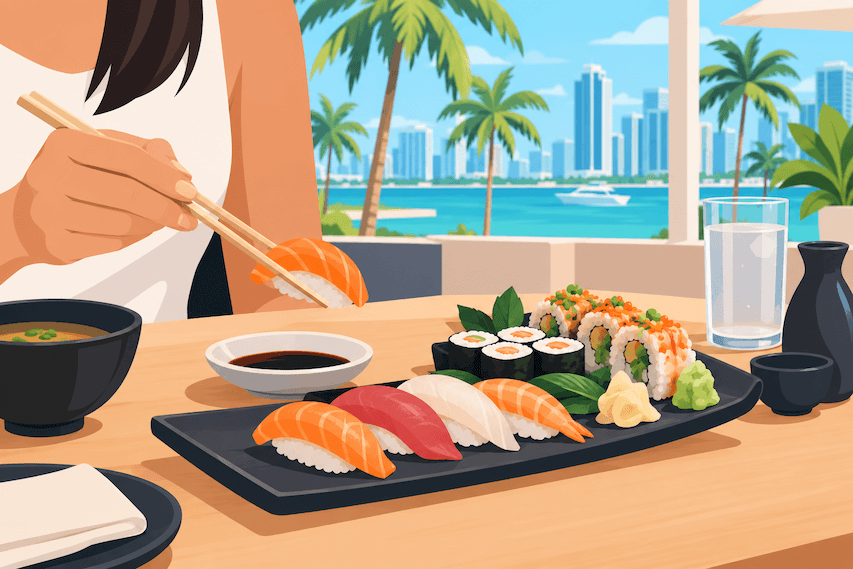
Miami’s dining culture is not built for rigid formality. South Beach, specifically, operates at a pace and energy that does not sit comfortably with a two-hour, 14-course, no-choice dining format.
What has emerged instead is an omakase-inspired approach: a curated opening sequence of nigiri and small plates, chosen by the kitchen, followed by an open à la carte window where guests order signature rolls, share plates, and cocktails on their own terms.
Tokyo Sushi Speakeasy executes this format naturally. The kitchen is grounded in Edomae technique — the traditional Tokyo-style sushi craft that prioritizes fish quality, precise knife work, and restraint — while the room operates on a late-night South Beach frequency. Guests who want the chef’s judgment can lean into the progression. Guests who want the Wagyu Truffle Roll and a Lychee Martini can have exactly that.
This hybrid model is increasingly common in American cities where omakase culture intersects with nightlife culture. It respects the craft without demanding that guests abandon agency entirely.
For a deeper look at the Edomae techniques underpinning this approach, the post on the art of Edomae at Tokyo Sushi Speakeasy covers the specifics in detail.
What to Order If You Cannot Decide
If you are sitting at Tokyo Sushi Speakeasy for the first time and genuinely uncertain where to start, the first-timer’s ordering guide provides a practical sequence built for that exact situation.
The broad principle, regardless of venue:
Start with lighter, cleaner preparations — white fish nigiri, sashimi, or a simple roll with minimal sauce
Let the kitchen show you the baseline quality before loading flavor with heavier rolls
Add a signature roll mid-meal when your palate is engaged but not fatigued
Finish with something rich and decisive — a wagyu preparation, a gold-leaf roll, or a premium nigiri selection
That structure mirrors the logic of an omakase sequence while keeping you in control of every choice.
Frequently Asked Questions
What does omakase mean in simple terms?
Omakase means you are letting the chef decide your entire meal. There is no menu — the chef selects the fish, determines the order of dishes, and controls the pacing from start to finish. The word comes from the Japanese phrase meaning “I leave it to you.”
How much does omakase cost in Miami?
Omakase pricing in Miami varies significantly by venue. Entry-level experiences start around $75 to $95 per person, while premium omakase at established restaurants can reach $200 to $350 per person. That price typically covers the full sequence of dishes but excludes drinks and gratuity.
Can you request specific dishes during an omakase?
Traditionally, no — omakase means you have relinquished that control. However, most chefs will accommodate genuine dietary restrictions (shellfish allergies, for example) when communicated in advance. Preferences or dislikes raised at the start of the meal are also typically respected. Requesting specific dishes mid-sequence falls outside the format.
Are sushi rolls considered authentic Japanese cuisine?
The heavily loaded, sauce-topped signature rolls common in American sushi restaurants are a distinctly American evolution of Japanese culinary tradition. In Japan, maki rolls tend to be simpler and smaller. Neither version is less valid — they represent different expressions of the same base craft adapted to different markets and appetites.
Is omakase good for first-time sushi diners?
Omakase is a strong choice for curious first-timers who are open to eating a wide range of fish without preconceptions. What makes it challenging for true beginners is the pace and the absence of familiarity — there is no menu to anchor to. A better first visit might combine a few pieces of à la carte nigiri with one or two signature rolls, giving you reference points before committing to a fully chef-led experience.
What is the difference between nigiri and sashimi?
Nigiri is fish served on a small mound of vinegared rice. Sashimi is fish served alone, without rice. Both showcase the quality of the fish directly, but sashimi is the purer expression since there is nothing to buffer or season beyond the fish itself. The nigiri vs. sashimi breakdown covers this distinction in full.
The format of your meal shapes the entire experience — not just what you eat, but how you relate to the kitchen and to the people at your table. Omakase places total trust in the chef’s hands. Sushi rolls put the decision-making back with you. At Tokyo Sushi Speakeasy, both paths lead to the same place: precise Japanese craft served inside a room built for South Beach after dark.
Reserve a table at Tokyo Sushi Speakeasy and decide your approach when you arrive.