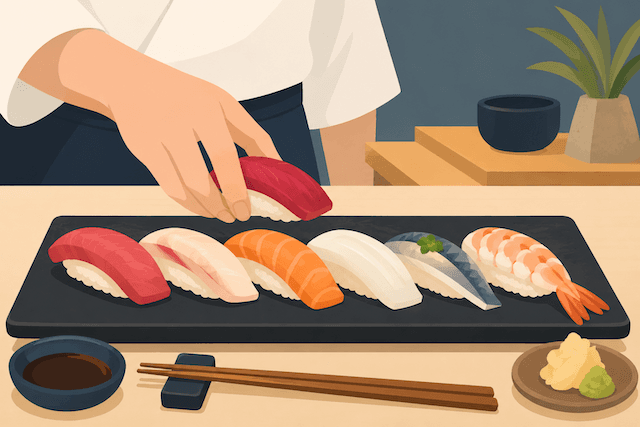
This nigiri sushi guide covers everything you need to order confidently. Nigiri is hand-formed sushi rice topped with a single ingredient — fish, shellfish, or wagyu beef. It is seasoned with precision and served immediately. At Tokyo Sushi Speakeasy, nigiri is the purest expression of Edomae training: no distractions, no excess, just clean cuts and great fish.
Key Takeaways
Nigiri consists of hand-formed shari (vinegared rice) topped with a single ingredient, traditionally eaten in one or two bites without modification.
The quality of nigiri depends on three variables: the grade of the fish, the seasoning of the rice, and the temperature at which both are served together.
Tokyo Sushi Speakeasy’s nigiri menu spans six distinct options — King Salmon, Tuna, Yellowtail, Spicy Tuna, Unagi, and Wagyu Beef — each priced at $10 for two pieces.
Edomae-style nigiri, the Tokyo tradition that informs this kitchen, prioritises subtlety over elaboration: the topping is the statement.
Nigiri differs fundamentally from sashimi (no rice) and maki rolls (rice-wrapped), making it the most technically demanding format for a chef to execute well.
First-time diners are advised to start with a clean-flavoured piece — King Salmon or Yellowtail — before moving to richer options like Wagyu Beef.
What Is Nigiri Sushi, and How Is It Different from Other Types?
Nigiri — formally nigiri-zushi — is the hand-pressed format that defines traditional Tokyo-style sushi. A chef takes a small, palm-formed portion of seasoned rice (shari), lightly seasons or brushes the topping (neta), and presses the two together with a deliberate squeeze. The result should hold its shape without being dense, release cleanly on the palate, and taste of the fish first, the rice second.
This distinguishes nigiri sharply from other sushi formats:
Sashimi carries no rice at all — it is sliced fish served alone, plated with accompaniments. For a full breakdown of the distinction, the nigiri vs sashimi guide on this site covers the key differences in detail.
Maki rolls wrap rice and fillings in nori, distributing flavours across multiple ingredients simultaneously.
Temaki are hand-rolled cones, informal and immediate.
Nigiri is widely regarded among sushi chefs as the most technically demanding format to execute well, because there is nowhere to hide. The fish quality, the rice temperature, the knife cut, and the seasoning judgment are all visible — and all tasted — in a single bite.
The Edomae Tradition Behind Tokyo Sushi Speakeasy’s Nigiri
Edomae sushi is broadly understood to have originated in Edo-period Tokyo, where it is traditionally associated with vendors selling rice topped with fish sourced or cured from the waters of Tokyo Bay. The term Edomae — literally “in front of Edo” — referred to the bay itself. Over centuries, those preservation techniques are said to have evolved into the restrained, fish-forward style that defines premium nigiri today.
In 2013, UNESCO inscribed Washoku — traditional Japanese dietary cultures — on its Intangible Cultural Heritage list, recognising the cultural significance of Japan’s culinary traditions. While the inscription covers washoku broadly rather than sushi or nigiri specifically, Edomae technique is widely regarded as one of its most refined expressions.
The core principles of Edomae technique that carry through to Tokyo Sushi Speakeasy’s kitchen are:
Rice temperature — shari is traditionally served at close to body temperature, rather than cold, so it melds with the fish rather than contrasting against it.
Rice seasoning — a precise ratio of rice vinegar, salt, and sugar that supports the topping without overpowering it.
Knife discipline — each cut follows the grain of the fish; a clean slice preserves the cell structure, which affects both texture and flavour release.
Minimal addition — a brush of soy, a whisper of wasabi between rice and fish, or a touch of citrus zest. Nothing more unless the fish demands it.
Immediate service — nigiri is formed and placed; it does not wait.
For a deeper look at how this kitchen applies Edomae principles across the menu, the art of Edomae at Tokyo Sushi Speakeasy is worth reading before your first visit.
How to Identify High-Quality Nigiri Fish
The fish on a nigiri order is the only thing standing between the rice and the diner. This makes sourcing and grading non-negotiable.
Sushi-grade fish — the standard required for raw consumption — must meet strict handling and freezing protocols. In the United States, the Food and Drug Administration (FDA) publishes parasite destruction guidelines recommending that fish intended for raw consumption be frozen at -4°F (-20°C) for a minimum of seven days, or at -31°F (-35°C) for 15 hours. These guidelines inform state-level food safety regulations, and restaurants operating at the level of Tokyo Sushi Speakeasy treat them as baseline, not exception.
Visually, high-quality nigiri fish shows:
Uniform colour with no browning at the edges
A moist but not wet surface — no pooling liquid
Clean scent: oceanic, not sharp or fishy
Translucency in the case of salmon and tuna — the flesh should have depth, not look flat or chalky
For a practical breakdown of what separates sushi-grade fish from standard-market fish, how to identify sushi-grade fish covers the grading criteria in full detail.
The Six Nigiri Options at Tokyo Sushi Speakeasy
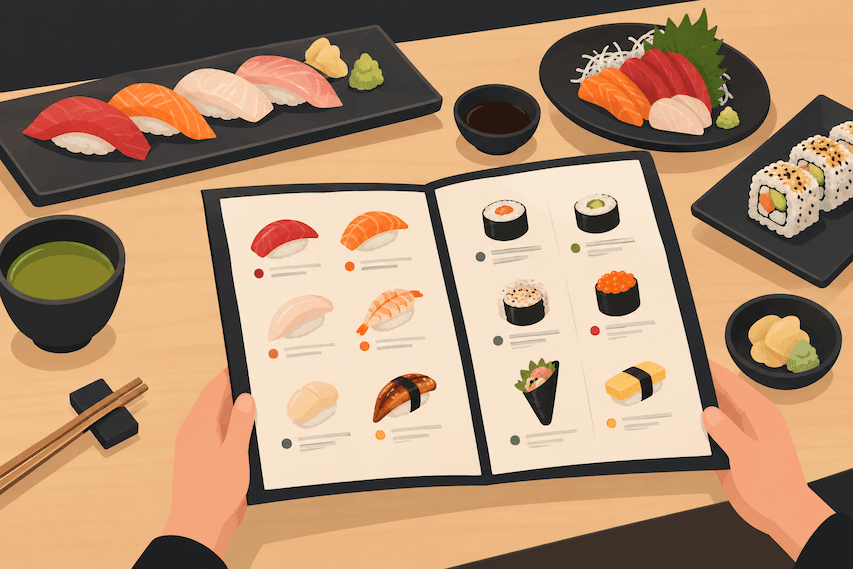
Each piece on the nigiri menu at Tokyo Sushi Speakeasy is $10 for two pieces. The six options represent a deliberate range — clean and delicate at one end, rich and decadent at the other. Below is a practical breakdown of each.
King Salmon — Rice, Salmon, Lemon Zest
King Salmon (Oncorhynchus tshawytscha) is widely regarded as among the fattiest and most flavourful of the Pacific salmon species. The addition of lemon zest — rather than the conventional soy brush — lifts the natural richness of the fish with citrus acidity without masking the flavour.
This is the entry point for first-time diners. The fat content in King Salmon is high enough that the fish tastes full and satisfying at body temperature, and the lemon zest does the work that a dressing might otherwise overdo. It is restrained in the best sense.
Tuna — Rice with Premium Tuna
Tuna nigiri (maguro) is the benchmark piece in any serious kitchen. The grade matters enormously: lean tuna (akami) is firm, clean, and slightly mineral; fatty tuna (toro) is buttery and dissolves on the palate. Tokyo Sushi Speakeasy specifies premium tuna, which signals a cut with consistent marbling and a clean iron-forward flavour.
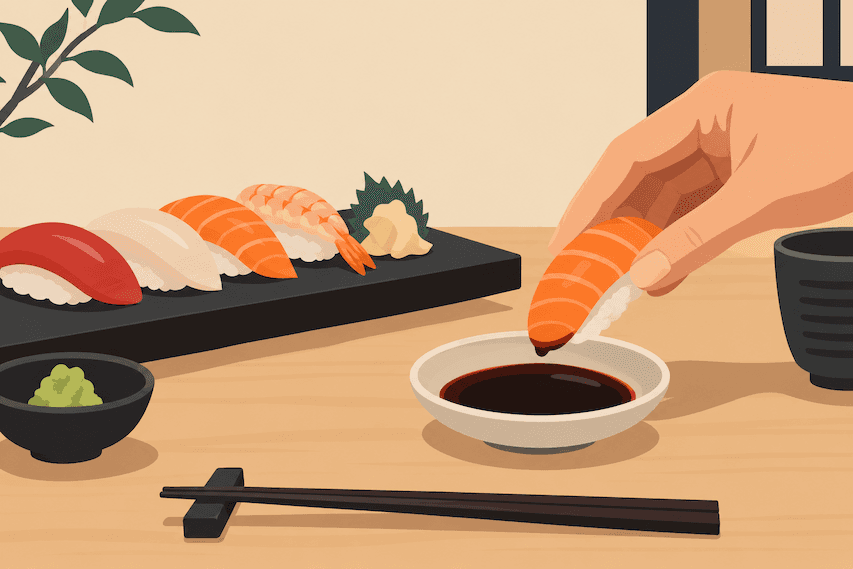
Tuna nigiri should be eaten without additional soy — the rice seasoning is calibrated to complement it. Dipping the rice in soy oversaturates the piece and flattens the fish’s own character.
Yellowtail — Rice with Hamachi
Hamachi (Seriola quinqueradiata) is Japanese amberjack, a fish with a flavour profile that sits between salmon and tuna — mildly fatty, subtly sweet, with a firm texture that holds its shape under a clean knife cut. It is one of the most versatile nigiri toppings because it pairs cleanly with acid, yuzu, or simply the rice.
Yellowtail is the preferred order for diners who find salmon too rich and tuna too lean — it occupies the middle ground precisely.
Spicy Tuna — Rice with Spicy Tuna and Chives
Spicy tuna nigiri applies a chilli-seasoned tuna mixture to the rice base, finished with chives. In a kitchen operating at Edomae standard, “spicy” does not mean incendiary — it means the heat is calibrated to accentuate the tuna’s flavour, not cover it.
The chives add a sharp herbal note that prevents the piece from reading as heavy, keeping the bite bright despite the richer seasoning. This is a transition piece: familiar enough for first-timers, complex enough for returning guests.
Unagi — Rice with Eel and Eel Sauce
Freshwater eel (unagi) is always served cooked — it is one of the few nigiri toppings that does not appear raw. Unagi is prepared through a process of grilling, steaming, and re-grilling that produces a caramelised exterior with a soft, yielding interior. The eel sauce (tare) is a reduction of soy, mirin, and sugar that coats the piece with a glossy, sweet-savoury finish.
Unagi nigiri is the richest piece on a standard menu. Its sweetness makes it a natural closer — many diners order it as their final piece before moving to cocktails, allowing the caramelised notes to linger. According to the Japanese Ministry of Agriculture, Forestry and Fisheries, unagi has been part of Japanese culinary tradition for over 1,000 years, making it one of the most historically significant ingredients in the sushi kitchen.
Wagyu Beef — Rice Topped with Wagyu Tartare and Truffle Mayo
Wagyu beef nigiri is the departure from the traditional Edomae lineup — and the most dramatic piece on the menu. Wagyu tartare (finely cut raw wagyu, seasoned) replaces fish entirely, topped with truffle mayo that adds an earthy, umami-forward richness that amplifies the beef’s natural marbling.
This piece belongs to the same family as the Wagyu Truffle Roll, which appears on the signature rolls menu. The nigiri format, however, concentrates everything into a single, uninterrupted bite — the rice temperature, the cold tartare, and the warm truffle note arriving simultaneously.
It is the final piece to order, not the first.
What Order Should You Eat Nigiri In?
The traditional sequence moves from lightest to heaviest — this preserves your palate’s ability to taste clean flavours before richness accumulates.
A recommended ordering sequence at Tokyo Sushi Speakeasy:
King Salmon — citrus brightness opens the palate
Yellowtail — mild fat and firm texture establish the middle register
Tuna — the benchmark piece, appreciated fully with a prepared palate
Spicy Tuna — heat and herb as a transition
Unagi — caramelised sweetness as a bridge to the end
Wagyu Beef — richness and umami as the final statement
If you are ordering nigiri alongside rolls or small plates, position the nigiri first. The clean, direct flavours of hand-pressed pieces are diminished when eaten after the more layered profiles of signature rolls.
For guidance on structuring a full table order from scratch, the first-timer’s guide to ordering at Tokyo Sushi Speakeasy covers the full menu progression in detail.
How Does Nigiri Pair with Cocktails and Sake?
Nigiri’s clean, fish-forward flavour profile makes it highly pairing-friendly — but the pairing logic differs from wine pairings because sushi rice introduces an acidity of its own.
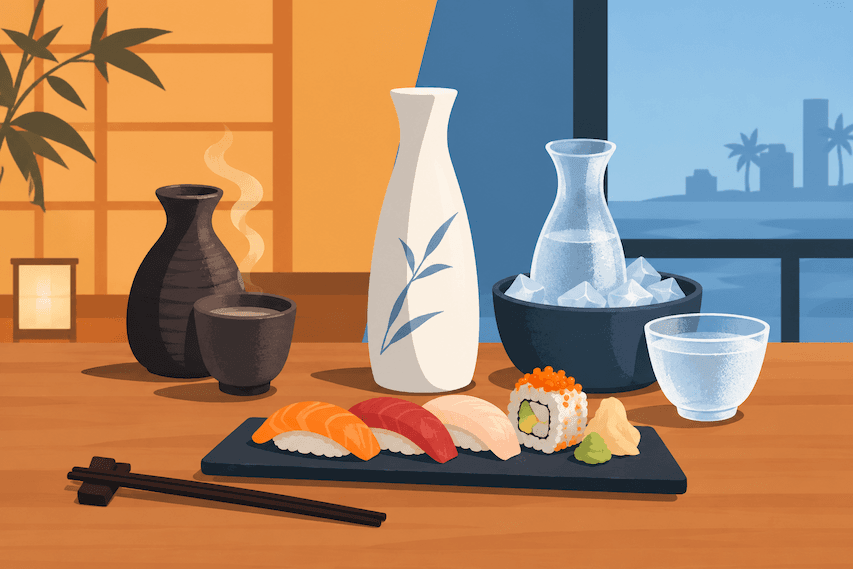
Sake is the traditional pairing because its umami base and light effervescence complement rather than compete with raw fish. A crisp junmai or junmai ginjo works across most nigiri pieces. The sake flights guide explains how Tokyo Sushi Speakeasy structures its pours for maximum pairing range.
Cocktails that work alongside nigiri have clean citrus or floral profiles — not heavy cream or sugar. The Lychee Martini (vodka, lychee sake, lychee juice, fresh lime) pairs particularly well with King Salmon and Yellowtail because its citrus-forward structure mirrors the lemon zest seasoning already on the fish. For a broader overview of how the cocktail menu aligns with different sushi formats, the best cocktails to pair with sushi covers the full pairing rationale.
Avoid pairing the Wagyu Beef nigiri with anything light — it can support a smoky, aged spirit or a richer sake with more body.
Frequently Asked Questions
What is nigiri sushi, and how is it made?
Nigiri sushi is a hand-formed portion of seasoned rice (shari) topped with a single ingredient — typically raw fish, cooked eel, or in premium kitchens, wagyu beef. A chef presses the rice into a compact oval, places the topping, and applies a small amount of seasoning — usually wasabi between rice and fish, or a light brush of soy. The piece is served and eaten immediately.
How many pieces of nigiri come in an order at Tokyo Sushi Speakeasy?
Each nigiri order at Tokyo Sushi Speakeasy is served as two pieces at $10 per order. This follows the standard nigiri service format, which allows diners to sample multiple varieties across a single sitting without committing to large quantities of any one topping.
Should you dip nigiri in soy sauce?
The conventional guidance is to dip the fish side — not the rice — lightly into soy, if at all. Many premium nigiri pieces are pre-seasoned by the chef, meaning additional soy is unnecessary and may overpower the topping’s natural flavour. For pieces like King Salmon with lemon zest, the seasoning is already calibrated — no soy is the correct approach.
What is the difference between nigiri and sashimi?
Nigiri includes hand-formed rice beneath the topping; sashimi is sliced fish served without rice. Nigiri is a complete bite designed to balance the rice and fish together, while sashimi is focused entirely on the fish’s texture and flavour in isolation. Both appear on Tokyo Sushi Speakeasy’s menu. The nigiri vs sashimi breakdown covers this distinction in full.
Is wagyu beef nigiri common in Japanese restaurants?
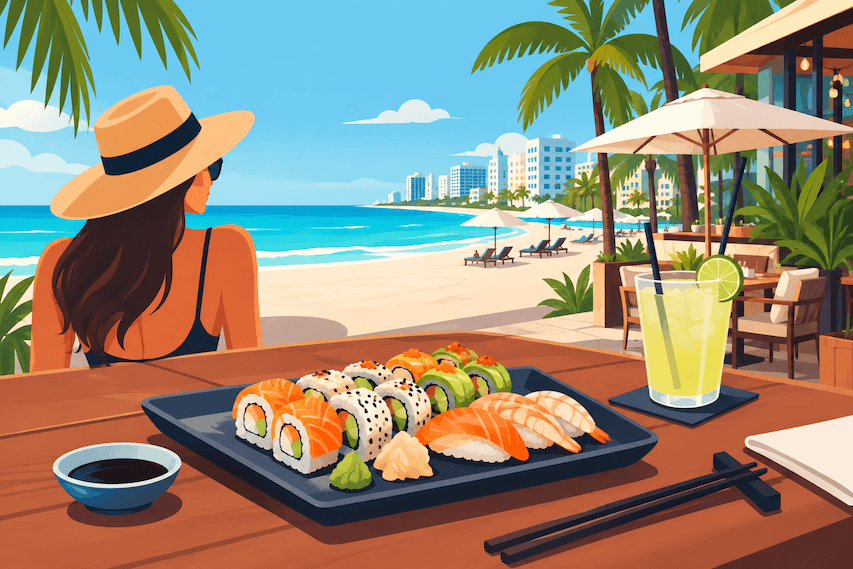
Wagyu beef nigiri is a premium addition found in progressive Japanese kitchens that extend beyond traditional fish-only Edomae lineups. It is not common in standard Japanese restaurants, which makes it a signature piece at Tokyo Sushi Speakeasy — the wagyu tartare and truffle mayo combination reflects South Beach’s appetite for luxury ingredients within a Japanese framework.
What is the best nigiri to order as a first-time diner?
King Salmon or Yellowtail are the strongest starting points for first-time nigiri diners. Both carry enough fat to deliver a satisfying flavour without overwhelming the palate, and both are seasoned cleanly enough to communicate what high-quality shari and neta taste like together. Build from there toward richer pieces like Unagi and Wagyu Beef.
Nigiri is the clearest test of what a kitchen can do — and the most rewarding format when the kitchen gets it right. At Tokyo Sushi Speakeasy, the six-piece lineup runs from citrus-bright King Salmon through to the decadent Wagyu Beef tartare, each piece designed as a complete statement on its own terms. Start with the lightest, move through the range, and let the Wagyu close it out.
Reserve a table at Tokyo Sushi Speakeasy at 1000 Collins Ave, Miami Beach, open Wednesday through Monday from 5PM to 12AM.