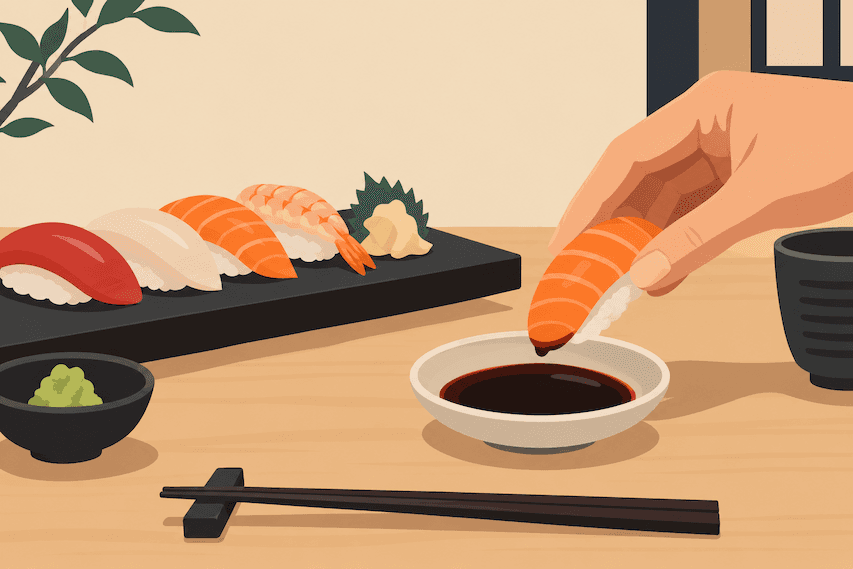

That green paste served alongside sushi might not be real wasabi. In many restaurants, the familiar condiment is made primarily from horseradish, mustard, and green coloring rather than the actual wasabi plant. Although both deliver a sharp, nose-tingling sensation, real wasabi has a more delicate, complex flavor that fades quickly after it is freshly grated.
Understanding the difference between real wasabi and regular wasabi can help you appreciate Japanese cuisine, recognize common substitutes, and make more informed choices when ordering sushi. The distinction comes down to the plant, how the condiment is prepared, and the flavor it brings to each bite.
What Is the Difference Between Real Wasabi and Regular Wasabi?
Real wasabi comes from the rhizome of the Wasabia japonica plant, while regular prepared wasabi is often a mixture based on horseradish, mustard, and coloring. They look similar and provide a comparable sharp sensation, but their flavor, texture, ingredients, and freshness can differ significantly.
Here is a quick comparison:
| Feature | Real Wasabi | Regular Prepared Wasabi |
|---|---|---|
| Main ingredient | Wasabi rhizome | Usually horseradish |
| Other ingredients | Freshly grated wasabi may be served on its own | May contain mustard, starch, coloring, and other additives |
| Flavor | Fresh, vegetal, mildly sweet, and complex | Sharper, more pungent, sometimes more bitter |
| Heat | Bright and relatively short-lived | Often stronger and longer-lasting |
| Texture | Fine, slightly fibrous, or grainy | Usually smooth and uniform |
| Color | Naturally pale to medium green | Often a more vivid, uniform green |
| Preparation | Grated shortly before serving | Commonly supplied as a ready-made paste or powder |
| Availability | Less common and generally more expensive | Widely available and usually more affordable |
These are general differences rather than absolute rules. Commercial products vary in their ingredients, and appearance alone cannot prove whether a condiment contains genuine wasabi.
Why Is Real Wasabi So Different?
Real wasabi contains naturally occurring compounds that develop its distinctive pungency when the plant tissue is grated. Breaking down the cells allows enzymes to react with other compounds, creating the sharp aromas associated with wasabi.
Those aromatic compounds are volatile, meaning they dissipate relatively quickly. This is why freshly grated wasabi can taste more fragrant and nuanced than a prepared paste that has been sitting for some time.
Regular wasabi substitutes rely largely on horseradish and sometimes mustard to recreate the familiar sinus-clearing sensation. They can perform a similar role alongside sushi, but they do not necessarily reproduce the same flavor complexity.
What Is Real Wasabi Made From?
Real wasabi is made from the rhizome of the wasabi plant, a member of the mustard family. Although it is commonly called a root, the part used for traditional wasabi preparation is technically a rhizome, an underground stem.
The plant is associated with Japanese cuisine and is known for its demanding growing conditions. Cultivation requires careful management of temperature, moisture, and other environmental factors, which contributes to the limited availability and higher price of fresh wasabi.
Where Does Real Wasabi Grow?
Wasabi originated in Japan and is traditionally cultivated in cool, moist environments. Some varieties are grown in carefully managed stream-fed beds, while others are cultivated in well-drained soil.
Growing conditions influence the plant’s development, but authentic wasabi is not defined solely by where it is grown. The key distinction is whether the condiment actually comes from the wasabi plant rather than being a horseradish-based substitute.
Is Real Wasabi Always Expensive?
Fresh wasabi generally costs more than standard prepared substitutes because cultivation is demanding and the product has a limited shelf life once grated. Availability, growing conditions, transportation, and supplier practices can all influence the final price.
Prepared wasabi products are more affordable and convenient because they can be manufactured, packaged, and distributed on a larger scale. For everyday sushi meals, they provide a practical alternative even though the flavor may differ from freshly grated wasabi.
What Does Real Wasabi Taste Like?
Real wasabi typically has a fresh, vegetal flavor with a clean burst of pungency, subtle sweetness, and a relatively quick finish. Instead of producing only a strong blast of heat, it can add aromatic complexity without completely overpowering the flavor of the fish.
The experience depends on the freshness of the rhizome, the way it is grated, and how long it sits before serving.
Does Real Wasabi Taste Less Spicy?
Real wasabi can seem less aggressive than horseradish-based paste, although its pungency is still noticeable. The main difference is often how the sensation develops and fades rather than whether the condiment is spicy at all.
Its heat tends to rise quickly through the nose and then diminish, leaving a cleaner finish. Prepared substitutes can produce a more persistent sharpness that may dominate the palate.
Unlike chili peppers, which produce their characteristic heat through capsaicin, wasabi’s pungency comes from different compounds that stimulate the nose. This explains why the sensation can feel more like a sharp nasal burst than a lingering burn on the tongue.
Why Does Real Wasabi Have a More Complex Flavor?
Freshly grated wasabi can offer more than pungency. Its aromatic qualities and subtle vegetal notes provide another layer of flavor that can complement the natural richness of seafood.
The difference is especially noticeable when the condiment is used sparingly. Rather than overwhelming a bite of sushi, a small amount can provide contrast and help balance the overall flavor.
How Is Real Wasabi Prepared?
Real wasabi is traditionally grated just before serving to preserve its aroma and pungency. The preparation method matters because grating breaks down the plant’s cells, allowing the flavor-producing compounds to develop.
Why Do Sushi Chefs Grate Wasabi Fresh?
Freshly grated wasabi loses much of its aromatic intensity over time. Preparing it shortly before serving helps preserve the bright flavor that makes authentic wasabi distinctive.
Traditional preparation may involve a fine-textured wasabi grater, including one made with sharkskin. The goal is to create a delicate paste that releases the plant’s aromatic compounds without leaving large, coarse pieces.
The basic process is straightforward:
Clean the rhizome. Remove dirt and trim away any damaged areas.
Prepare the surface. Remove unwanted stems or rough outer areas as needed.
Grate finely. Use a suitable wasabi grater to create a fine paste.
Allow the flavor to develop briefly. A short rest can help the pungency emerge.
Serve promptly. Freshly prepared wasabi is best enjoyed before its delicate aromas fade.
Can You Buy Real Wasabi in a Tube?
Yes, some products contain genuine wasabi in a packaged form, but the ingredients vary by manufacturer. A tube labeled “wasabi” does not automatically mean the product consists entirely of the actual wasabi plant.
Some products contain a blend of real wasabi and horseradish, while others rely predominantly on horseradish and mustard. Processing and packaging also affect the finished flavor.
If authenticity matters to you, read the ingredient list carefully and look for a clear statement about the percentage of genuine wasabi. Fresh rhizome and products made exclusively from the real plant are different from blends designed to imitate its flavor.
What Is Regular Wasabi Made From?
Regular prepared wasabi is commonly made from horseradish, mustard powder, and other ingredients used to create its pungency, color, and consistency. Some formulations include actual wasabi, but many rely primarily on substitutes because they are less expensive and easier to produce in large quantities.
Why Is Horseradish Used as a Substitute?
Horseradish belongs to the same broader plant family as wasabi and produces a similarly sharp sensation when its tissues are processed. Its pungency makes it a practical alternative for a condiment that needs to deliver a strong, quick hit of flavor.
Horseradish is also more widely available and generally easier to source economically. These qualities make it useful for producing large quantities of prepared wasabi paste.
Mustard can add another layer of sharpness, while green coloring gives the finished product the familiar appearance associated with wasabi.
Does Regular Wasabi Contain Real Wasabi?
Sometimes, but not always. The term “wasabi” on a package or menu does not necessarily tell you how much genuine wasabi is present.
Products can differ in several ways:
Horseradish-based paste: Primarily uses horseradish, with other ingredients for flavor and color.
Wasabi blend: Combines real wasabi with horseradish or other ingredients.
Wasabi powder: May contain horseradish, mustard, starch, and coloring, depending on the formulation.
Pure wasabi powder: Uses dehydrated wasabi as its main or sole ingredient, depending on the product’s labeling and specification.
Fresh wasabi: Made by grating the actual wasabi rhizome shortly before serving.
Checking the ingredient list is more reliable than judging the product by its name or color.
How Can You Tell Real Wasabi From Regular Wasabi?
You can look for clues in the ingredients, texture, aroma, and flavor, but none of these characteristics alone guarantees authenticity. The most reliable approach is to combine what you observe with clear information from the restaurant or product manufacturer.
1. Check the Ingredients
Ingredient labels provide the clearest starting point for packaged products. If horseradish appears as the primary ingredient and wasabi is absent, the condiment is a substitute rather than pure wasabi.
If the product contains both ingredients, it is a blend. Check whether the manufacturer specifies the percentage of genuine wasabi.
2. Observe the Texture
Freshly grated wasabi often has a fine, slightly fibrous or grainy texture. Prepared paste is generally smoother and more uniform because it has been processed and mixed with other ingredients.
However, texture is only a clue. A processed product containing real wasabi may be smooth, and a coarse texture does not automatically establish authenticity.
3. Notice the Color
Fresh wasabi is generally a natural, relatively soft green, though its exact shade varies. Prepared substitutes can have a brighter, more uniform color because coloring agents may be added.
Color should never be your only test. Both authentic and imitation products can look similar, and natural variation is normal.
4. Pay Attention to the Flavor
Real wasabi can deliver a clean, aromatic burst followed by a subtle vegetal finish. Horseradish-based paste often tastes more directly pungent, with a sharper sensation that may linger longer.
Taste can vary with freshness and formulation, so this difference is useful as a guide rather than definitive proof.
5. Ask How It Is Prepared
If you are dining at a sushi restaurant and want to know whether its wasabi is authentic, ask whether it uses freshly grated wasabi, a prepared blend, or a standard horseradish-based paste.
A restaurant that uses fresh wasabi may be able to explain its preparation method and sourcing. It is better to ask directly than to assume that a premium-looking sushi plate automatically includes authentic wasabi.
Real Wasabi vs. Regular Wasabi: Which Is Better With Sushi?
Real wasabi is worth trying if you want to explore the subtle aromatic qualities of traditional Japanese ingredients. Regular prepared wasabi remains a practical option for diners who enjoy a stronger, familiar kick and want an affordable condiment.
Neither option needs to be treated as the only correct choice. The best fit depends on your taste preferences, the dish, and how much you value the nuances of the ingredient.
Which Wasabi Works Best With Nigiri?
Nigiri combines seasoned rice with a topping, usually fish or seafood. A small amount of wasabi can add pungency and contrast without masking the other components.
Fresh wasabi may appeal to diners who want to appreciate the fish, rice, and condiment as a balanced combination. Prepared wasabi works well for those who prefer a more pronounced hit of heat.
If you’re exploring different preparations, Tokyo Sushi Speakeasy’s sushi types guide explains how nigiri, sashimi, maki, and other styles differ.
Which Wasabi Works Best With Sashimi?
Sashimi is served without sushi rice, so the flavor and texture of the seafood take center stage. A restrained amount of wasabi can add contrast, especially when paired with a light seasoning or dipping sauce.
Fresh wasabi’s more delicate aroma can complement the seafood without dominating it. Regular prepared wasabi can also provide a familiar sharpness, but using too much may overwhelm the fish’s natural flavor.
For example, Tokyo Sushi Speakeasy’s hamachi sashimi guide explores the flavor of yellowtail and common accompaniments used when serving sashimi.
Should You Mix Wasabi Into Soy Sauce?
There is no single rule that every diner must follow, but using wasabi sparingly can make it easier to appreciate the condiment’s flavor. Mixing a large amount into soy sauce may spread its heat throughout the dipping sauce and make the wasabi’s more subtle characteristics harder to notice.
For nigiri, you can try a small amount alongside the fish and rice. For sashimi, experiment with a little wasabi and soy sauce separately before deciding which combination you prefer.
The goal is to find a balance that complements the food rather than overwhelms it.
Why Does Wasabi Taste Different From One Restaurant to Another?
Wasabi can taste different because restaurants use different ingredients, preparation methods, and serving practices. Even authentic wasabi varies in flavor depending on its freshness, growing conditions, and how long it has been grated.
Does Freshness Change Wasabi’s Flavor?
Yes. Freshly grated wasabi develops its characteristic pungency when its cells are broken down, but the aromatic compounds begin to fade after preparation. Wasabi served immediately may taste more fragrant and nuanced than a portion that has been sitting for a while.
Prepared pastes can retain their sharpness for longer because of their ingredients and processing methods. That difference helps explain why a familiar restaurant condiment may taste much stronger or more persistent than freshly grated wasabi.
Does Every Sushi Restaurant Use Real Wasabi?
No. Restaurants choose their ingredients based on availability, cost, menu style, and preparation requirements. Many use prepared wasabi because it is convenient and consistent, while others may offer fresh wasabi or a blend.
You should not assume that a restaurant uses authentic wasabi simply because it specializes in Japanese cuisine. If the distinction matters to you, ask the staff what the condiment contains and how it is prepared.
Tokyo Sushi Speakeasy serves Japanese-inspired dishes including nigiri, sashimi, and specialty rolls. You can explore the current offerings on its sushi and Japanese dining menu, though you should confirm directly with the restaurant whether fresh wasabi is available.
Is Real Wasabi Worth Trying?
Real wasabi is worth trying if you enjoy exploring how individual ingredients contribute to a dish. Its fresh aroma, vegetal notes, and relatively quick finish offer a different experience from the stronger, more persistent pungency many people associate with prepared wasabi.
For someone who has only tasted horseradish-based paste, authentic wasabi can be an interesting introduction to a more nuanced side of Japanese cuisine.
Who Should Try Real Wasabi?
Fresh wasabi may be especially appealing if you:
Enjoy learning about traditional Japanese ingredients.
Prefer aromatic flavors over lingering heat.
Like tasting seafood with minimal seasoning.
Want to compare authentic ingredients with common substitutes.
Appreciate careful preparation and ingredient sourcing.
You do not need to be an experienced sushi diner to appreciate these differences. Start with a small amount and pay attention to how the flavor develops and fades.
Is Regular Wasabi Still a Good Choice?
Absolutely. Prepared wasabi is convenient, affordable, and familiar to many sushi lovers. It can add the sharp contrast that makes sushi enjoyable, even if it does not replicate the complete flavor of freshly grated wasabi.
The important distinction is understanding what you are eating. A substitute is not necessarily a bad product; it simply delivers a different flavor and preparation experience.
Frequently Asked Questions About Real Wasabi
Is real wasabi made from horseradish?
No. Authentic wasabi comes from the rhizome of the wasabi plant, Wasabia japonica. Horseradish is a different plant commonly used as the main ingredient in imitation wasabi.
Why is real wasabi more expensive?
Real wasabi generally costs more because cultivation requires careful conditions, availability is more limited, and freshly grated wasabi loses its aroma relatively quickly. Prepared substitutes are easier to produce and distribute in large quantities.
Is real wasabi less spicy than imitation wasabi?
It can seem less harsh because its pungency is often more aromatic and short-lived. However, intensity varies with freshness, preparation, and the ingredients used in the substitute.
Is bright green wasabi fake?
Not necessarily. Color can provide a clue, but it cannot establish authenticity on its own. Check the ingredient list or ask the restaurant whether it uses real wasabi, a blend, or a horseradish-based substitute.
Does real wasabi lose its flavor?
Yes. The volatile compounds responsible for its characteristic aroma and pungency diminish after grating. This is why fresh wasabi is traditionally prepared shortly before serving.
Can you get real wasabi outside Japan?
Yes. Authentic wasabi is cultivated outside Japan as well, and fresh rhizomes and genuine wasabi products are available through some specialty suppliers. Availability and price depend on the market and supplier.
Is wasabi the same as mustard?
No. Wasabi, horseradish, and mustard are different plants, although they belong to the same broader botanical family and can produce similar pungent sensations. Mustard may be included in prepared wasabi products to contribute additional sharpness.
Should you eat wasabi with every piece of sushi?
No. Wasabi is optional, and the amount you use depends on your preference and the dish. Trying a small amount can help you appreciate its flavor without overpowering the fish, rice, or other ingredients.
Conclusion: Understanding the Difference Makes Every Bite Better
The difference between real wasabi and regular wasabi goes beyond appearance. Authentic wasabi comes from a specific plant and offers a fresh, aromatic pungency that fades relatively quickly, while many prepared substitutes rely on horseradish and mustard for a stronger, more persistent kick.
Both have a place in sushi dining, but knowing what distinguishes them can help you appreciate the ingredients and preparation behind Japanese cuisine. The next time you order nigiri or sashimi, try a small amount of wasabi, notice how its flavor develops, and ask about its ingredients if you are curious.
Exploring these details is one way to get more out of a sushi meal, whether you prefer traditional preparations or modern Japanese-inspired creations.