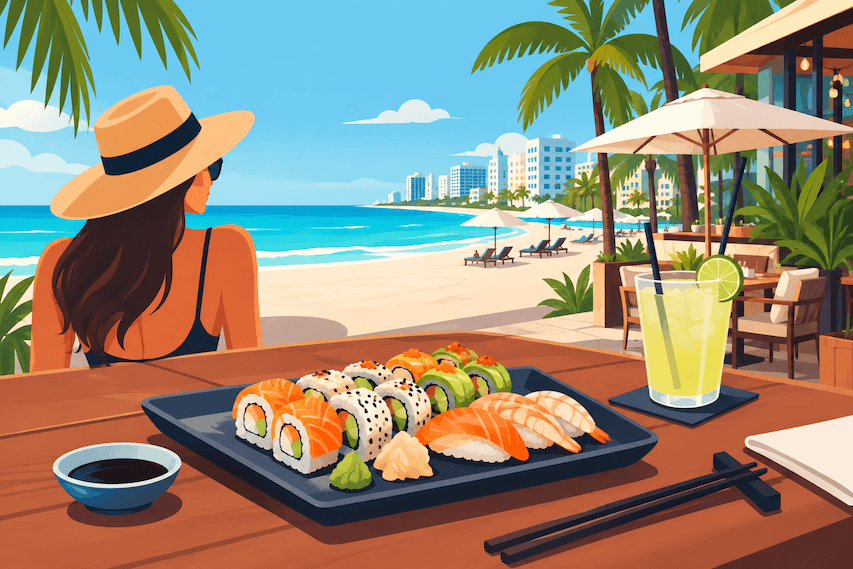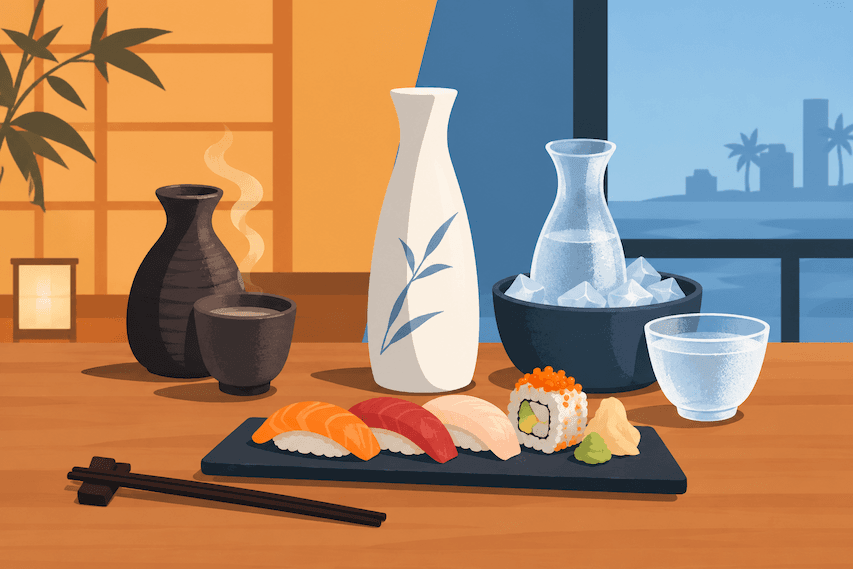
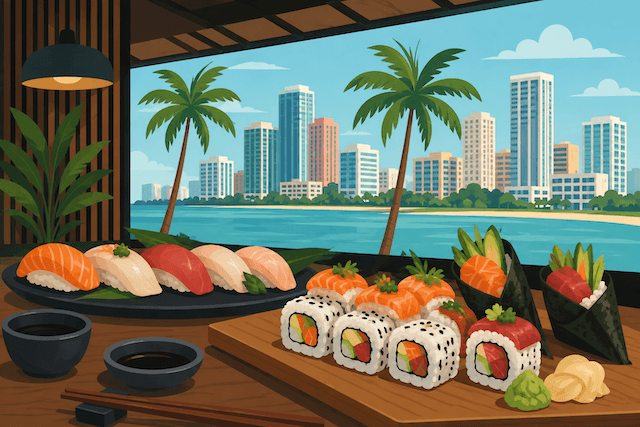
Miami’s sushi scene has matured into one of the most distinctive in the United States — and if you’re searching for the best sushi in Miami, the range, quality, and variety you’ll find here goes well beyond what most visitors expect. Shaped by the city’s Latin influences, access to premium Atlantic and Gulf seafood, and a nightlife culture that demands dining experiences match the energy of the room, it is a scene worth understanding before you book a table.
Key Takeaways
Miami’s sushi scene spans traditional Edomae technique to bold, South Florida-influenced signature rolls — the range is wider than many comparable US cities, rivalling markets typically associated with serious Japanese dining.
South Beach is widely regarded as one of the highest concentrations of quality Japanese restaurants in the Miami area, with venues that blend sushi precision with late-night cocktail culture.
Florida’s restaurant industry is one of the largest in the United States by economic output, and Japanese cuisine has been widely noted as among the faster-growing fine dining segments in the state — though specific figures should be confirmed with the Florida Restaurant and Lodging Association for the most current data.
Sushi quality in Miami is directly tied to sourcing — the best venues specify fish origins, use sushi-grade standards, and rotate menus seasonally.
Tokyo Sushi Speakeasy on Collins Ave operates late into the evening on select days of the week — check directly with the venue for current hours and days of operation, as these details are subject to change.
Reservations are strongly recommended at top-tier Miami sushi venues, particularly on weekends when tables fill hours in advance.
What Makes Miami’s Sushi Scene Different?
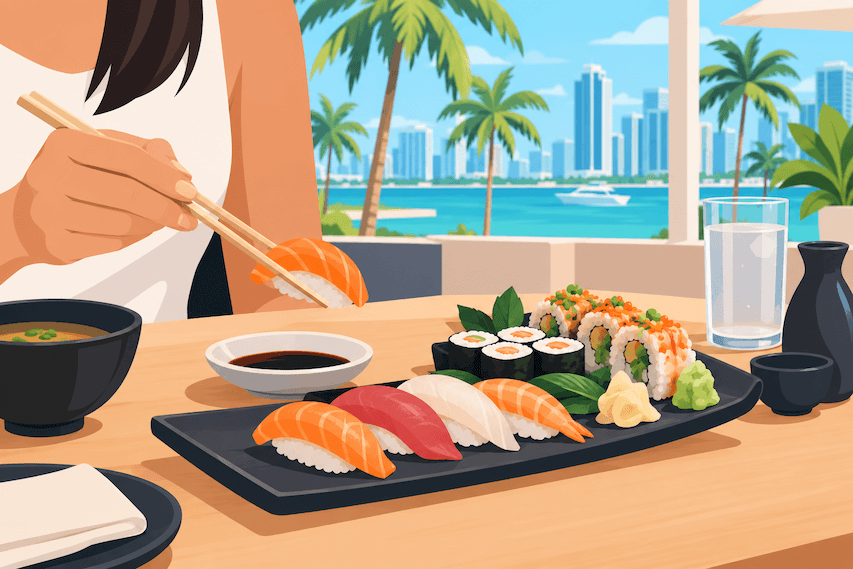
Miami’s sushi landscape is not a replica of any other American city’s. Caribbean and Latin American culinary influences run through the food. The tourism economy runs year-round. And the dining culture is built around late nights and social energy. Together, these forces have produced something genuinely distinct.
In practice, this means Miami sushi menus lean into bold flavor contrasts — rich tropical fruit accents, house-made sauces with heat and acid, and a willingness to elevate classic rolls with premium finishes like caviar, wagyu, and edible gold. This is not fusion for its own sake — it is sushi technique applied to Miami’s appetite and identity.
The city also benefits from geography. Access to Gulf of Mexico yellowfin tuna, Florida-farmed oysters, and direct import relationships with Japanese fish markets means the raw product at serious Miami sushi venues is genuinely competitive — and for certain locally sourced species, proximity to the Gulf can be a meaningful freshness advantage.
How Is Sushi Quality Measured in Miami?
Sushi quality in Miami — as anywhere — comes down to three variables: fish sourcing, rice preparation, and knife technique. What separates a strong Miami sushi restaurant from an average one is whether all three operate at the same level simultaneously.
Fish sourcing is the most publicly visible quality signal. Credible Miami sushi venues will identify fish origins on the menu or be willing to explain sourcing when asked. Sushi-grade designation is not a USDA-regulated term, and the FDA does not formally define it — in practice, reputable vendors typically use it to indicate the fish has been handled and frozen in a manner consistent with FDA parasite destruction guidelines, though standards can vary between suppliers. For a deeper breakdown of how to evaluate raw fish quality yourself, how to identify sushi-grade fish covers the core criteria in detail.
Rice preparation is where many otherwise competent venues fall short. Edomae-style sushi rice — the foundational technique from Tokyo’s original sushi tradition — requires precise seasoning with rice vinegar, salt, and sugar, served at around body temperature or slightly above. Cold rice is a telltale sign of poor execution regardless of fish quality.
Knife technique determines the texture of every piece. A clean cut releases a fish’s natural oils evenly across the slice. A poor cut crushes the protein structure and produces a mushy texture that misrepresents an otherwise quality ingredient.
The Main Styles of Sushi You’ll Find in Miami
Miami sushi venues generally fall across a spectrum from traditional to contemporary. Understanding where a venue sits on that spectrum helps set accurate expectations before you arrive.
Traditional Edomae Nigiri
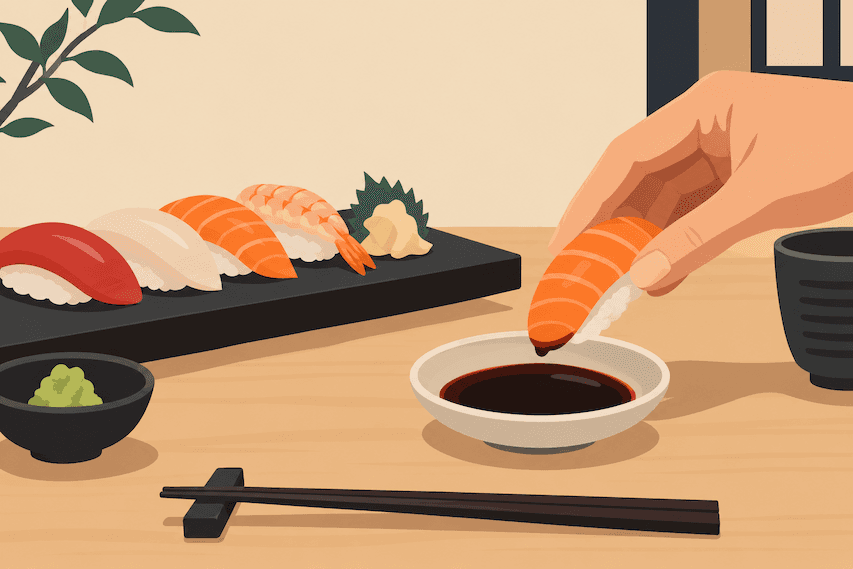
Edomae is the original Tokyo-style sushi tradition — minimal garnish, precisely seasoned rice, fish served at the correct temperature with a light brush of nikiri soy sauce applied by the chef. This style demands the highest technical skill because there is nowhere to hide a mistake.
Very few Miami venues execute authentic Edomae technique. Tokyo Sushi Speakeasy is one that commits to this foundation while layering it with a South Beach dining experience. Their Edomae approach at Tokyo Sushi Speakeasy explains the specific methods behind their nigiri program.
Signature and Specialty Rolls
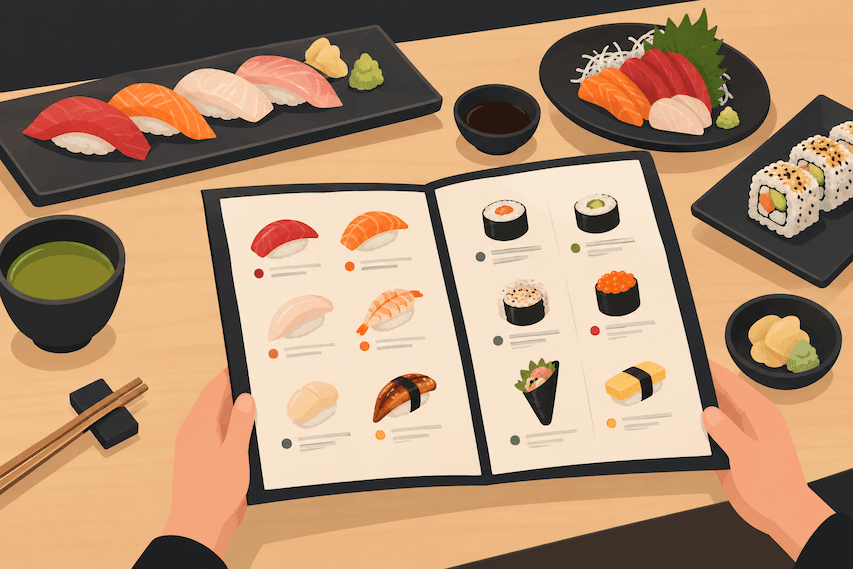
This is where Miami sushi expresses its most local character. Signature rolls at South Beach venues are built for drama — layered with multiple proteins, finished with house sauces, and plated for visual impact. The best examples balance aesthetics with actual flavor development rather than using toppings as decoration alone.
Tokyo Sushi Speakeasy’s Tokyo Gold Roll — which at time of writing featured shrimp tempura, eel, and avocado topped with tuna, ikura, spicy mayo, eel sauce, and 24K gold leaf — is a direct product of Miami’s appetite for elevated presentation matched with genuine flavor. (Confirm current ingredients with the venue, as menus are subject to change.) The South Beach Roll (salmon, shrimp, and avocado topped with crispy crab and caviar) reads the room differently: it is built for the table, shareable, and crowd-accessible without being basic. The signature sushi rolls at Tokyo Sushi Speakeasy provides the full breakdown of what goes into each creation.
Sashimi-Forward Menus
Some Miami diners — particularly those with serious Japanese food backgrounds — prefer a sashimi-led order. Sashimi removes rice from the equation entirely and puts the quality of the fish and the cut completely in focus. If you are evaluating a Miami sushi venue for the first time, ordering a sashimi course alongside nigiri is the fastest way to assess their fish quality honestly. The complete sashimi guide walks through species, cuts, and what to look for when ordering.
Omakase-Influenced Dining
True omakase — a fully chef-directed tasting sequence — is rare in Miami outside a handful of dedicated counters. More common in South Beach is an omakase-influenced approach, where the menu structure and pacing are designed to guide the diner through courses in a deliberate sequence rather than presenting a simple à la carte list. This style rewards diners who trust the kitchen and order across the full menu rather than selecting one or two items. For context on the difference, omakase vs. sushi rolls covers both approaches clearly.
What to Drink With Sushi in Miami
Miami’s sushi cocktail culture has developed well beyond sake-and-beer defaults. Serious venues now build cocktail programs specifically calibrated to complement fish — using citrus-forward spirits, floral liqueurs, and low-tannin bases that don’t overpower delicate proteins.
Sake
Sake remains the classic pairing and for good reason. The amino acids in sake interact with umami-rich fish in a way that amplifies both. In Miami, sake programs at top venues offer flights across junmai, ginjo, and daiginjo styles — a useful way to understand the range before committing to a bottle. The sake flights guide explains how to read a sake menu and what pairs with what.
Crafted Cocktails
The cocktail programs at leading Miami sushi venues treat the bar as seriously as the kitchen. At Tokyo Sushi Speakeasy, the Lychee Martini — vodka, lychee sake, lychee juice, and fresh lime — is built with the same logic as a wine pairing: high acidity and light sweetness cut through rich fish without competing with it.
For anyone wanting guidance on pre-dinner drink choices, pre-dinner cocktails before sushi covers which spirits and profiles work best before a sushi-led meal. And if you want a broader pairing framework, the best cocktails to pair with sushi is worth reading before you order.
Miami Neighborhoods for Sushi: Where to Focus
Not all Miami sushi is located in the same area, and location affects more than just convenience — it shapes the entire dining experience.
NeighborhoodSushi ProfileBest ForSouth Beach (SoBe)High-end signature rolls, speakeasy atmosphere, late-nightDate nights, celebrations, after-dark diningBrickellCorporate-facing Japanese restaurants, reliable qualityBusiness dinners, weekday diningWynwoodExperimental and fusion-forward, younger crowdCasual groups, creative menusBal Harbour / SurfsideResort-adjacent, premium pricing, quieter atmosphereUpscale tourist dining, familiesDowntown MiamiMixed quality, high volume, tourist-heavyConvenience dining
South Beach delivers the most concentrated and highest-quality sushi experience in Miami, particularly for anyone combining dinner with cocktails and a late-night atmosphere. The combination of venue quality, cocktail programming, and room energy is difficult to replicate in other Miami neighborhoods.
How to Order Sushi in Miami Like Someone Who Knows What They’re Doing
Ordering well at a Miami sushi restaurant follows a logic that applies across venues, from traditional to contemporary.
Start with nigiri or sashimi before moving to rolls. This lets you assess the base quality of the fish and rice before flavors become more complex.
Order lighter fish before richer fish. Flounder and snapper before salmon; salmon before fatty tuna. This mirrors the progression a sushi chef would follow in an omakase setting.
Ask what came in today. Any serious Miami sushi venue will have daily fish arrivals. Asking what’s freshest is not a demanding question — it signals you know what you’re doing and often produces better recommendations.
Do not over-order rolls at the beginning. Signature rolls are filling and rich. Order one or two after your nigiri and sashimi courses, not as the centrepiece of the meal.
Match your drinks to the course. Light, citrus-forward cocktails work well with sashimi. Sake pairs well across nigiri. Richer cocktails and dessert drinks suit the end of the meal.
Reserve before you arrive. The best Miami sushi venues — particularly on South Beach — fill fast on weekends. Walking in without a reservation on a Friday or Saturday is a genuine gamble.
For anyone visiting Tokyo Sushi Speakeasy for the first time, the first-timer’s ordering guide walks through the full menu structure and what to prioritise.
The Late-Night Sushi Culture in Miami
One of Miami’s most distinctive qualities is that serious food and late hours are not mutually exclusive. Most American cities see kitchen quality drop significantly after 9 PM. In South Beach, venues like Tokyo Sushi Speakeasy operate at full capacity until midnight — the same knife work, the same sourcing, the same cocktail standards regardless of the hour.
According to Eater Miami, late-night dining has become one of South Beach’s defining hospitality categories, with Japanese venues leading the trend toward premium food served in a nightlife-adjacent context.
This is the specific gap Tokyo Sushi Speakeasy fills in Miami’s restaurant landscape: it is not a restaurant that stays open late as a concession — it is built for the after-dark dining ritual from the ground up. The room, the lighting, the music, and the menu are all calibrated for guests who arrive between 8 PM and 11 PM and intend to spend the full evening there. The late-night sushi guide for South Beach covers this in more detail for anyone planning a night out.
Frequently Asked Questions
What is the best area in Miami for sushi?
South Beach offers the highest concentration of quality sushi venues in Miami, particularly for those who want to combine a serious dinner with cocktails and a nightlife atmosphere. Brickell is the strongest alternative for business dining or weekday plans without the South Beach crowd.
Is sushi in Miami expensive?
Miami sushi pricing ranges from affordable casual rolls under $15 to premium signature rolls between $25 and $40. At Tokyo Sushi Speakeasy, nigiri starts from $10 per piece, signature rolls run $24 to $35, and the full evening experience — including cocktails — typically lands between $60 and $120 per person depending on what you order.
Does Miami have good sushi compared to New York or Los Angeles?
Miami’s top sushi venues compete directly with New York and Los Angeles on fish quality and technique, particularly at South Beach establishments that import directly from Japanese fish markets and maintain strict sourcing standards. The overall volume of top-tier venues is smaller in Miami, but the ceiling is comparable.
What should I order at a Miami sushi restaurant if it’s my first time?
Start with two to three nigiri pieces of different fish to assess quality, add a sashimi order for direct comparison, then choose one signature roll. Pair with a sake flight or a house cocktail. Avoid ordering five different rolls on a first visit — you will not experience the kitchen’s range or your own preferences clearly.
Can I get sushi late at night in Miami?
Yes. Tokyo Sushi Speakeasy on Collins Ave, South Beach, serves late into the evening on select nights — confirm current hours directly with the venue before visiting. Very few Miami sushi venues maintain full kitchen quality this late — it is one of the characteristics that separates Tokyo Sushi Speakeasy from the broader South Beach dining landscape.
How far in advance should I reserve a table at a South Beach sushi restaurant?
For weekend dining at top South Beach venues, reserving 48 to 72 hours in advance is standard. Tables at Tokyo Sushi Speakeasy on Friday and Saturday evenings fill quickly — same-day reservations are possible on slower nights but are not reliable for weekend plans.
The Honest Assessment
Miami’s sushi scene is genuinely strong — better than its reputation outside Florida would suggest, and improving year on year as more technically serious operators enter the market. The city’s appetite for bold, visually dramatic presentations sometimes gets used as evidence that Miami sushi lacks depth, but that misreads the landscape. The best South Beach venues deliver serious technique underneath the drama.
If you are planning a sushi dinner in Miami, South Beach is where to focus your attention, and reserving ahead at a venue with a defined identity — one with a real cocktail program, a sourcing philosophy, and a room built for the full evening — will produce a meaningfully better experience than walking into the first Japanese restaurant you find on Collins Avenue.
Reserve your table at Tokyo Sushi Speakeasy and experience what South Beach’s most distinctive Japanese speakeasy has built.