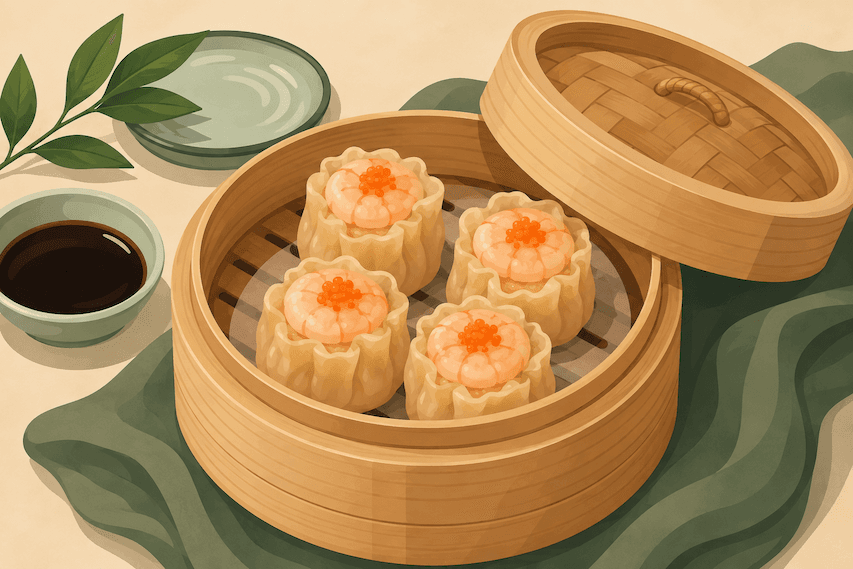
Ebi shumai are steamed Japanese dumplings filled with seasoned shrimp, wrapped in a thin wheat flour skin, and finished with a single piece of shrimp pressed on top — making the filling instantly visible before the first bite. They are a staple of Japanese izakaya and dim sum-influenced dining, prized for their clean flavor, delicate texture, and versatility as a starter or shared plate.
Key Takeaways
Ebi shumai are Japanese steamed dumplings made primarily with shrimp (ebi) and a thin, open-topped wrapper — distinct from pork-dominant Chinese shumai.
The dumpling traces its origins to Chinese dim sum but was fully adapted into Japanese cuisine by the early 20th century, most famously by崎陽軒 (Kiyoken) in Yokohama.
Proper ebi shumai relies on a combination of shrimp paste and chopped shrimp for texture — using only paste produces a rubbery result.
Traditional garnishes include a single green pea or whole prawn on top, served with karashi (Japanese mustard) and soy sauce.
At a modern Japanese speakeasy in South Beach like Tokyo Sushi Speakeasy, small plates built on Japanese technique — including steamed and composed starters — reflect the same precision that defines ebi shumai at its best.
Ebi shumai can be made at home with accessible ingredients, but the quality of the shrimp determines the final flavor more than any other variable.
What Is Ebi Shumai?
Ebi shumai (海老焼売, where 焼売 is the Japanese rendering of the Chinese shāomài/烧卖) is the Japanese iteration of shumai — a category of dumpling that is widely understood to have originated in Chinese dim sum culture as shāomài. The word ebi means shrimp in Japanese, identifying it as the primary protein. Unlike its Chinese counterpart, which typically features pork and sometimes scallop, the Japanese version centers the filling on shrimp, producing a lighter, sweeter, and more delicate dumpling.
The wrapper is made from thin wheat flour dough, left deliberately open at the top rather than sealed shut. This open structure is functional: it allows steam to circulate evenly through the filling during cooking, and it showcases the filling itself as part of the presentation.
In practice, what separates an exceptional ebi shumai from a forgettable one is the shrimp preparation. A skilled cook divides the shrimp into two portions. One portion is ground into a paste to bind the filling. The other is chopped into small pieces to preserve bite. The ratio between them determines the final texture. Too much paste makes the dumpling dense and rubbery. Too much chop and it falls apart.
The History Behind the Dumpling
From Chinese Dim Sum to Japanese Staple
Shumai is generally thought to have arrived in Japan through Chinese communities established in Yokohama’s Chinatown, likely during or around the Meiji era (1868–1912), though the precise timing and route of introduction are not fully documented. Japanese cooks adapted the original pork and shrimp formula significantly. They shifted the protein balance toward shrimp to suit local palates that favored lighter, cleaner seafood flavors.
The company most responsible for cementing shumai as a Japanese icon is Kiyoken, widely reported to have been founded in Yokohama in the late 1920s — commonly cited as 1928, though readers should verify the exact date against Kiyoken’s current published materials. Kiyoken’s shumai became so closely associated with Yokohama that they are sold as an ekiben (train station bento) to this day. The brand has become a cultural reference point for what Japanese shumai tastes like. Kiyoken’s long commercial history and continued presence as a cultural institution reflect just how thoroughly the dumpling embedded itself in Japanese food culture — the brand is frequently cited as having sold vast quantities of shumai over its decades of operation, though specific cumulative figures should be confirmed against Kiyoken’s current published materials.
Why Shrimp Replaced Pork
The substitution was not arbitrary. Japanese cuisine in the early 20th century was building its own lexicon of refined seafood preparation, influenced by both Edomae sushi tradition and the broader appreciation for clean protein flavors over fatty richness. Shrimp offered sweetness, a firmer bite, and a filling that could be shaped without the need for heavy seasoning to mask fat content.
The result is a dumpling that reads as Japanese rather than simply an import. It followed the same process of absorption and refinement that produced tonkatsu from a European cutlet and ramen from Chinese noodle soup.
How Ebi Shumai Is Made
The Filling
A well-constructed ebi shumai filling contains:
Ground shrimp paste — processed until sticky to act as the binder
Coarsely chopped shrimp — for texture and visible pieces within the bite
Minced onion or water chestnuts — for moisture and a subtle crunch
Katakuriko (potato starch) — to absorb excess moisture and help the filling hold shape
Sesame oil — applied sparingly for aroma, not to dominate
Salt and a small amount of sugar — to season and highlight the natural sweetness of the shrimp
Some recipes include ginger to counter any oceanic sharpness. What you will not find in a proper ebi shumai is cream cheese, heavy sauces, or ingredients that obscure the shrimp. The filling is a study in restraint.
The Wrapper
Shumai wrappers are typically thinner than gyoza skins and are most commonly square rather than round, though round shumai wrappers do exist and thickness can vary by brand or maker. They are available pre-made at most Asian grocery stores, and the quality of store-bought wrappers is reliably high — this is not a component where making from scratch offers a significant advantage unless you are working at a very high production level.
The wrapper is gathered up around the filling by pressing the sides with the fingers, leaving the top open. The goal is a neat cylinder with pleated sides, stable enough to stand upright in the steamer.
Cooking Method
Ebi shumai are steamed, not pan-fried. This is non-negotiable for the authentic result. A bamboo steamer lined with cabbage leaves or parchment paper prevents sticking without absorbing steam.
Bring water to a boil in a wok or pot
Place filled dumplings in the steamer with space between each piece
Steam over medium-high heat for approximately 8 to 10 minutes, or until the shrimp is fully cooked through — timing may vary depending on dumpling size and steamer setup
Check that the shrimp has turned fully pink and the wrapper is translucent
Overcooking tightens the shrimp protein and produces a rubbery result — the filling should be just cooked through, tender, and moist.
What Makes Ebi Shumai Different From Other Dumplings?
FeatureEbi ShumaiGyozaChinese ShāomàiHar GowPrimary proteinShrimpPork and cabbagePork and shrimpShrimpWrapper typeThin wheat, square, open topRound wheat, pleated and sealedThin wheat, open topRice starch, translucent, sealedCooking methodSteamedPan-fried / steamedSteamedSteamedOriginJapan (Yokohama adaptation)Japan (Chinese origin)ChinaChina (Cantonese)Texture profileTender, light, slightly sweetCrispy base, soft topRicher, denserSilky wrapper, clean shrimp
The key distinction from har gow — which might seem like the closest relative — is the wrapper. Har gow uses a rice starch skin that becomes nearly translucent when steamed, while ebi shumai uses a wheat-based skin with more structural body. The eating experience is different: har gow delivers a softer, more yielding bite, while ebi shumai has a slightly more defined chew from the wrapper.
How to Serve and Eat Ebi Shumai
Traditional Accompaniments
Ebi shumai is almost universally served with two condiments:
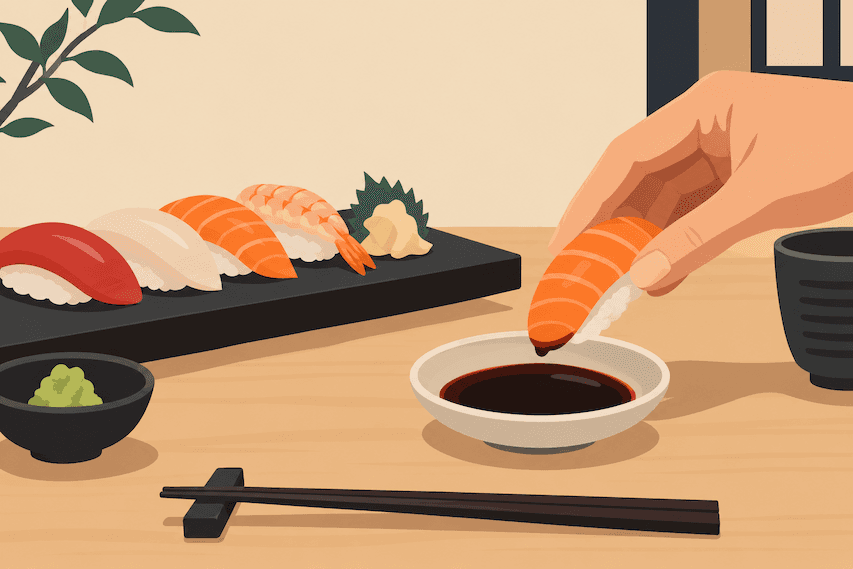
Karashi — Japanese hot mustard, sharper and more direct than American yellow mustard, applied in a small amount to the side of the dumpling
Soy sauce — for dipping, used lightly enough not to overwhelm the shrimp
The combination of karashi heat and soy salinity cuts through the natural sweetness of the shrimp filling and prevents the eating experience from becoming one-dimensional across multiple pieces.
Some restaurants add a small dish of rice vinegar as a third option. Ponzu — a citrus-soy sauce blend — is a modern variation that works particularly well with seafood-based dumplings. For more on how ponzu functions as a complement to Japanese seafood dishes, see this guide to house sauces at Tokyo Sushi Speakeasy.
Presentation
A standard restaurant portion is four to six pieces arranged in a steamer basket or on a ceramic plate. The single green pea or whole shrimp placed on top of each dumpling before steaming is not decorative afterthought — it identifies the filling at a glance and has been part of the presentation since Kiyoken standardized the format.
Ebi Shumai in the Context of Japanese Small Plates
In Japan, shumai appears across a wide range of dining contexts — convenience store shelves, train station bento, izakaya menus, and high-end kaiseki as an intermezzo. That range reflects the dumpling’s structural flexibility: it can function as quick street food or as a refined, composed small plate depending on the quality of ingredients and the care taken in execution.
In Miami’s modern Japanese dining scene, small plates occupy a similar role — they frame the larger dining experience without overshadowing it. At Tokyo Sushi Speakeasy, the approach to starters and small plates reflects that same Japanese logic: each item should be precise, purposeful, and built to set the tone for what follows. The full range of small plate options available is detailed in this overview of small plates and starters at Tokyo Sushi Speakeasy.
Understanding how starters sequence into a full Japanese dinner is part of what separates a good evening from a great one. For a full breakdown of how to approach an omakase-style menu versus ordering individual rolls, the omakase vs. sushi rolls guide covers the decision clearly.
Common Mistakes When Making Ebi Shumai at Home
These are errors that consistently appear when the dumpling is made without proper technique:
Using all shrimp paste — produces a dense, rubbery texture with no variation in bite. Always include chopped shrimp pieces.
Skipping the starch — without katakuriko or cornstarch, the filling releases too much moisture during steaming and becomes wet inside the wrapper.
Overfilling — the wrapper cannot gather properly if the filling mound is too large, and the dumpling collapses during steaming.
Not lining the steamer — shrimp filling sticks aggressively to bare bamboo. Cabbage leaves or lightly oiled parchment paper are both reliable solutions.
Steaming at too low a heat — insufficient heat extends cooking time and results in a soggy wrapper. The water should be at a full boil before the steamer basket goes on.
Using pre-cooked or frozen shrimp as the sole ingredient — the texture of the finished filling will be noticeably inferior. Raw shrimp, processed fresh, produces the correct result.
Nutritional Profile of Ebi Shumai
Ebi shumai is one of the lighter dumpling options available in Japanese cuisine. Shrimp is a high-protein, low-fat protein source. According to the U.S. Department of Agriculture, a 3-ounce serving of cooked shrimp provides approximately 20 grams of protein and under 1 gram of total fat, making it one of the most protein-efficient seafood choices available.
The dumpling wrapper adds a moderate amount of carbohydrate from the wheat flour, and sesame oil contributes a small amount of fat. A standard four-piece serving of ebi shumai runs roughly 150 to 200 calories depending on the size of each piece and the amount of sesame oil used — significantly lower than pan-fried gyoza, which derives additional calories from the cooking oil absorbed during frying.
For a broader look at how sushi and Japanese seafood-focused meals support health goals, this post on the health benefits of eating sushi covers the subject in detail.
Frequently Asked Questions
What does ebi mean in Japanese?
Ebi (海老) means shrimp or prawn in Japanese. The term appears across multiple dish names — ebi tempura (shrimp tempura), ebi nigiri (shrimp sushi), and ebi shumai (shrimp dumpling). The distinction between smaller shrimp and larger prawns is often contextual rather than strictly enforced by the word itself.
What is the difference between shumai and gyoza?
Shumai and gyoza are both Japanese dumplings with Chinese origins, but they differ in shape, wrapper, and cooking method. Shumai uses a thinner square wrapper, is left open at the top, and is always steamed. Gyoza uses a round wrapper, is fully sealed with pleated edges, and is typically pan-fried on one side to develop a crispy base before being steamed to finish. The flavor profiles are also distinct — shumai is lighter and more delicate; gyoza tends to be richer and more savory.
Can ebi shumai be frozen before cooking?
Yes. Assembled, uncooked ebi shumai freezes well. Arrange the dumplings on a parchment-lined tray without touching, freeze until solid, then transfer to a sealed container. Cook directly from frozen by adding two to three additional minutes to the standard steaming time. Do not thaw first, as this makes the wrapper wet and fragile.
What should I serve with ebi shumai as part of a larger Japanese meal?
Ebi shumai pairs naturally with lighter courses — edamame, a clean salad with ponzu, or miso soup. As a starter, it leads well into nigiri or sashimi, where the delicacy of raw fish benefits from the palate being calibrated rather than overwhelmed. Avoid pairing it with heavy, cream-based or intensely spiced dishes immediately before or after.
Is ebi shumai gluten-free?
Standard ebi shumai is not gluten-free. Both the wheat flour wrapper and soy sauce (used in the dipping condiment) contain gluten. Rice paper wrappers can be substituted for a gluten-free version, though the texture will differ. Tamari can replace soy sauce in the dipping portion.
How does ebi shumai differ from Chinese har gow?
Both are steamed shrimp dumplings, but the wrappers are made from different flours. Ebi shumai uses wheat flour, producing a wrapper with more structural body and opacity. Har gow uses a rice starch and wheat starch blend that becomes almost translucent when steamed, delivering a softer, more delicate wrapper texture. Har gow is also fully sealed, while shumai is open-topped.
Ebi shumai rewards the cook and the diner who pay attention to fundamentals — shrimp quality, filling texture, and cooking precision. When those three variables are controlled, the result is a dumpling that is genuinely refined: light, sweet, and structurally clean in a way that reflects the best of Japanese adaptation from its Chinese source material.
If you want to experience what Japanese precision applied to small plates and composed seafood dishes looks like in a South Beach setting, reserve a table at Tokyo Sushi Speakeasy — open Thursday through Sunday from 5PM.